


Hi, dear passengers and avgeeks!
This FR is a remastered version of a domestic flight from Shanghai Hongqia (SHA) to Beijing Capital (PEK) on Air China B748. The preceding FR covers PEK-SHA flight also on a CA B748 and sheds light on the interiors of all the cabins of the Jumbos and also gives some information about other Chinese airlines. As was said in the preceding FR, my original flight CA1557 PEK-SHA on 22 November 2025 was cancelled and thus I rebooked myself on the same flight number but on the following day and it played out well. At the same time I decided not to change my return flight SHA-PEK on 26 November 2025, and it also played out well, giving me a possibility to fly a B748 again. At the moment when I was making the decision in the Air China office in Beijing, CA app was promising that 2 PEK-SHA-PEK rotations on November 28 will be operated by Jumbos: CA1531/1532 by B744 and CA1557/1558 by B748. I was feeling that one of these rotations will definitely suffer aircraft type change and thus decided to stay with the original return date. And yes - later it turned out that on November 28 CA1531/1532 were operated by a B748 and CA1557/1558 - by an A333.
Shanghai Hongqiao International Airport (SHA)
Shanghai (having one of the largest metropolitan area in the world) is a kind of city that has a large international airport (PVG) relatively far from the centre and a smaller international airport (SHA) much closer to the city centre, reminding, for example Seoul (ICN, GMP), Taipei (TPE, TSA) and Paris (CDG, ORY). At the same time, Beijing with its PEK and PKX can be to some extent compared with Tokyo with its HND and NRT.
What makes Shanghai unique is that its airports - PVG and SHA - are not only well-integrated into the vast subway network of the city, but there's a subway line 2, directly connecting these airports (with the maglev line coming online in future, as currently maglev only connects PVG with the outskirts of the city centre)! Due to the proximity to the city centre, SHA provides fast and efficient access by the subway.
I was in PVG during my round-the-world trip in 2024 (I flew BUD-PVG-AKL on FM+MU flights and had 20-hours layover), so it was interesting to visit SHA for comparison. BTW, Chinese word "hong" means pearl or rainbow and "qiao" (an extremely frequent word in Chinese toponymics) means bridge, so Hongqiao means "Pearl Bridge". For comparison, Hong Kong means "Pearl Bay".
SHA, located a bit west from the city centre, consists of 2 runways - 18L/36R (3400 m.) and 18R/36L (3300 m.) - and two terminals: relatively large domestic T1 and quite small international T2 (which serves mid-haul intra-Asian flights). These terminal are located on the opposite sides of the runways and one has to use subway line to transfer between them. Also SHA has an adjacent huge railway Hongqiao station, but I didn't have time to see it.
T1 SHA: Landside
An outside view of T1.
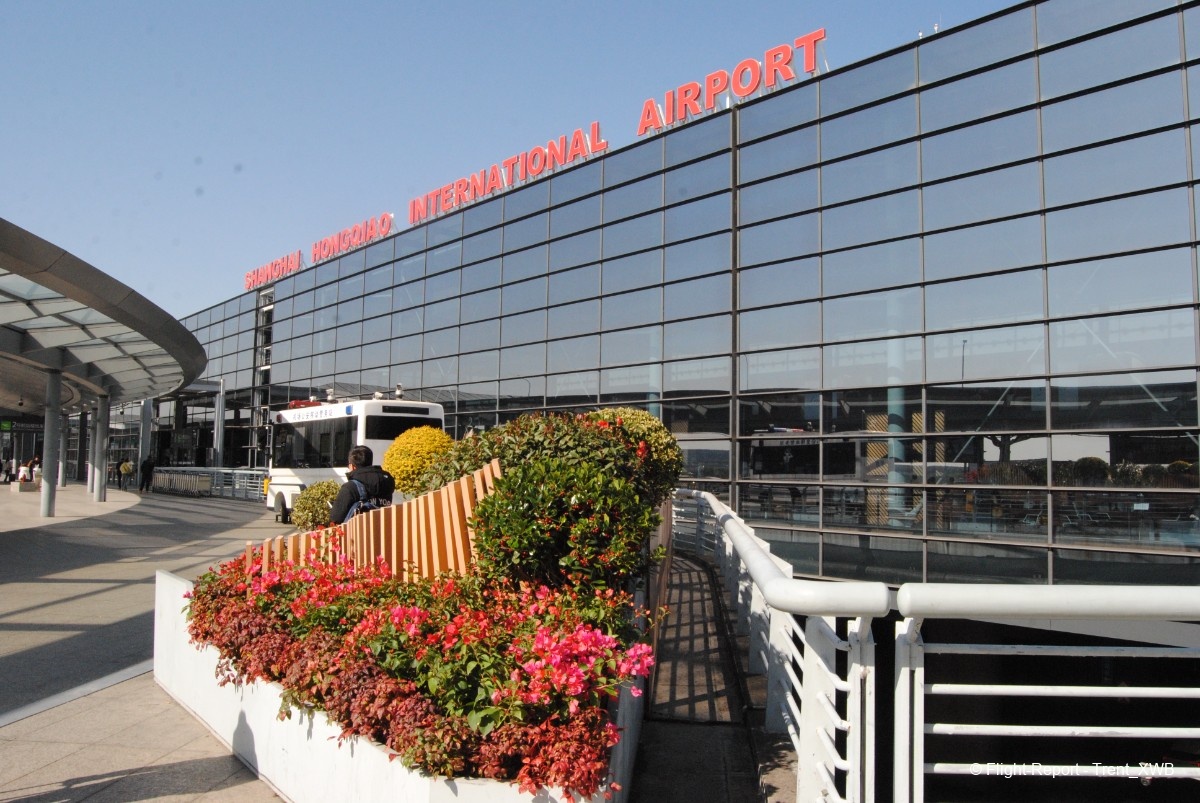
Upon entering T1 from the subway station, one can already see self-check-in machines on the underground level.
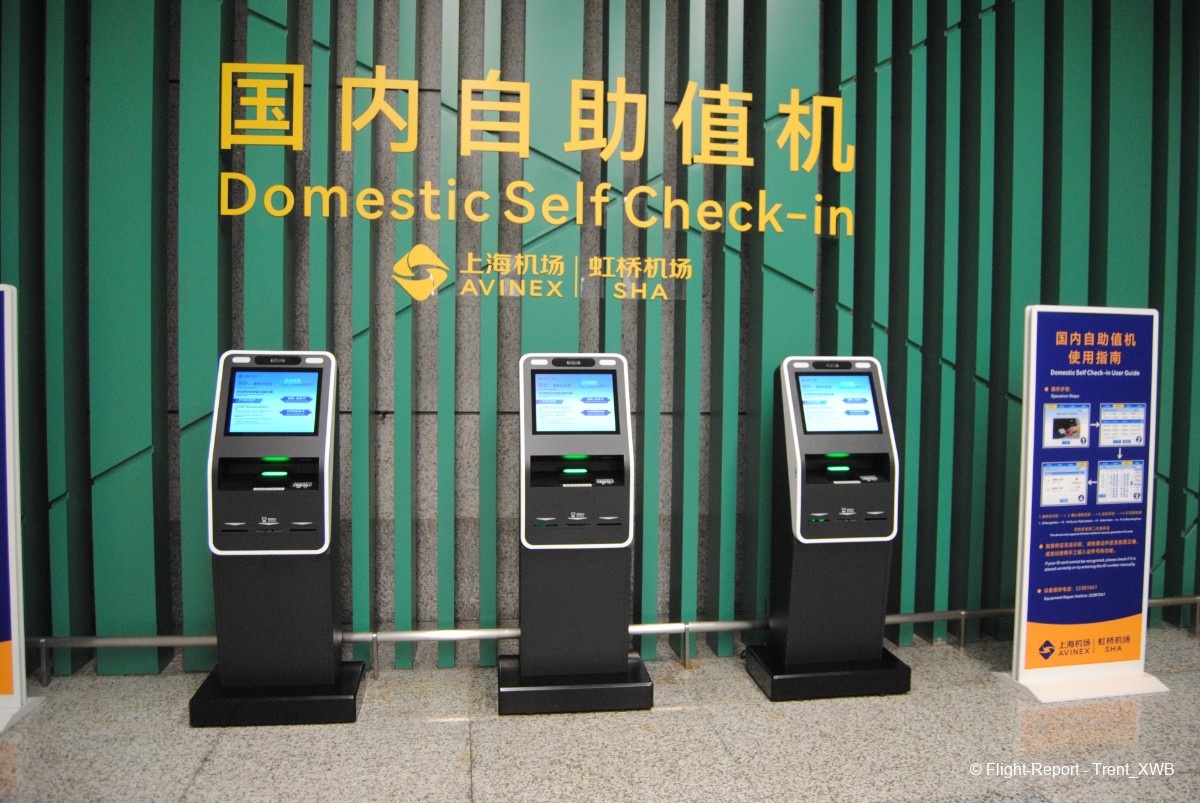
But the machines for CA "Express Line" flights are located in the main check-in hall on the ground level.
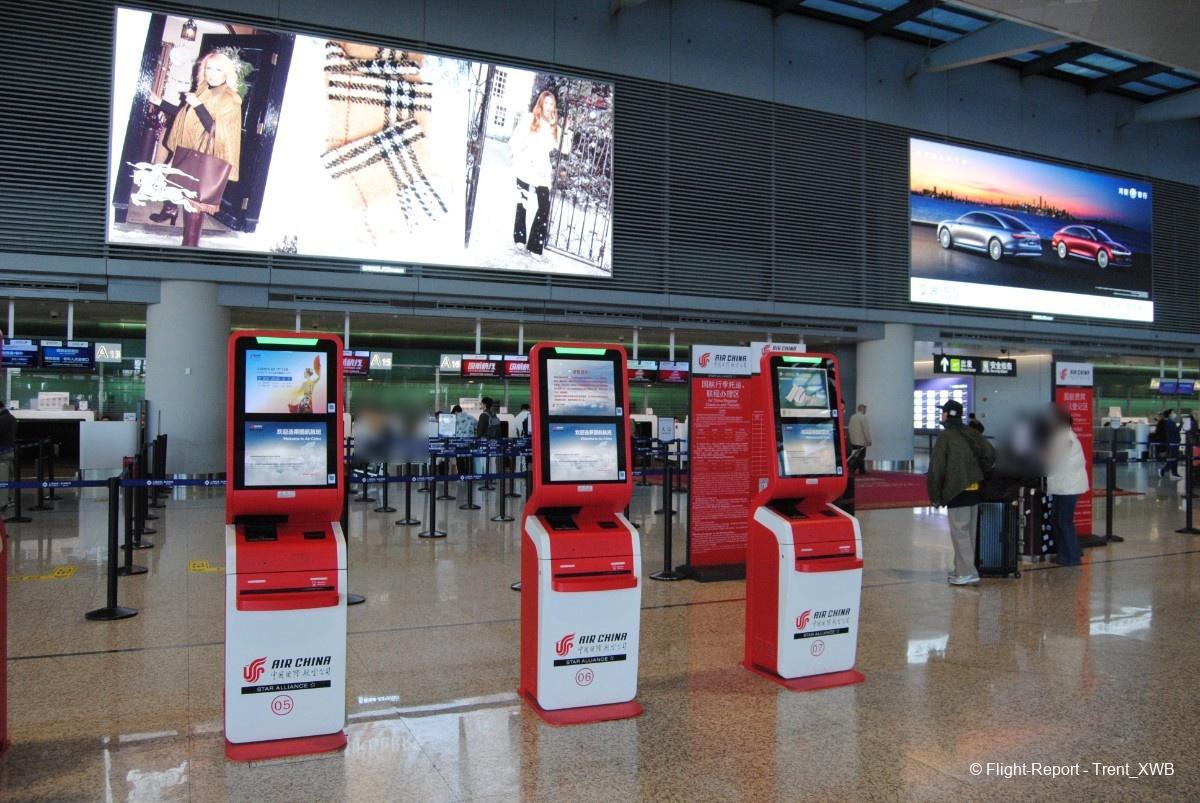
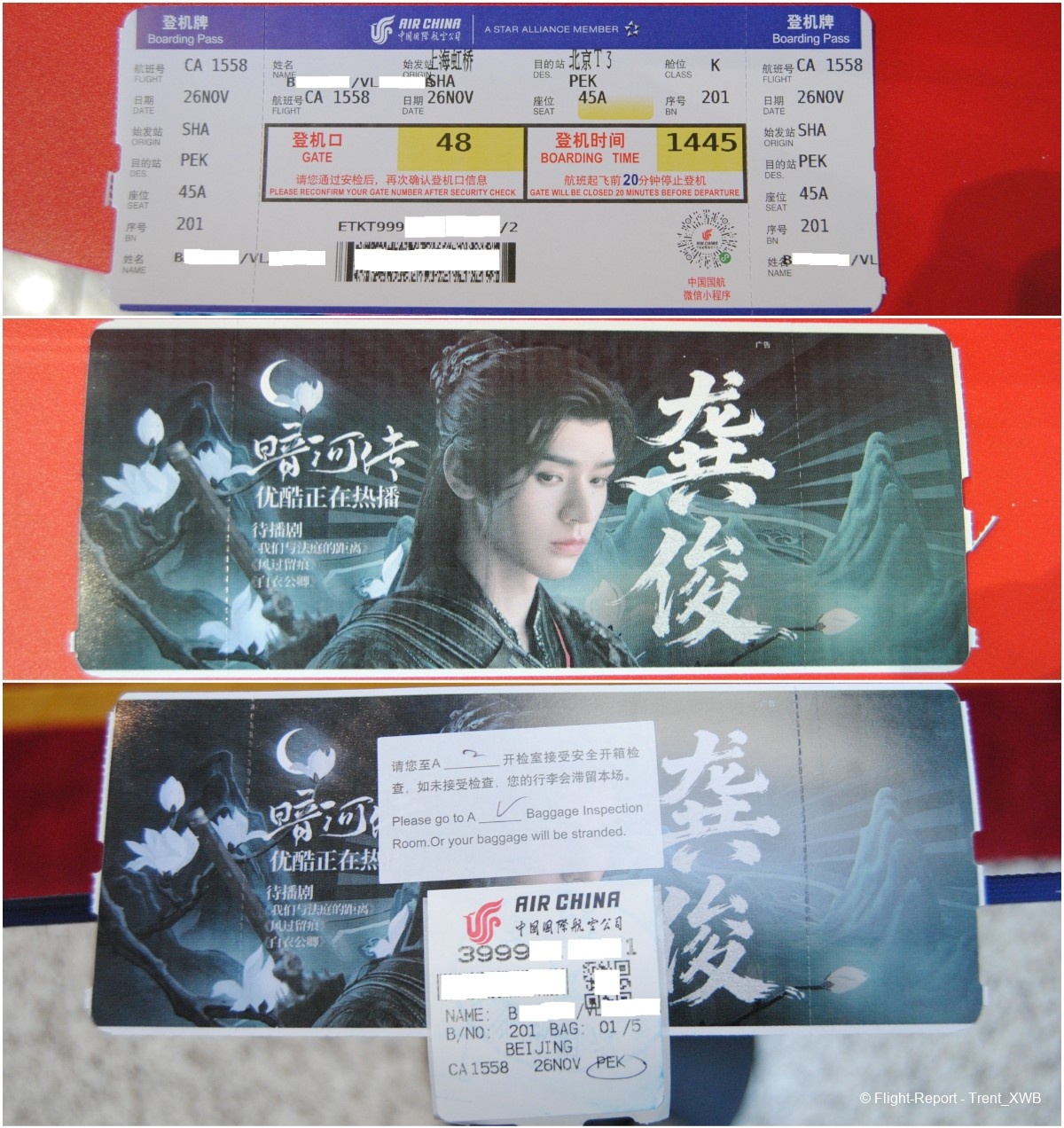
As I failed to create an account in CA app, I was unable to check-in online, but having chosen the seat well beforehand, it was not a problem and I just printed my BP. This time I also decided to check-in my backpack and take into cabin just a small backpack with devices. Whereas in PEK I had to sign a declaration to be able to check-in the luggage, here in SHA my backpack was sent into the special security room, where I also had to go, and in my presence the backpack was inspected and eventually sent to the luggage system. Indeed!
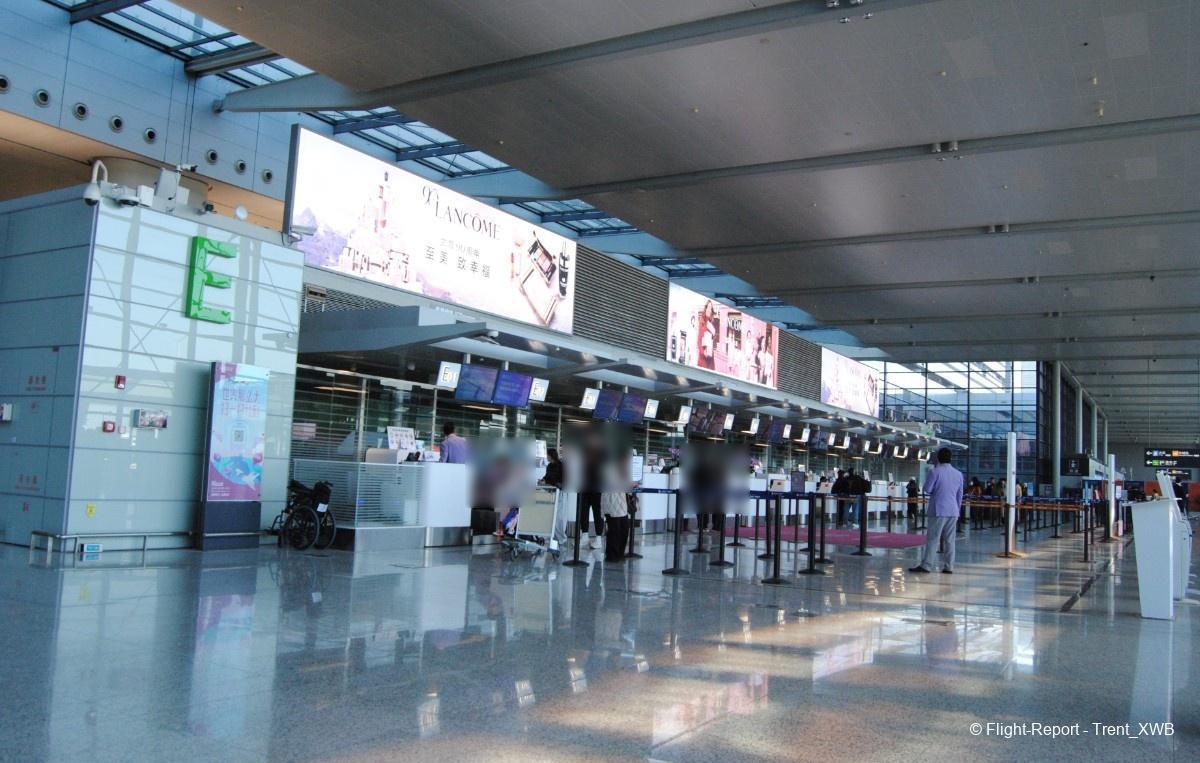
Views of the check-in area of T1. On the photos 1-3 one can see the main check-in hall, where CA and MU counters are located, on the photos 4-5 - dedicated MU check-in area near the main entrance and on the photo 6 - check-in area in the far end of T1 for other Chinese airlines.
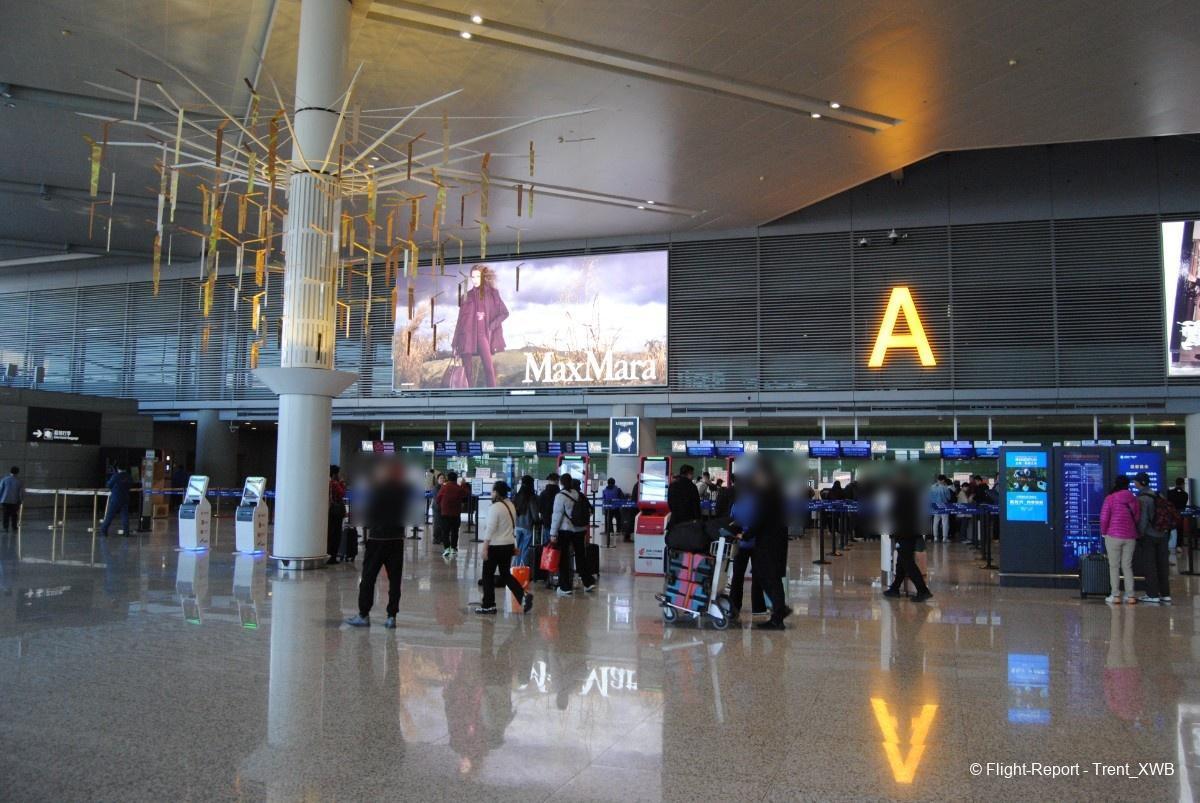
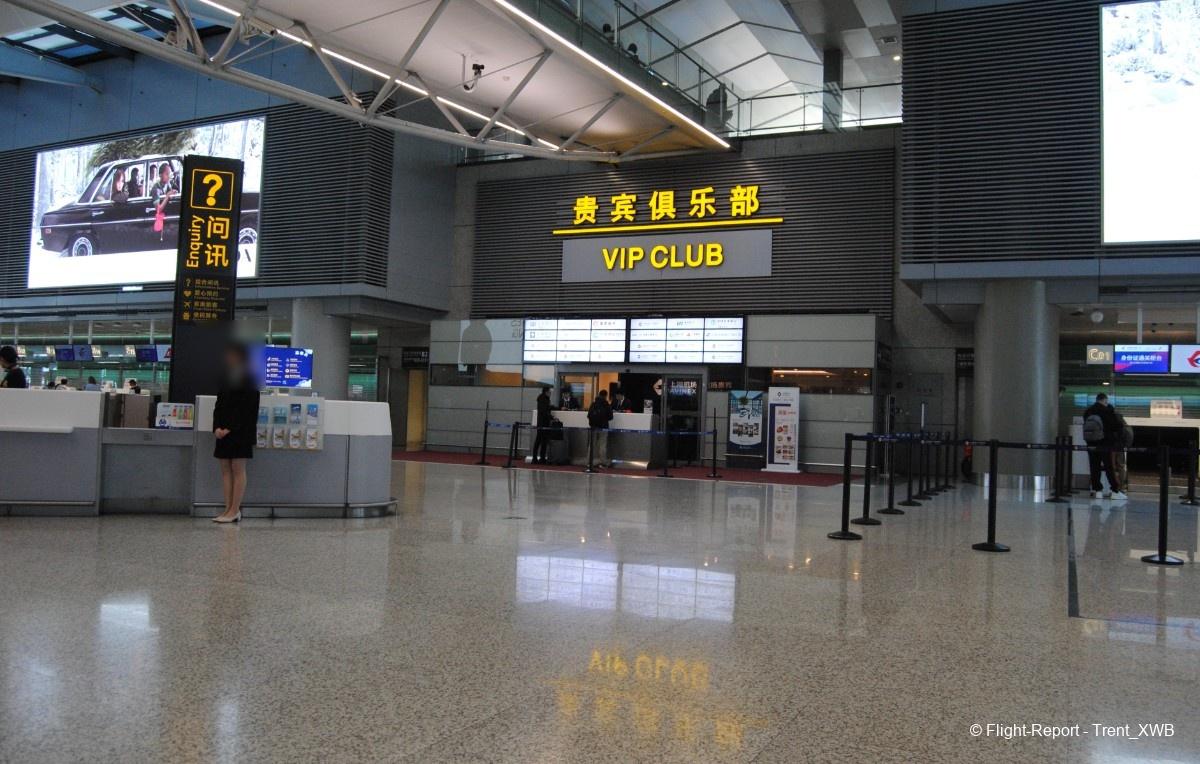
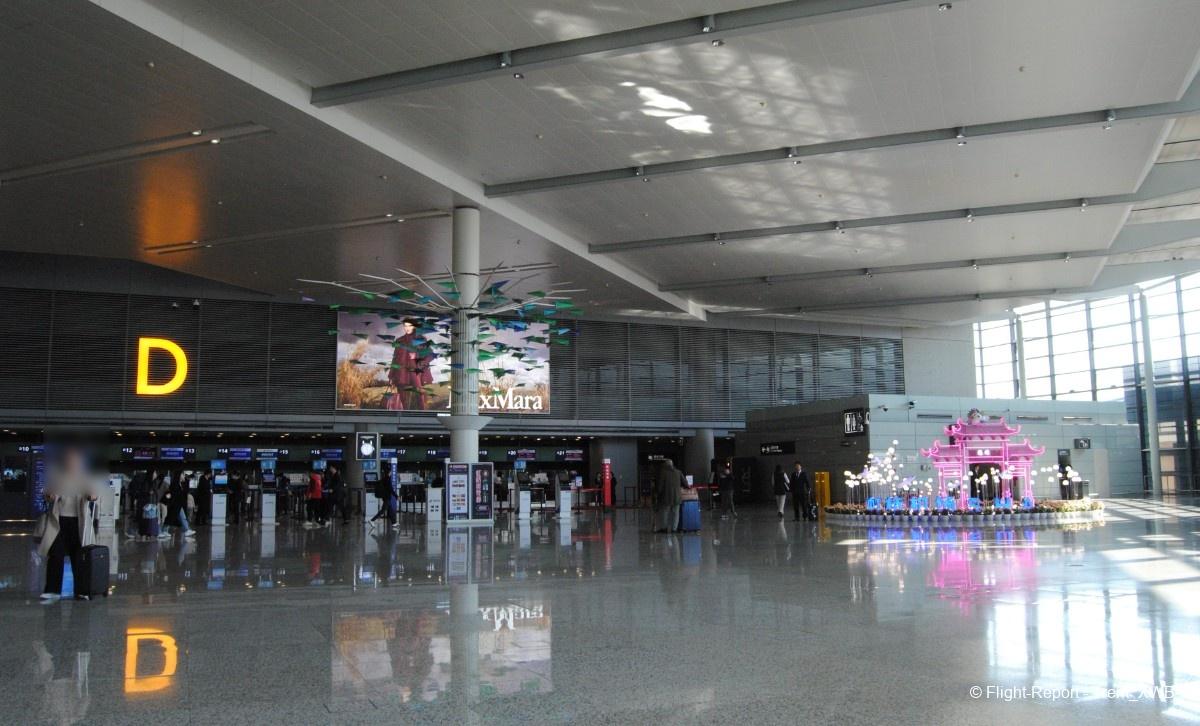
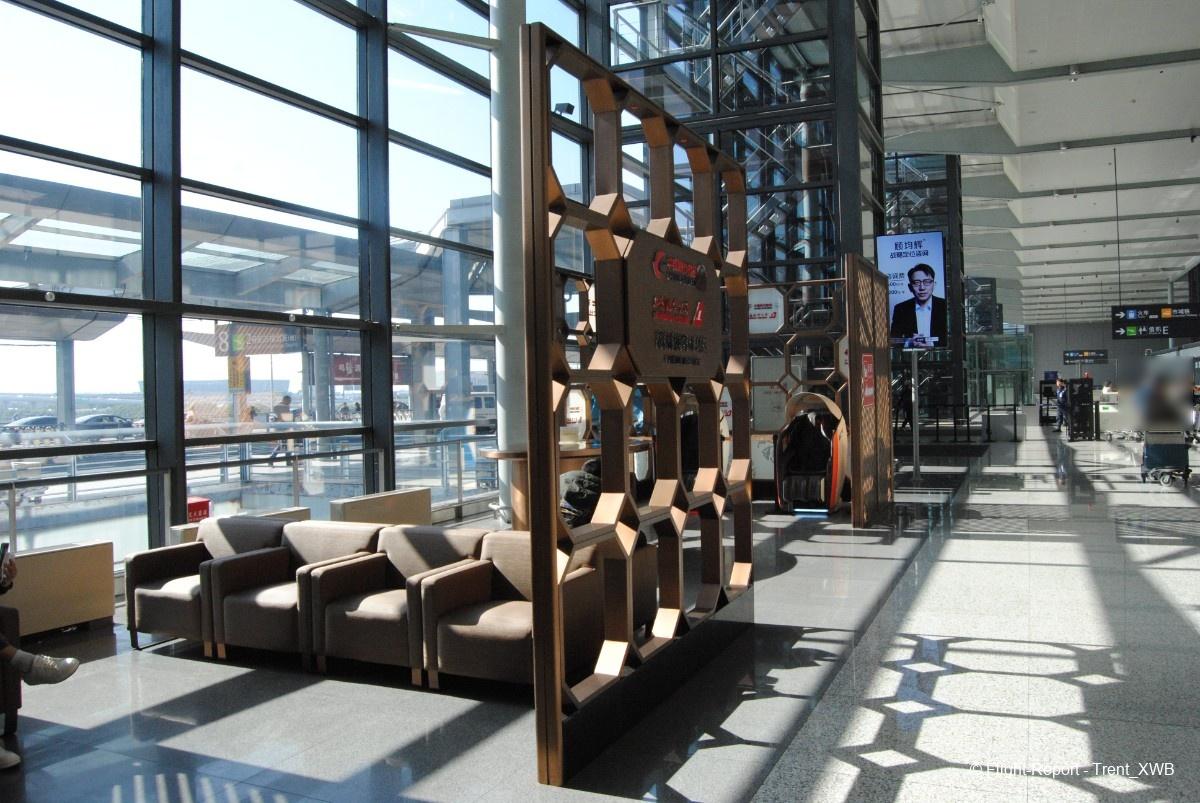
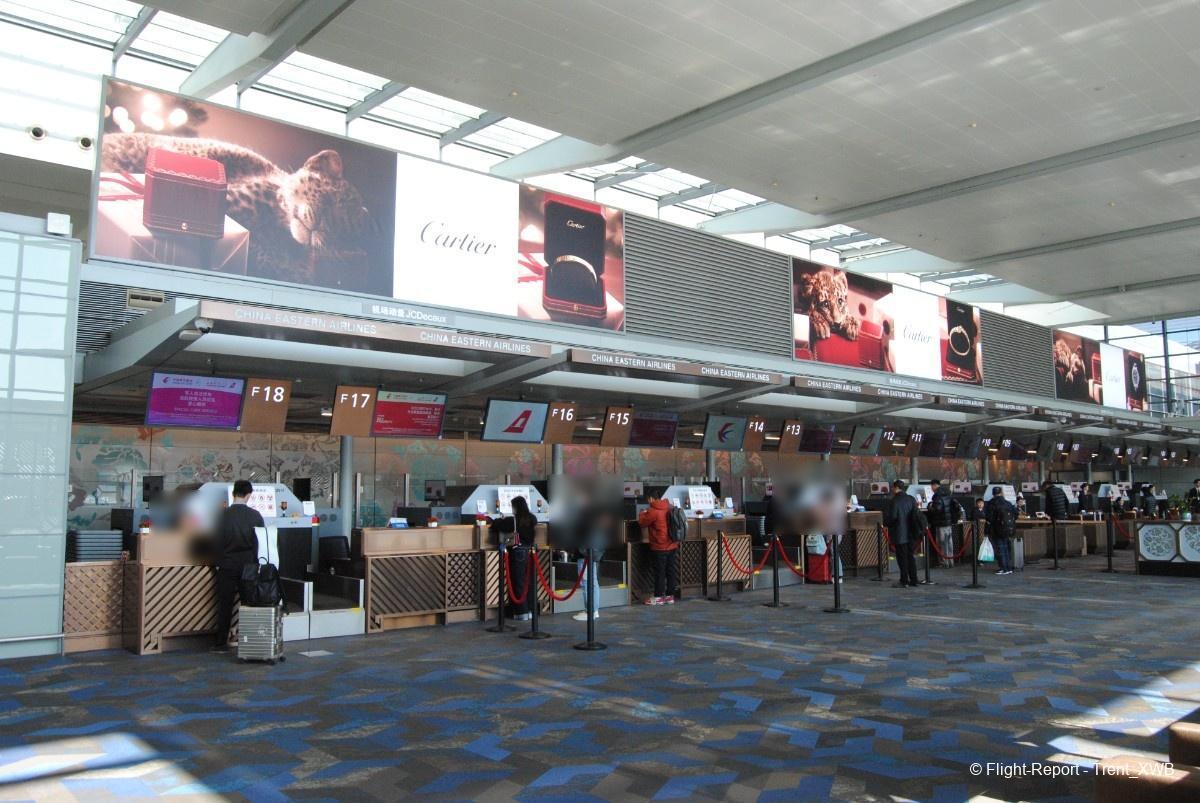
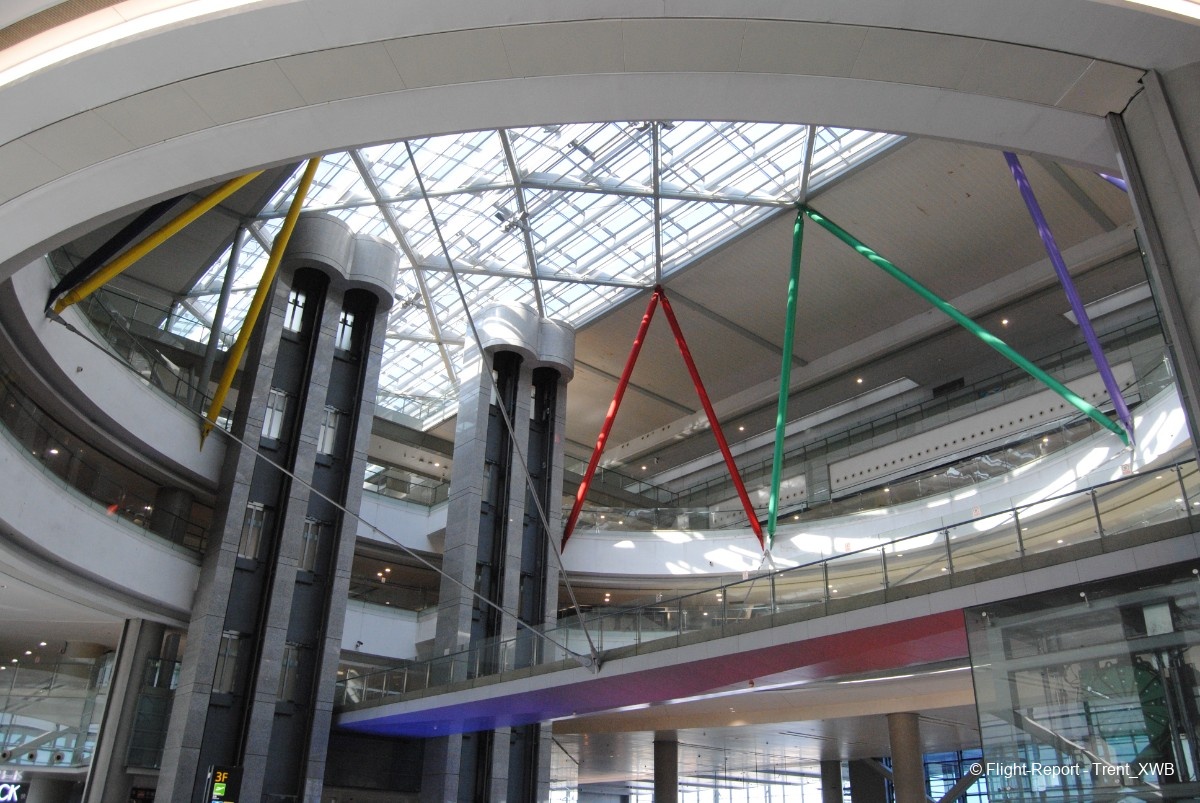
The roof in the central part of T1.
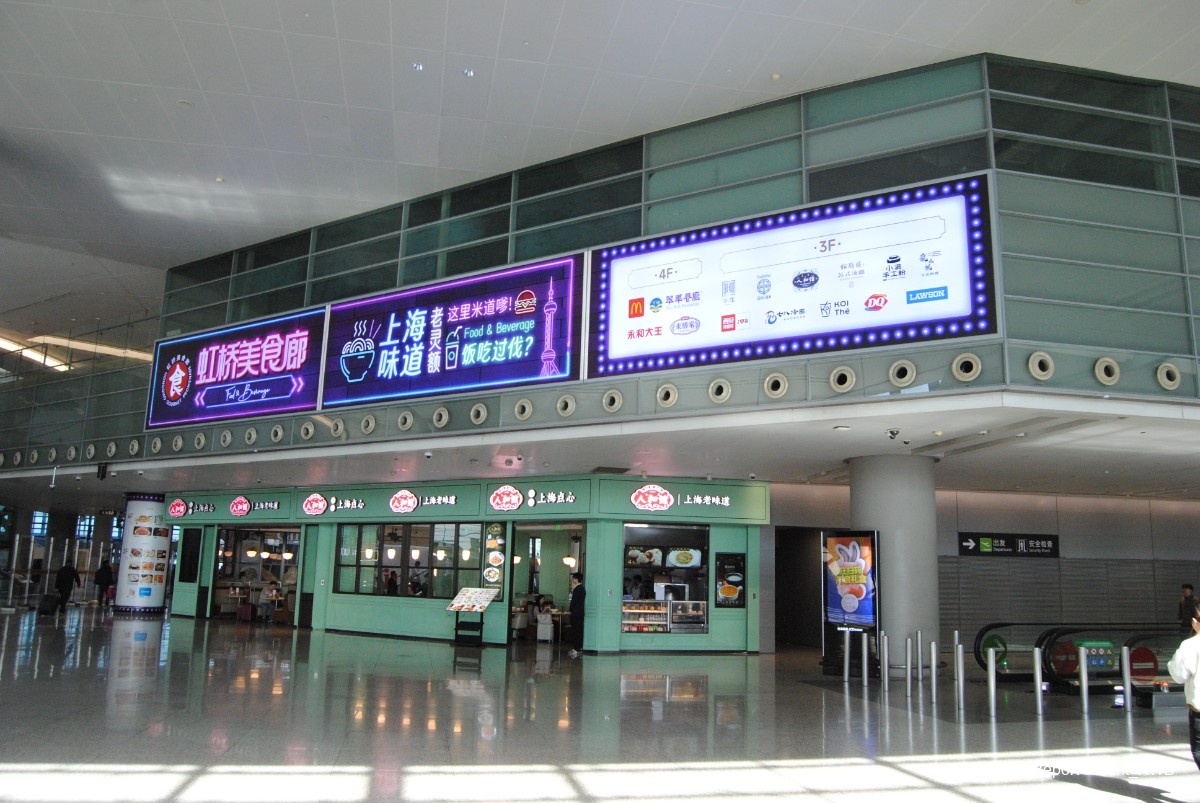
T1 has quite a large area with eateries and food shops.
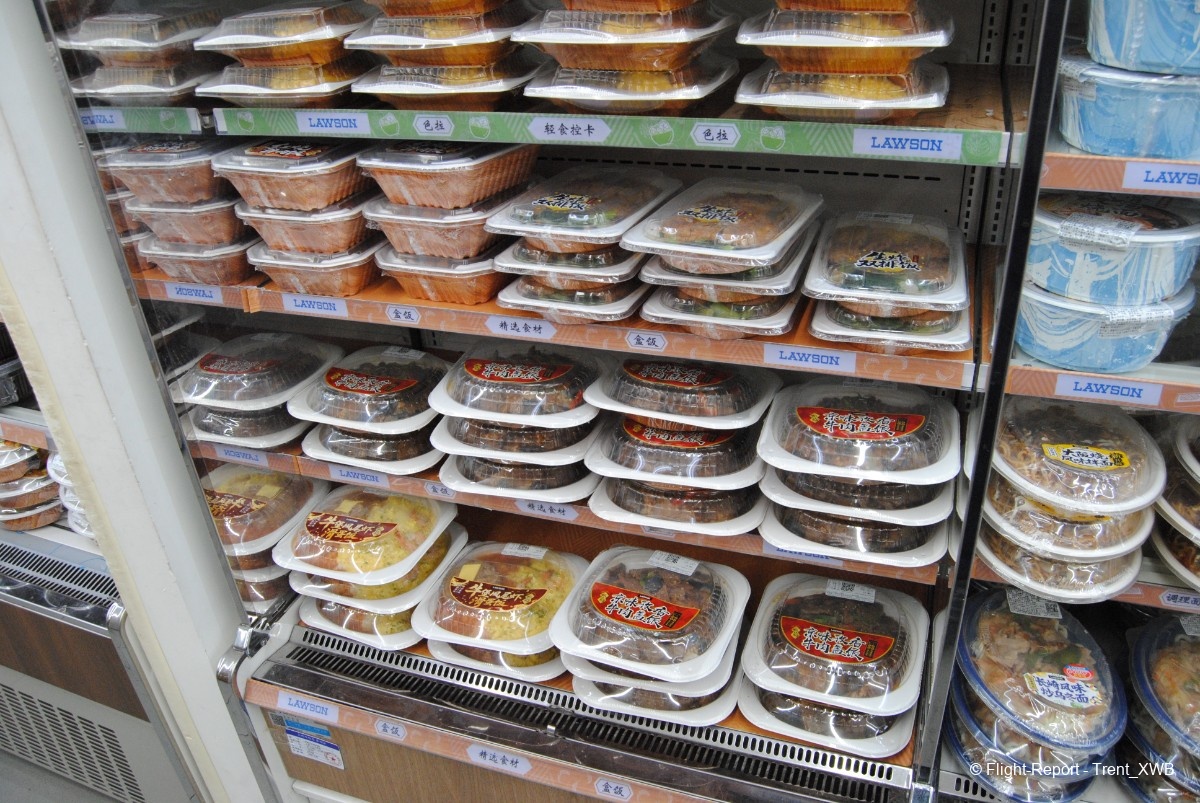
In this area one can also find omnipresent Lawson conbini, giving a possibility to have a meal before the flight for a cheap. It was the right decision to eat here - as you'll see further, the meal on the flight was not abundant at all.
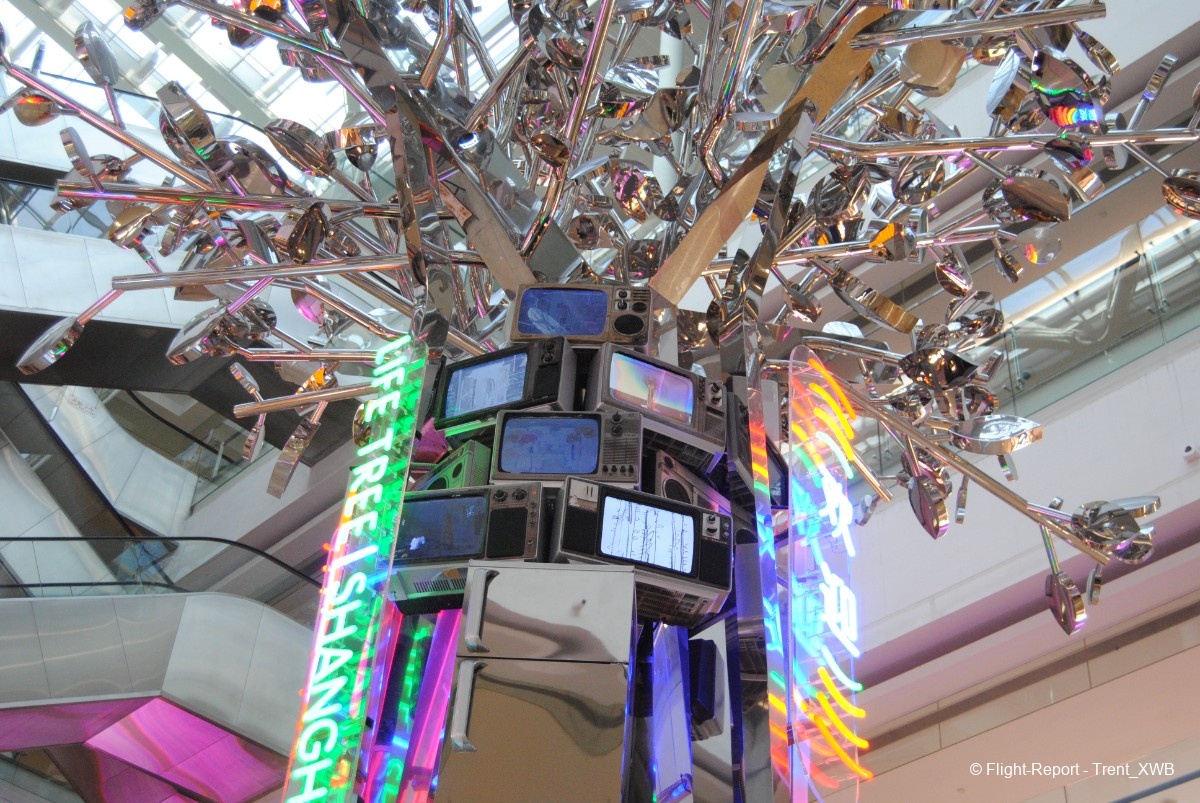
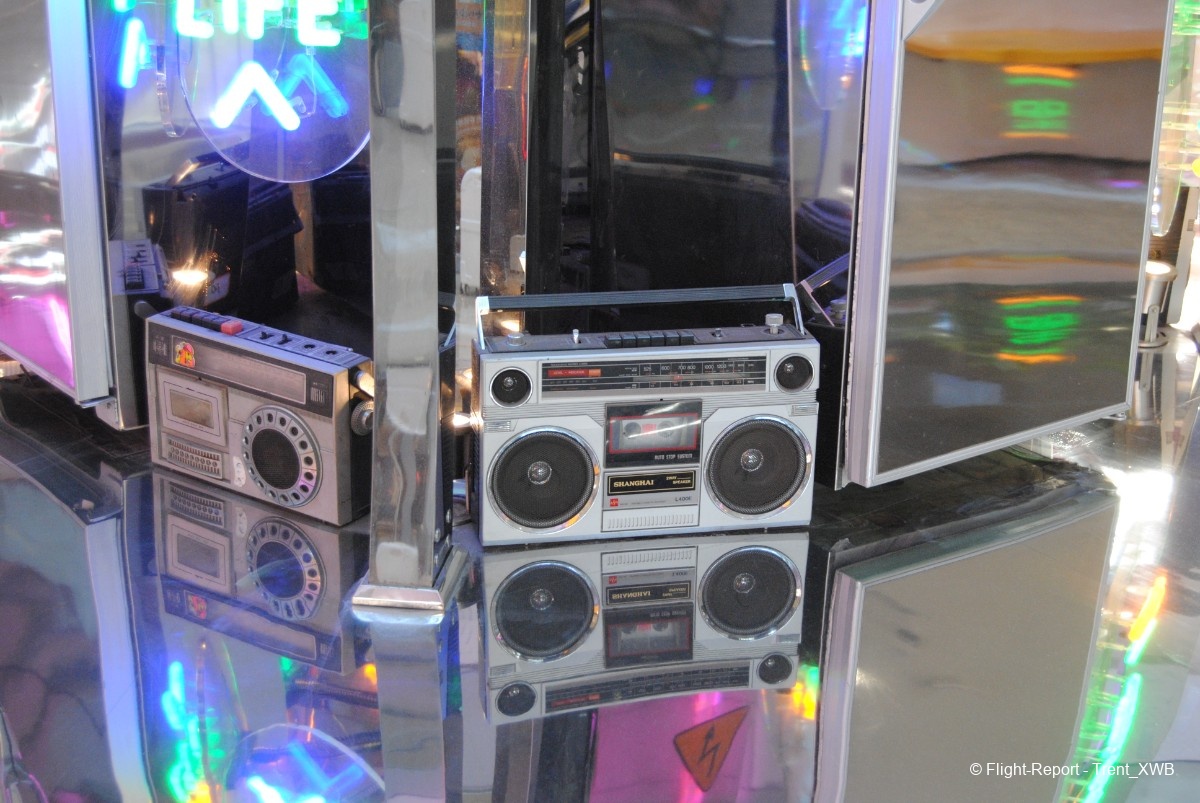
In the center of the dining area one can see an interesting installation named "Life Tree Shanghai", consisting of devices of the long-gone era.
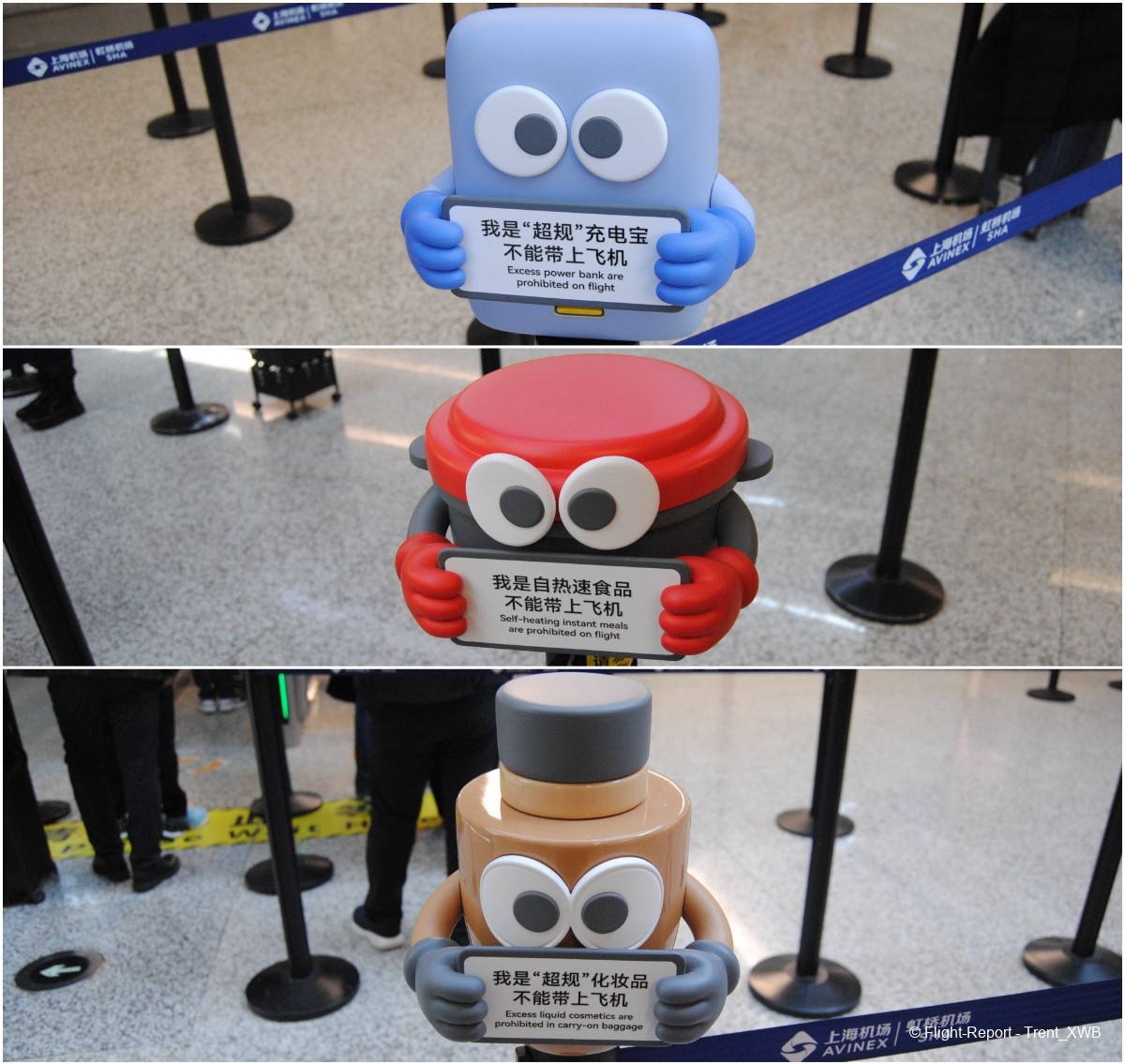
Time to go airside through security. SHA uses a creative method to attract attention to the fact that non-compliant powerbank, self-heating meals and excess liquid cosmetics are prohibited in carry-ons.
T1 SHA: Airside
T1 has whopping 55 gates, distributed between the central pier, 2 perpendicular pier and 2 side piers. I explored only the central part (gates 46-50) and one of the orthogonal piers (gates 26-40).
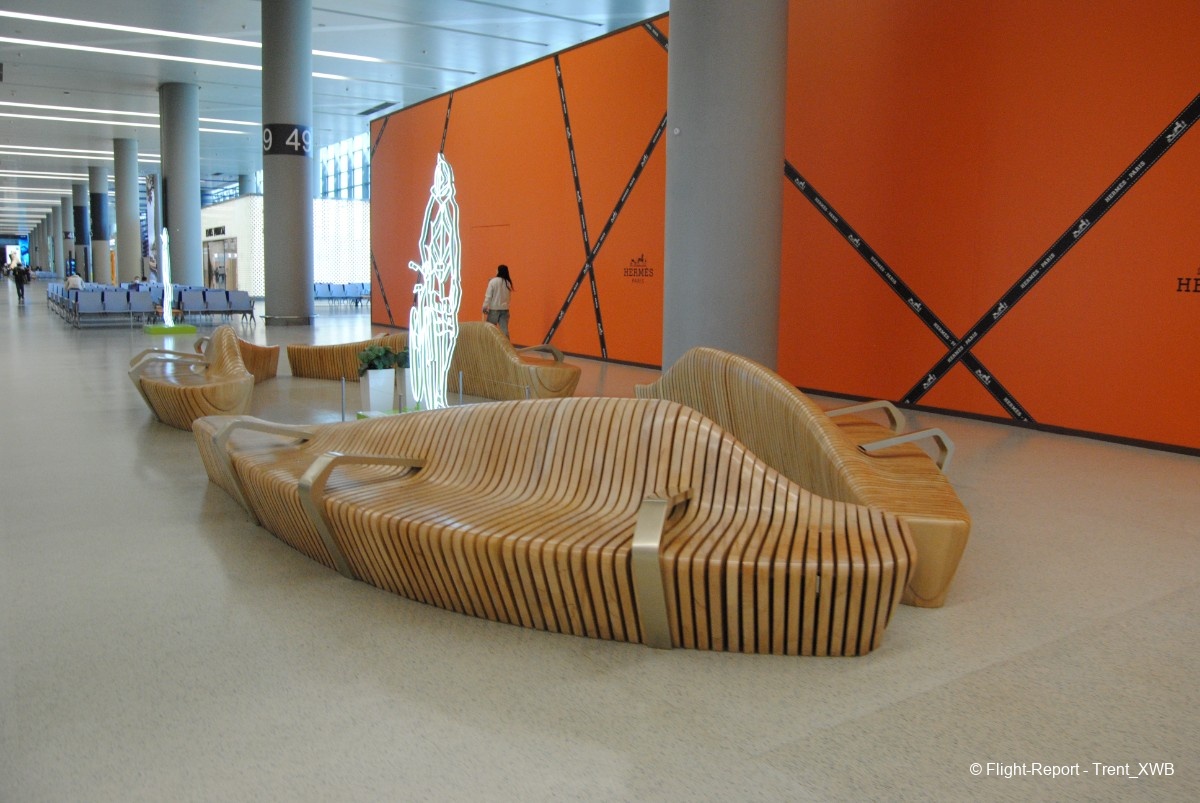
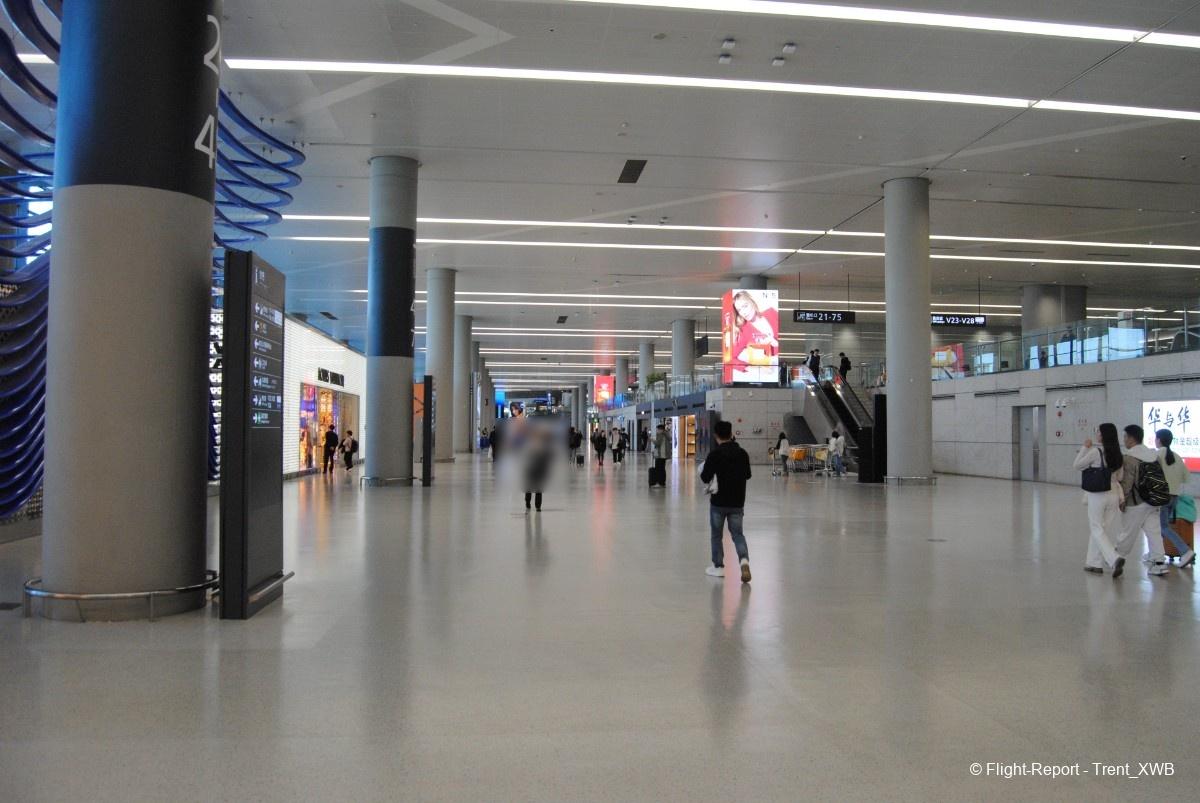
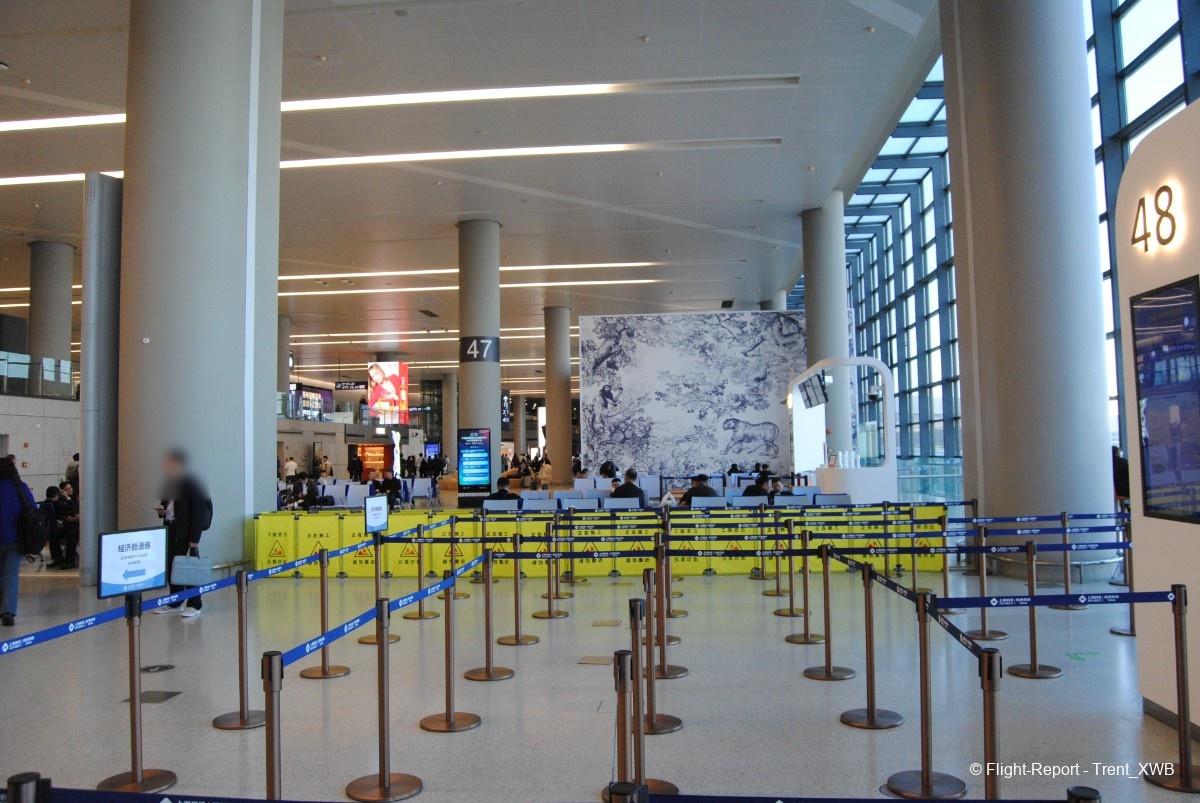
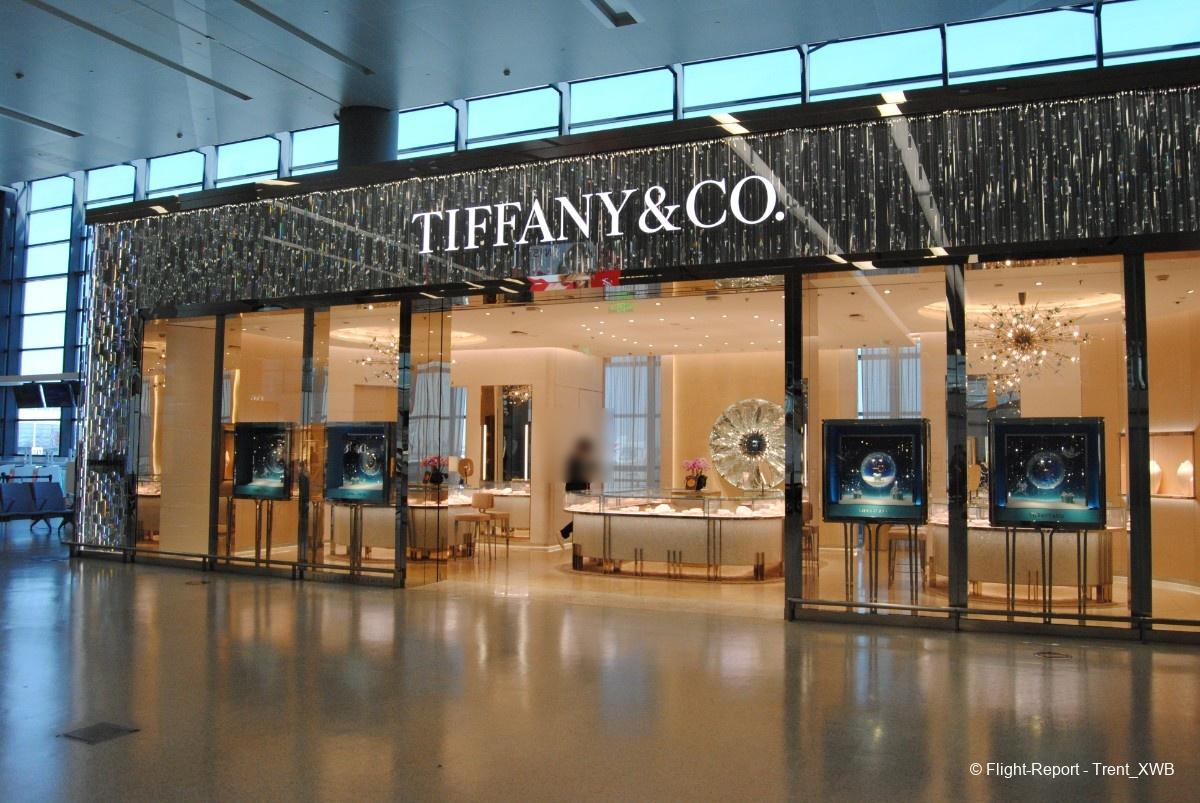
Views of the central pier. On the photo 3 is gate 48, from where my flight CA1558 was boarding; one the photo 4 is one of luxury jewelry boutiques in this area.
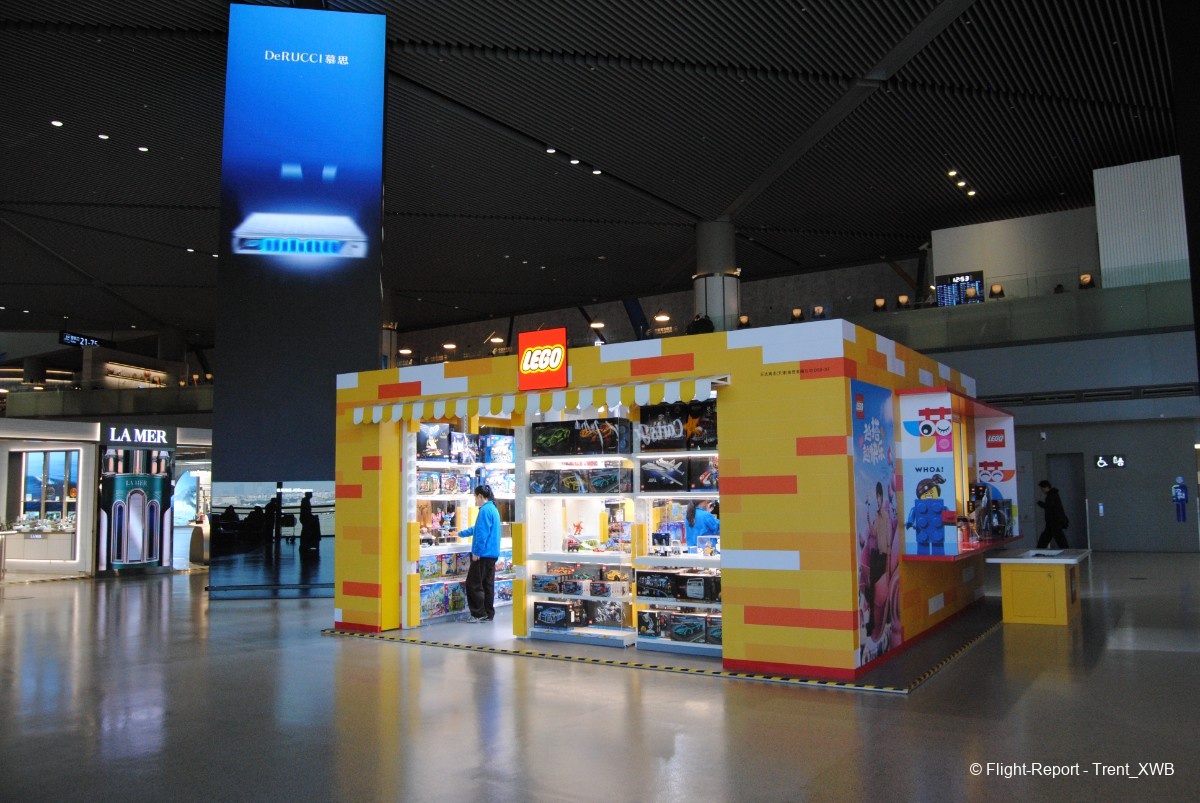
LEGO shop near the beginning of the orthogonal pier of gates 56-70 (I didn't visit this pier).
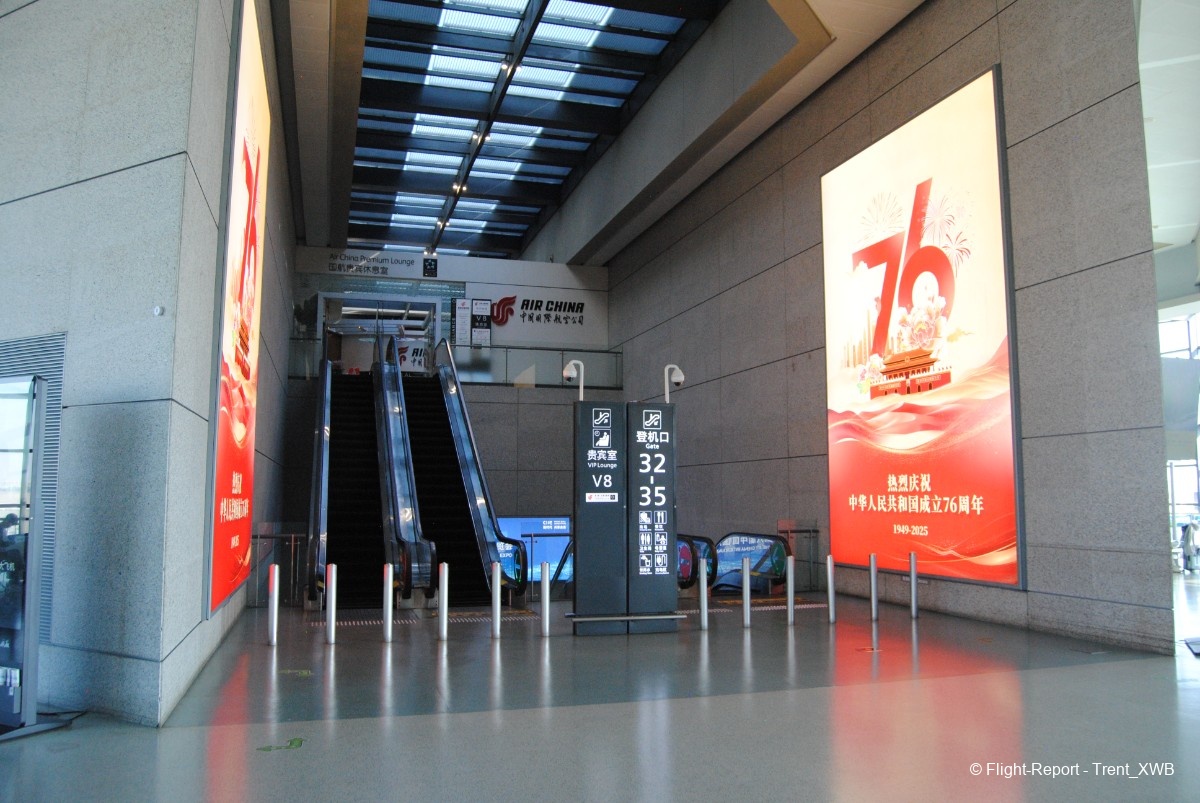
Some views of the orthogonal pier of gates 26-40. On the photo 1 is CA lounge, on the photos 2-3 is seating area near the far end of the pier, on the photo 4 is the area of gates 31-34, located downstair. Needless to say that T1 also has a plenty of charging points.
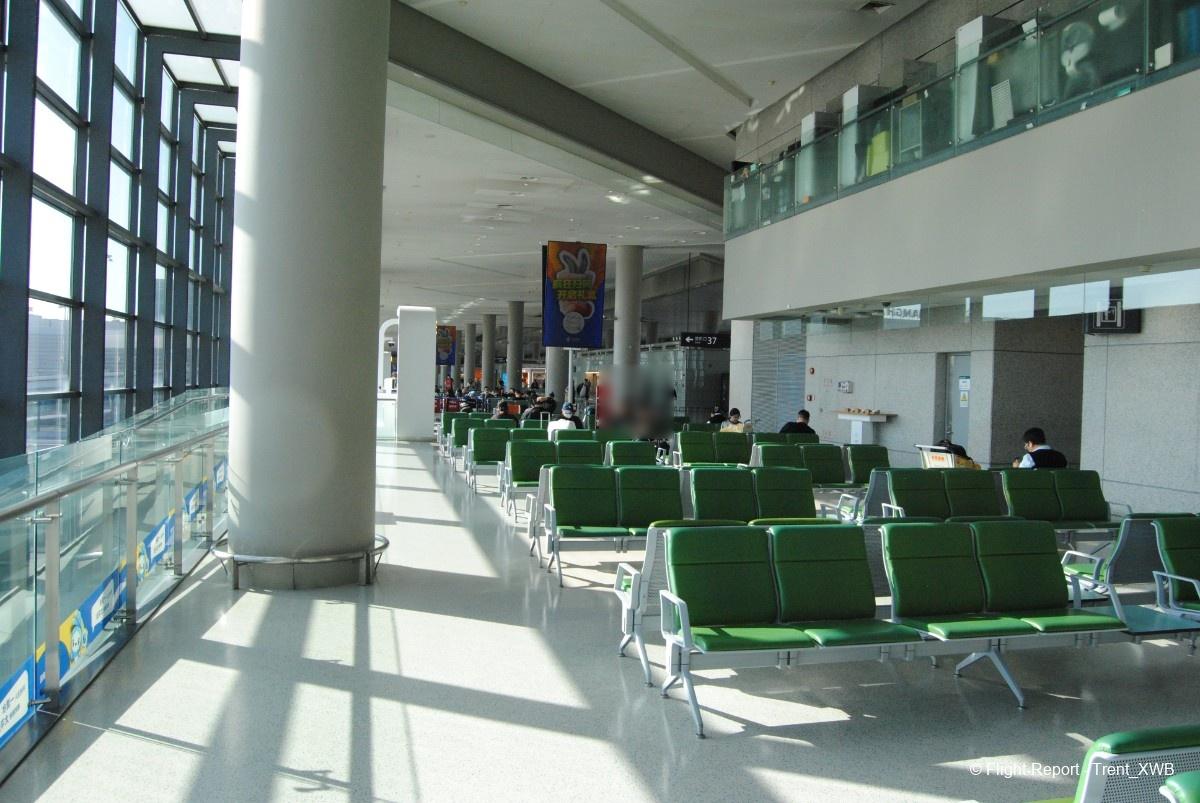
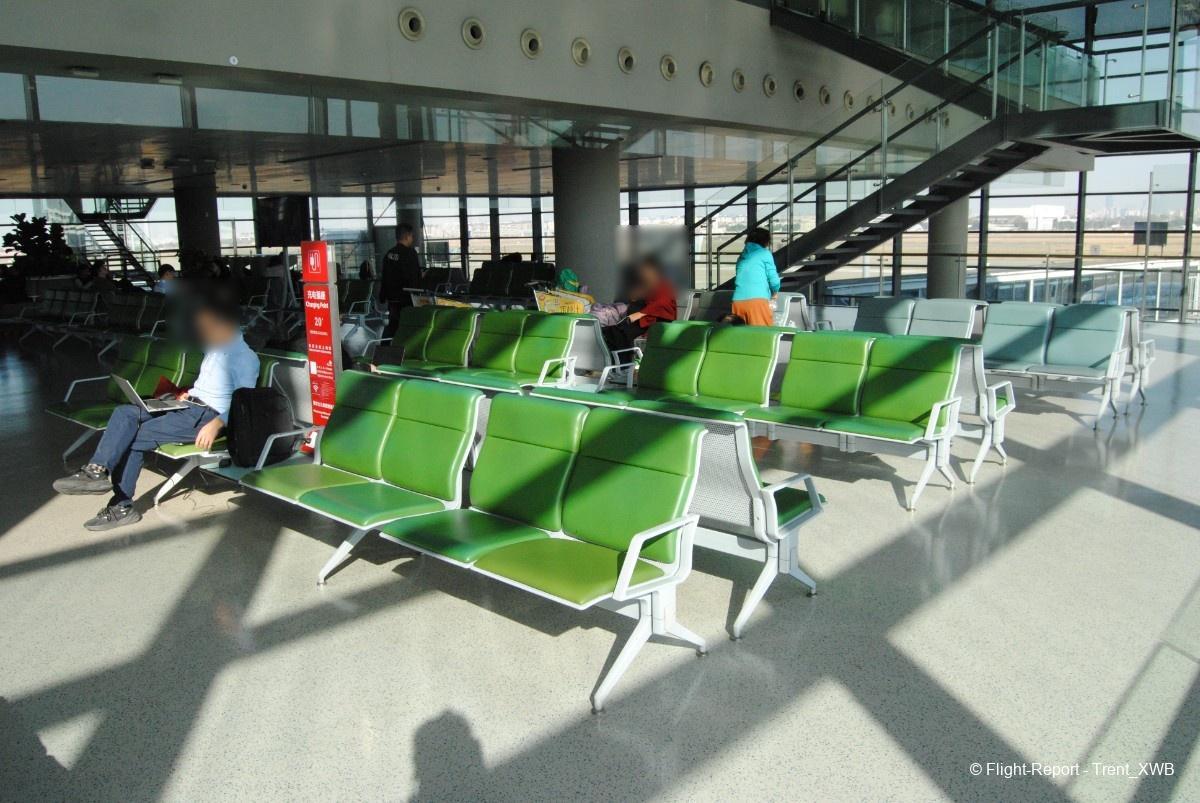
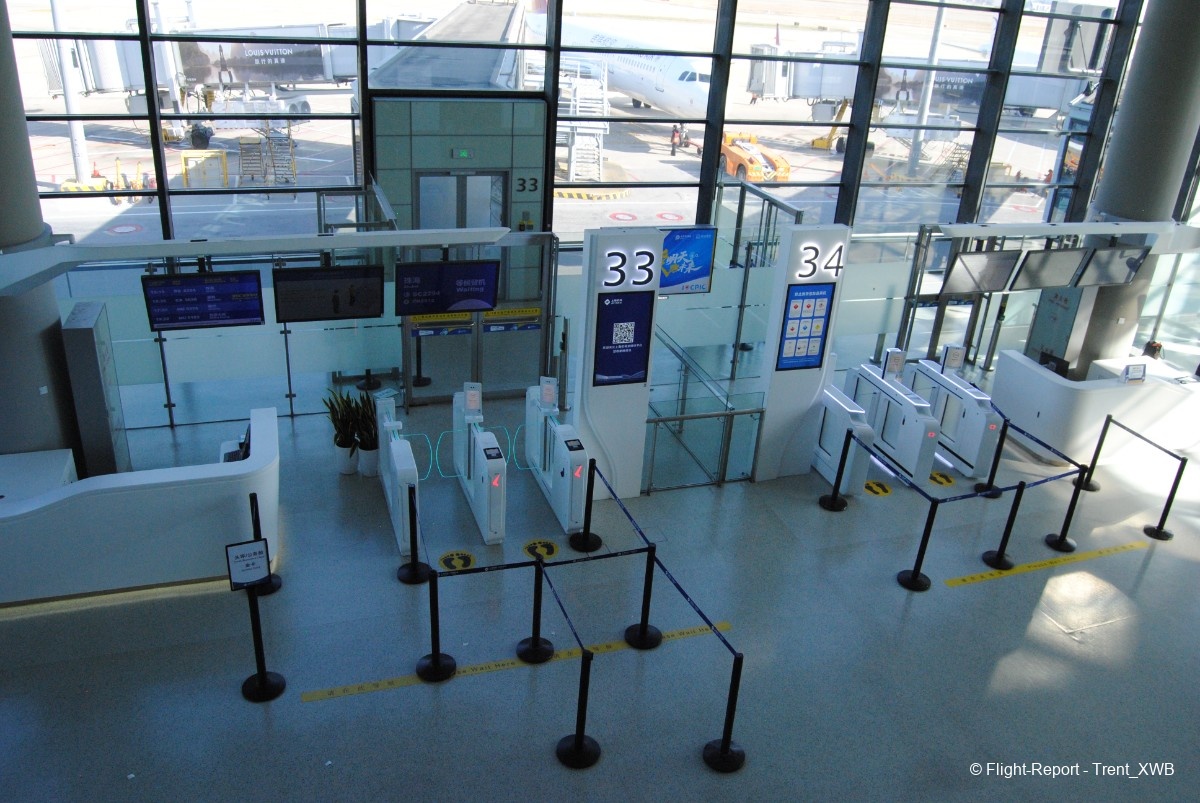
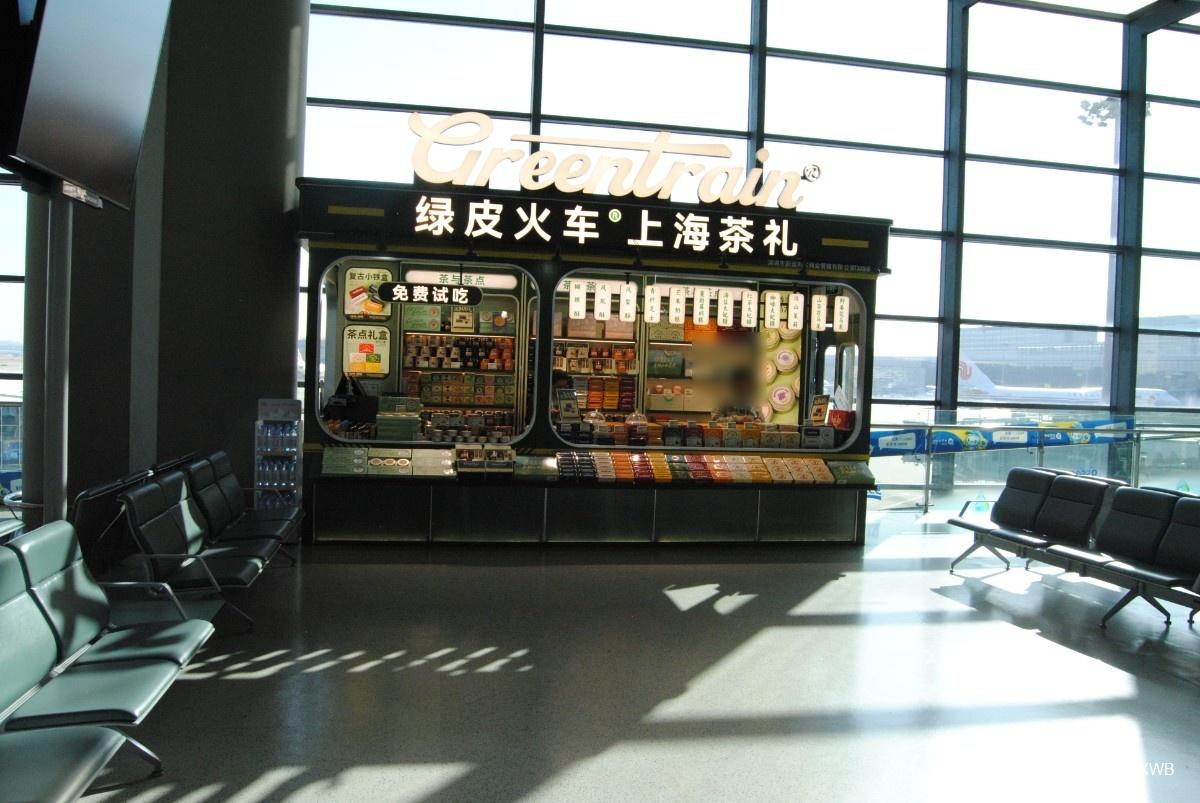
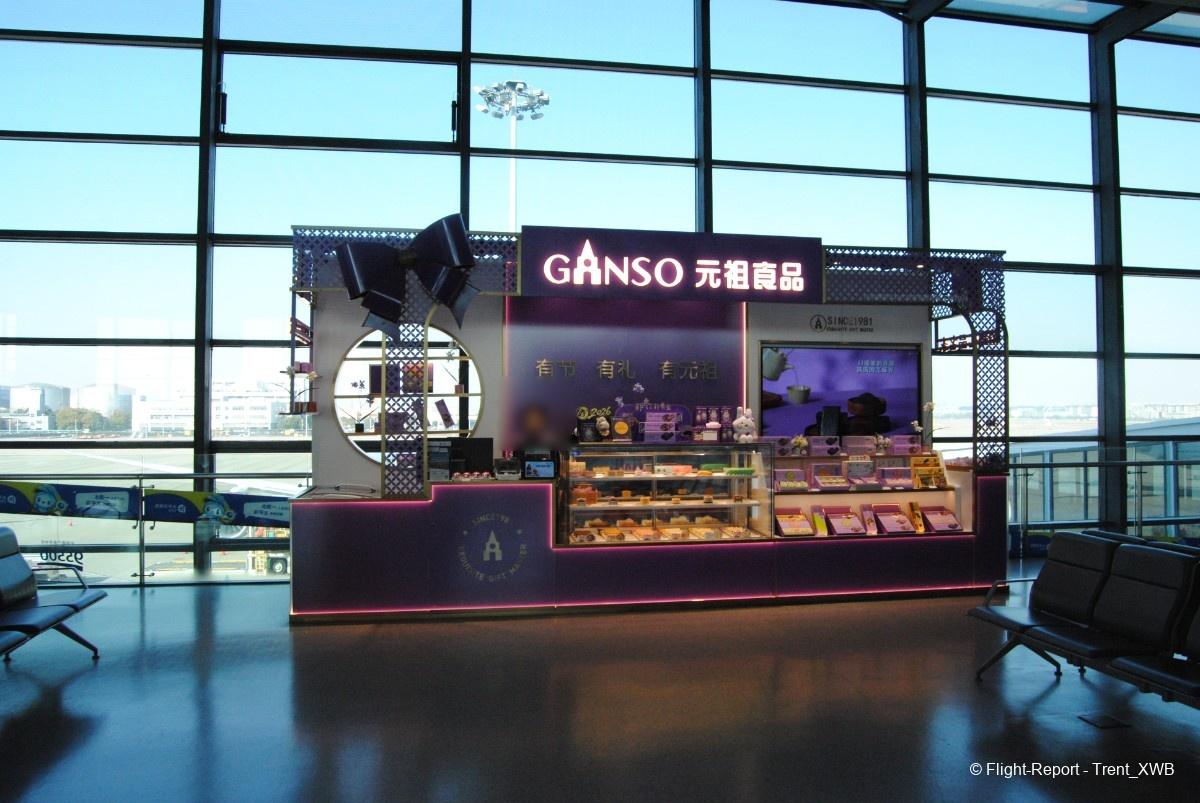
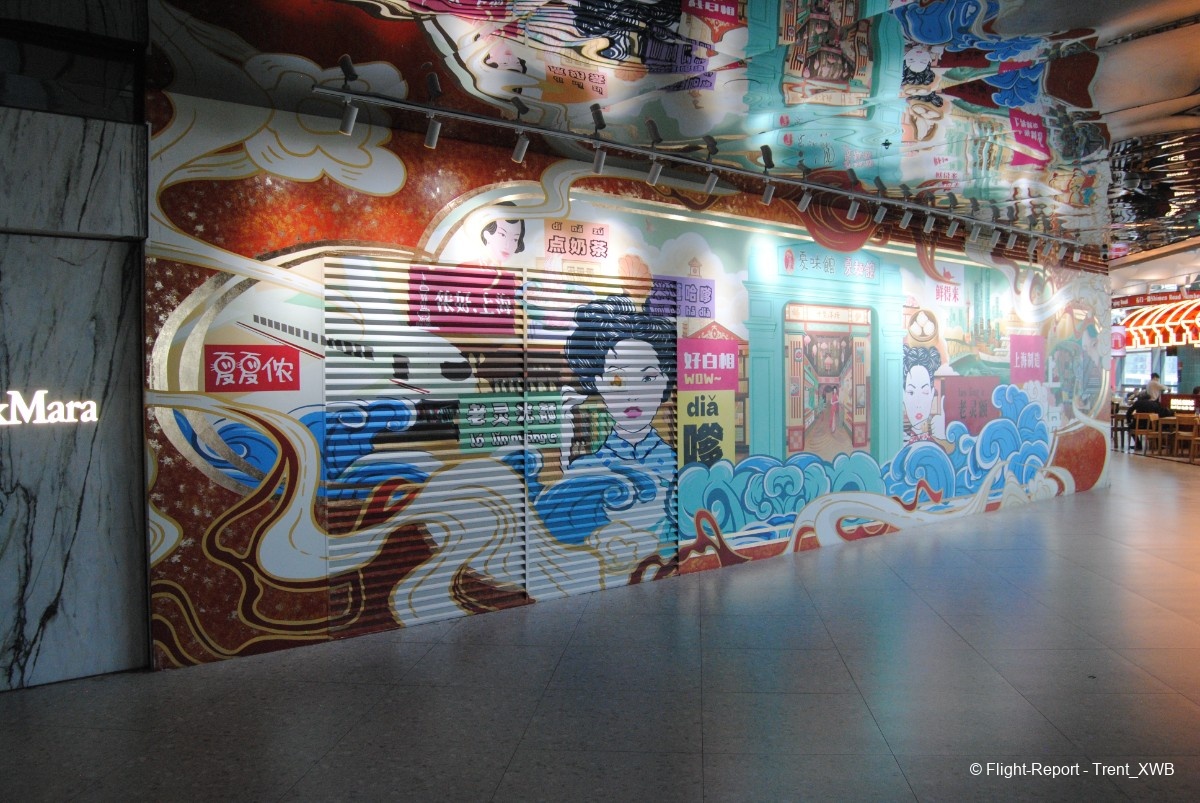
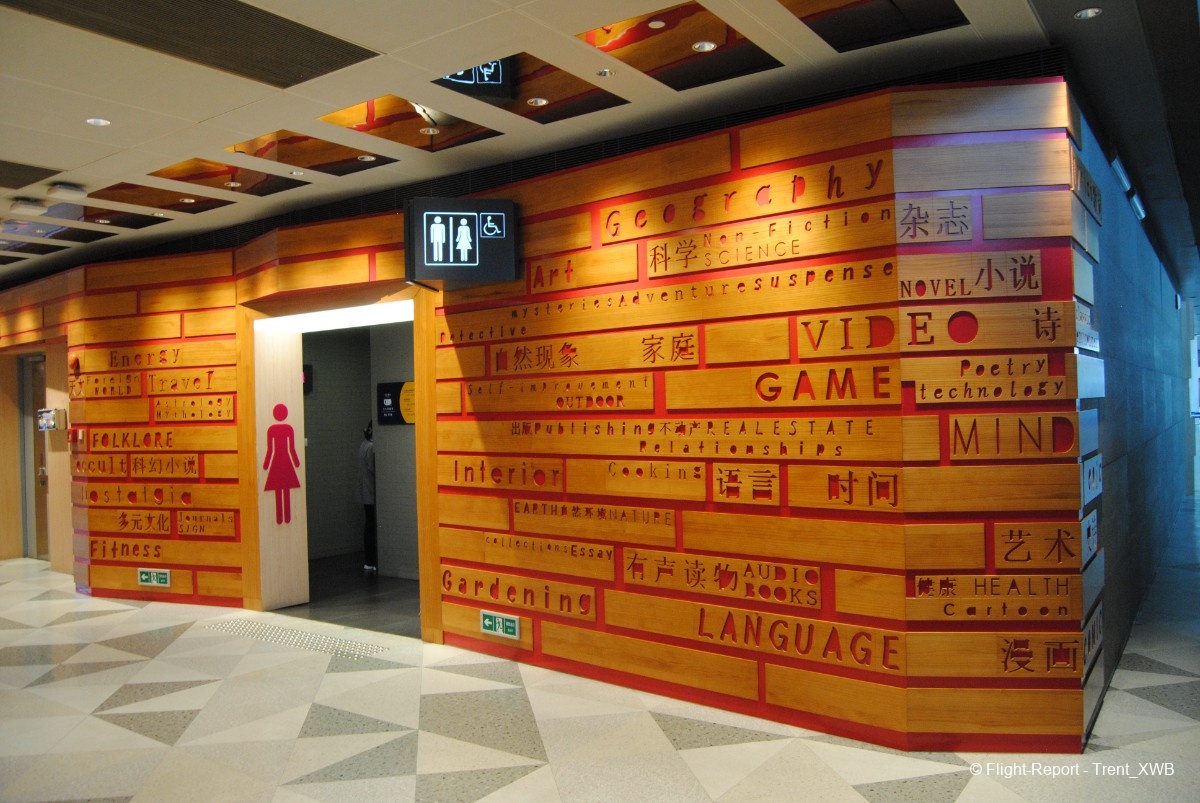
This pier has some interesting shops and nicely decorated eateries and toilets.
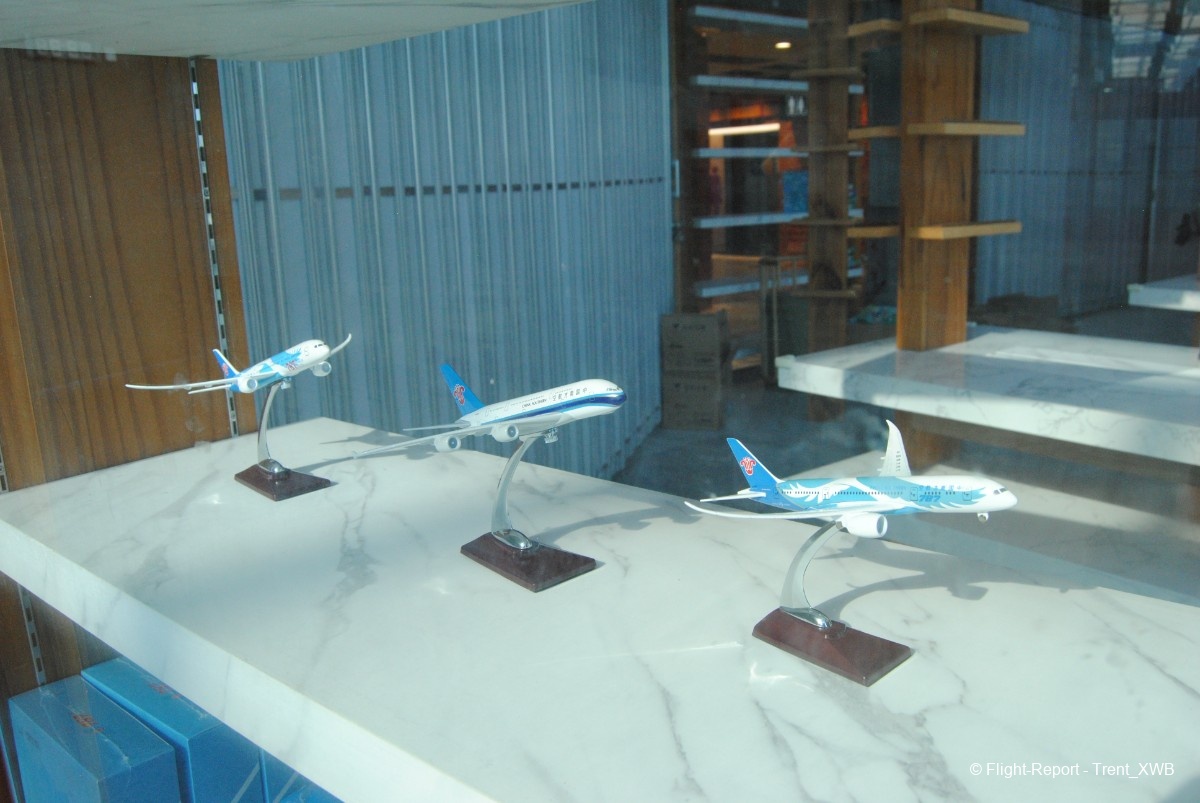
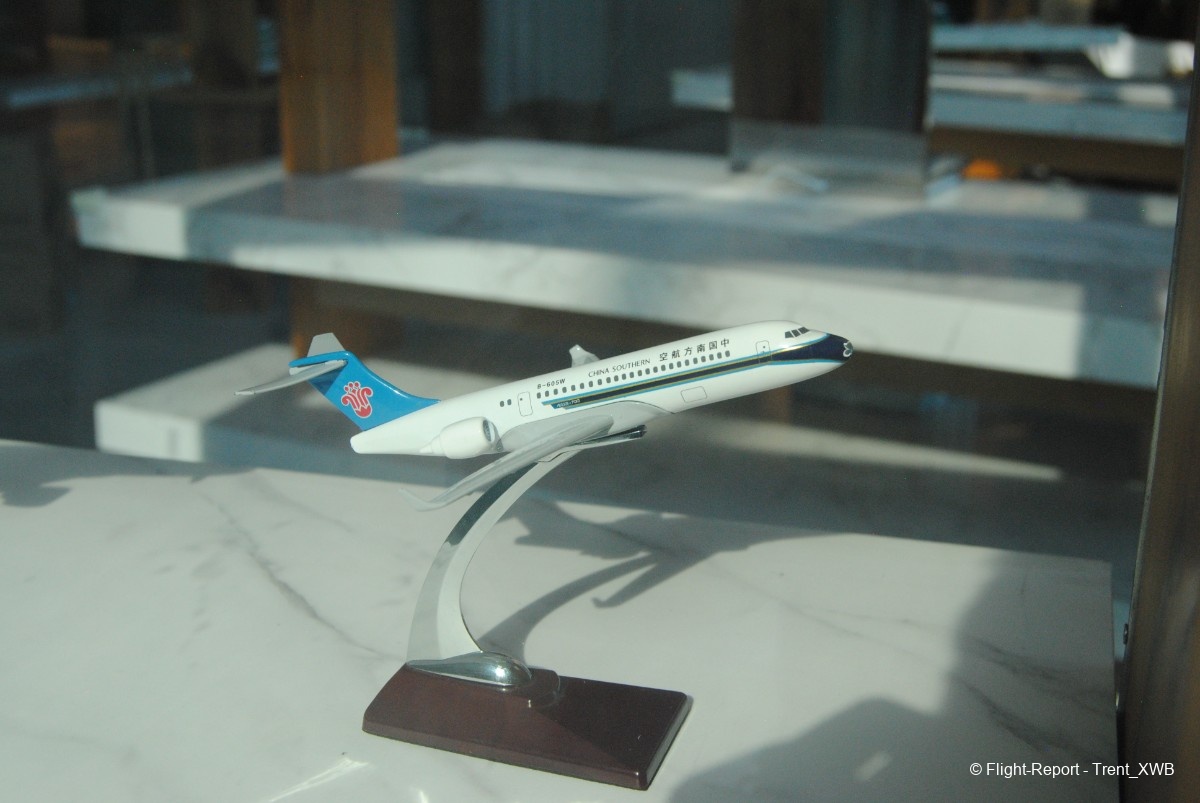
Scale models of some past- and present CZ aircrafts: B789, A380 (gone in 2022), B788 (gone recently), C909.
Planespotting From T1 SHA
SHA is a kind of avgeek paradise due to its abundant and various traffic (mostly domestic), including widebodies of almost all the calibers from B748s (when CA puts them to SHA flights) to A332s. Combined with excellent spotting possibilities in T1 due to large windows with direct access, it means than one can easily spend hours here.
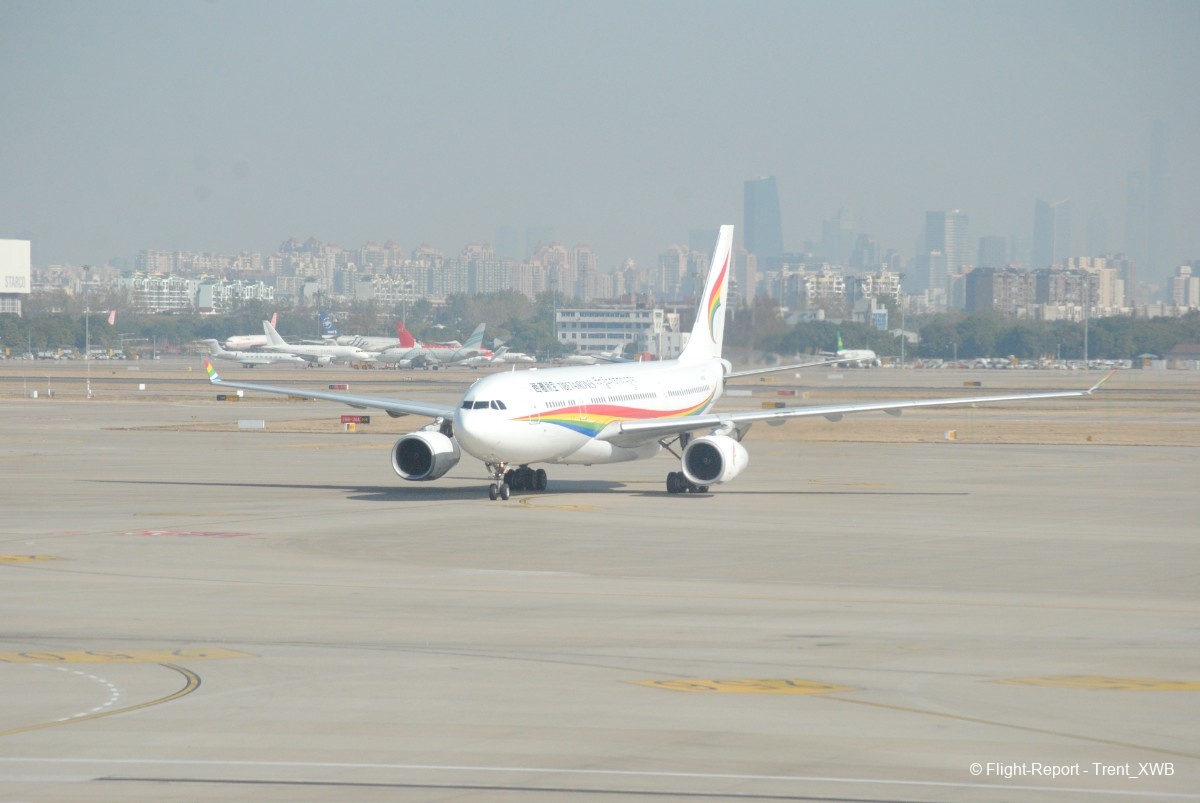
Xizang (former Tibet) Airlines A332 (B-1047), arriving to T1. Being built in early 2018, it's the second-youngest TV A332s and one of the last-produced A332s, as their production ended in 2018. TV A332s have C12_Y+32_Y235 layout, and as one can see from Sam Chui's video, they feature Safran/Zodiac Aura Lite seats in business and very comfortable Weber 5751 seats in economy. I've also said some words about TV fleet in the preceding FR. On the backdrop one can see a number of narrowbodies and private jets, and also a couple of A332s with one of them being a MU's one in Skyteam livery.
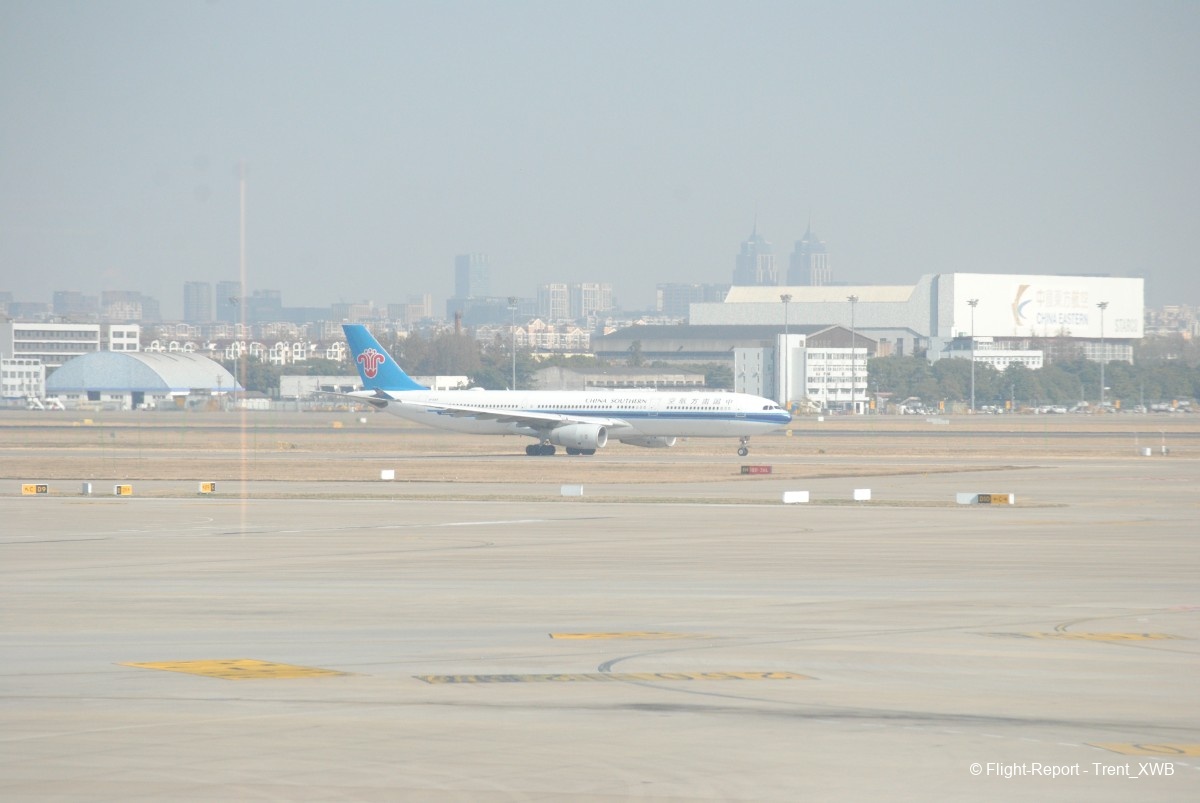
CZ RR-powered A333 (B-1065). These A333s (9 frames) have C28_Y258 layout with Stelia Solstys seats in business and uncomfortable Recaro CL3710 seats in economy. One can think that all the A330ceos of Chinese airlines are RR-powered, but it's not true as you'll see a bit further.
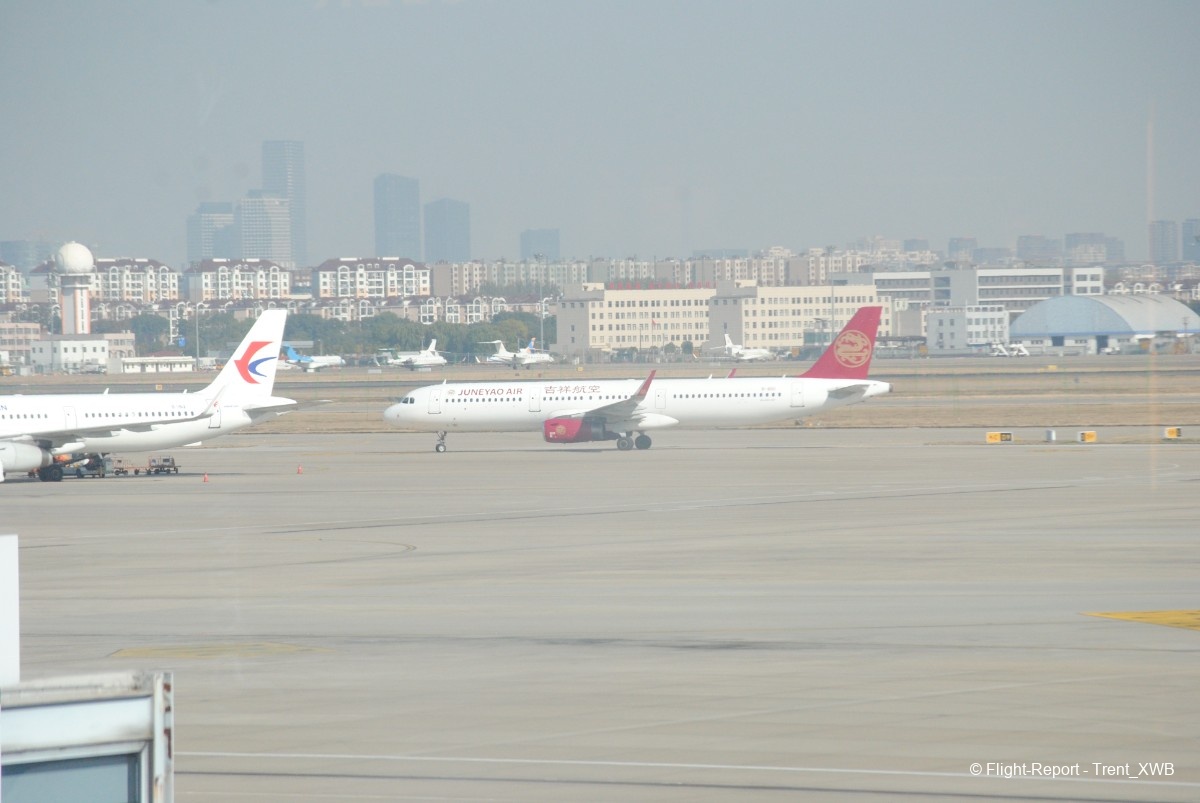
Juneyao Airlines A321SL (B-1001) in the standard livery. HO has 27 A321SL in C8_Y190 layout with Weber 7700 recliners in business and Weber 5700 seats in economy. On the backdrop one can see some private jets.
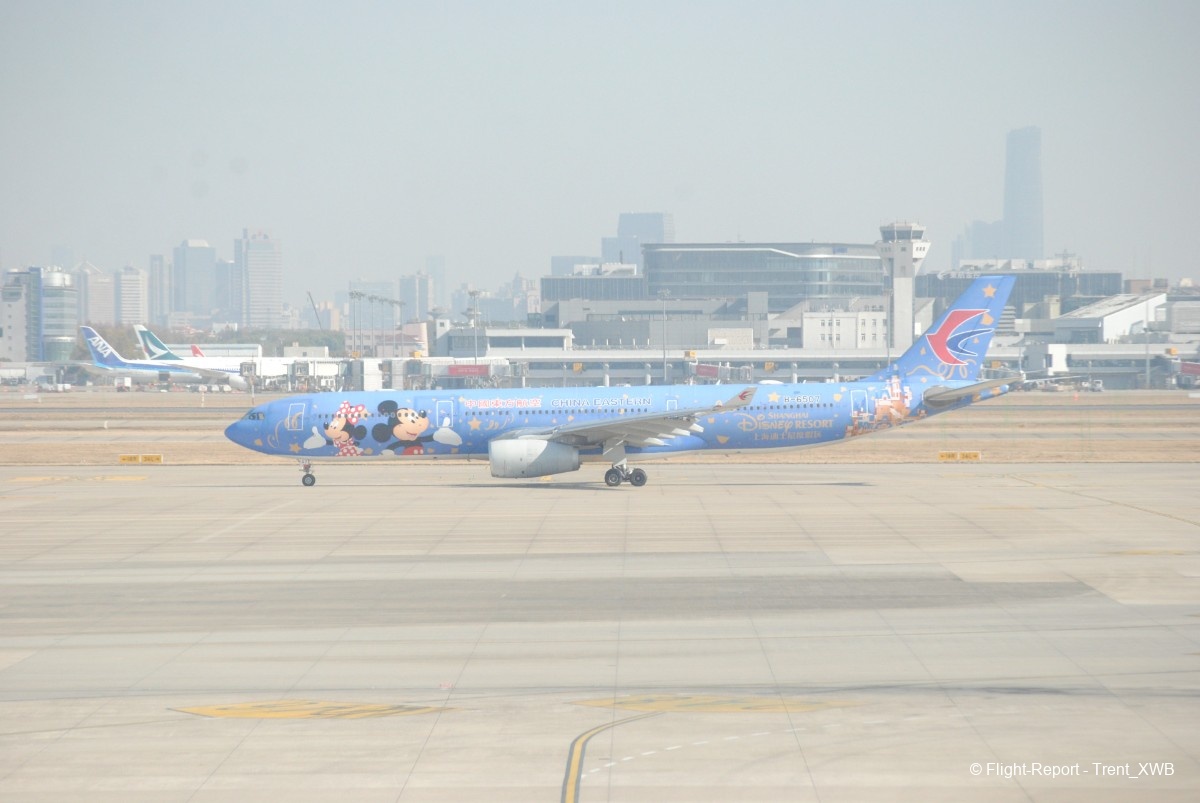
MU A333 (B-6507) in "Shanghai Disney Resort: Minnie and Mickey Mouse" livery. This A333 is one of 11 older (2007-2015-built) MU A333s with C38_Y262 layout, featuring obsolete B/E Aerospace Minipod angle-lie seats in business and comfortable Weber 5751 seats in economy. MU also have 15 newer (2017-2018-built) A333s with C32_Y+32_Y230 layout, featuring Thompson Aero Vantage XL seats in business and comfortable Safran Z300 seats in "economy+" and economy. On the backdrop one can see T2 (international) with tails of NH (3-class RR-powered B78X from HND) and CX (A333 from HKG).
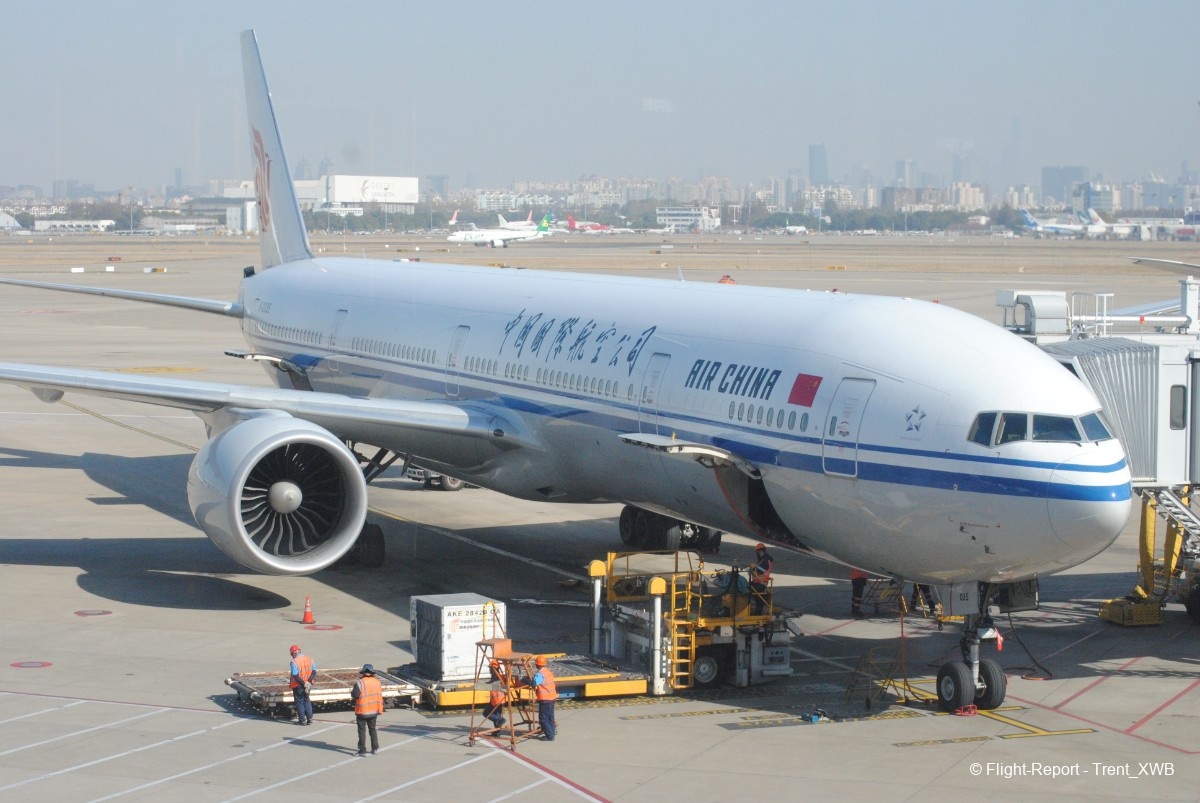
CA's 3-class B77W (B-2035). CA has 20 2012-2014-built 3-class B77Ws (B-20XX regs) in F8_C42_Y261 layout, featuring the same Zodiac Aerospace Venus suites in first class and Collins Parallel Diamond seats in business as CA B748s (the difference is that F and C cabins of these B77Ws are smaller than the B748s' ones). What makes these B77Ws outstanding is their 3-3-3 economy layout with very comfortable Weber 5751 seats (of early production years); thus these 3-class B77Ws are the most comfortable CA widebodies for long-haul flying in economy. Worth noting that CA also have 8 2016-2018-built 2-class high-density B77W in C36_Y356 layout, featuring Collins Parallel Diamond seats in business and Collins Pinnacle seats in 3-4-3 layout in economy (though, the comfortable seats offset some drawbacks of the laterally dense layout).
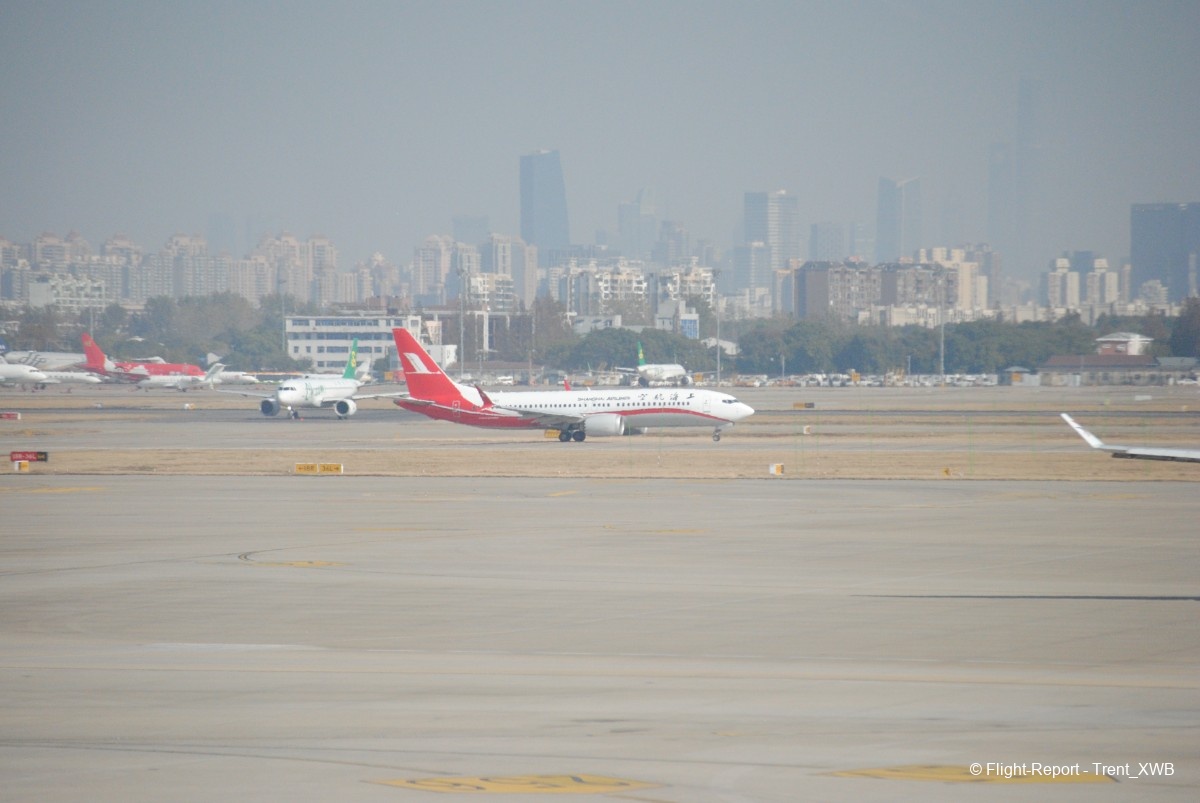
Shanghai Airlines B7M8 taking off. FM has 17 B7M8s in C8_Y168 layout.
MU A21N (B-32NK). MU has 31 2024-2026-built A21Ns in C12_Y186 layout. On the backdrop one can see a MU A333 arriving to T2, T2 with NH B78X and CX A333 tails and JL B77W, departing from T2 for HND.
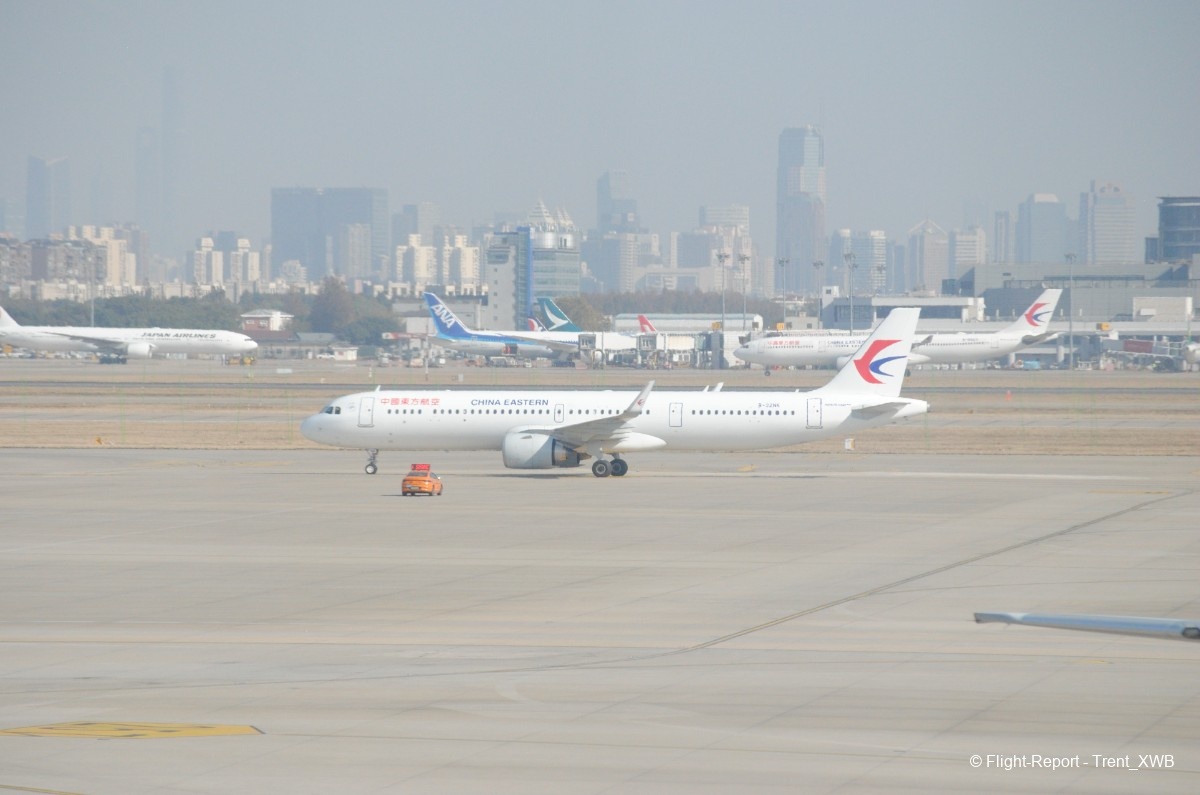
MU B737 (B-5815) taking off. MU has 36 2009-2015-built B737 (which means that most of them have Sky Interior!) in C8_Y126 layout.
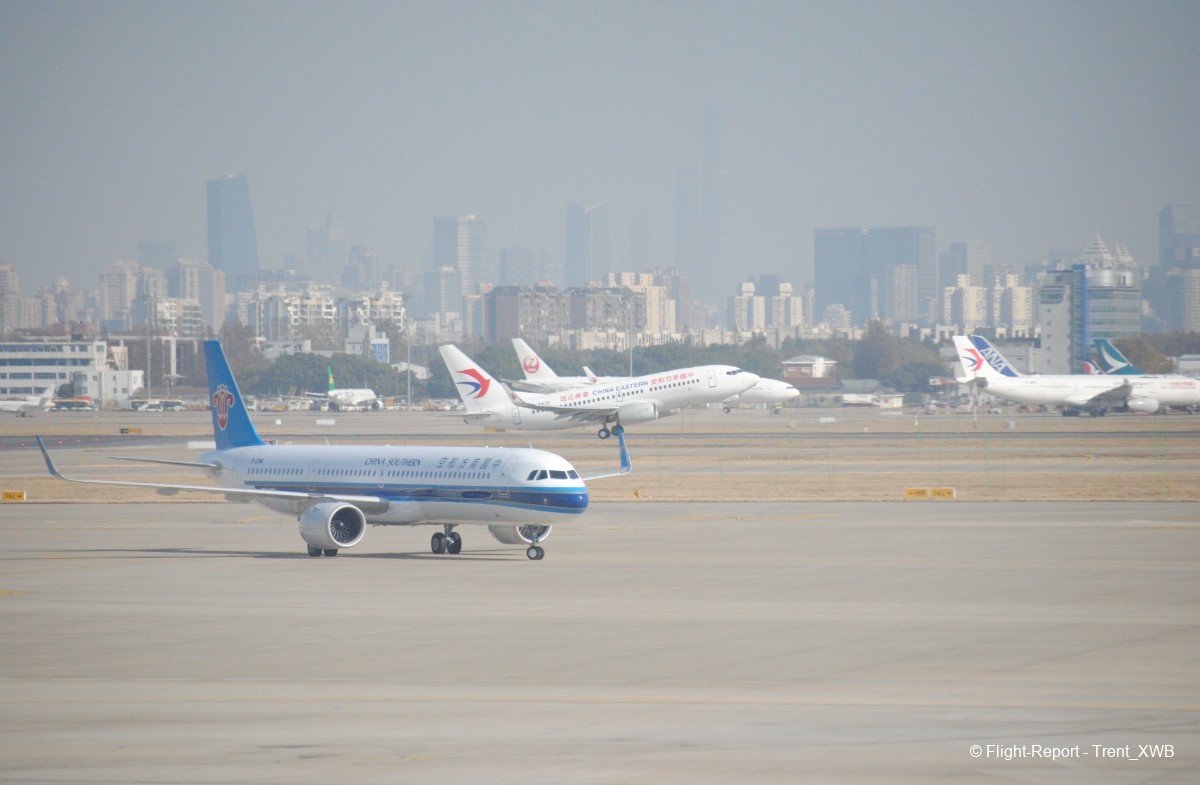
CZ A21N (B-32MA). CZ has 68 2020-2026-built A21Ns with ACF door config in C12_Y188 layout. Also CZ has 28 2018-2019-built A21Ns with the old (pre-ACF) door confing in C4_Y191 layout. On the backdrop are JL B77W (JA741J), departing from T2 for HND and MU and CX A333s near T2.
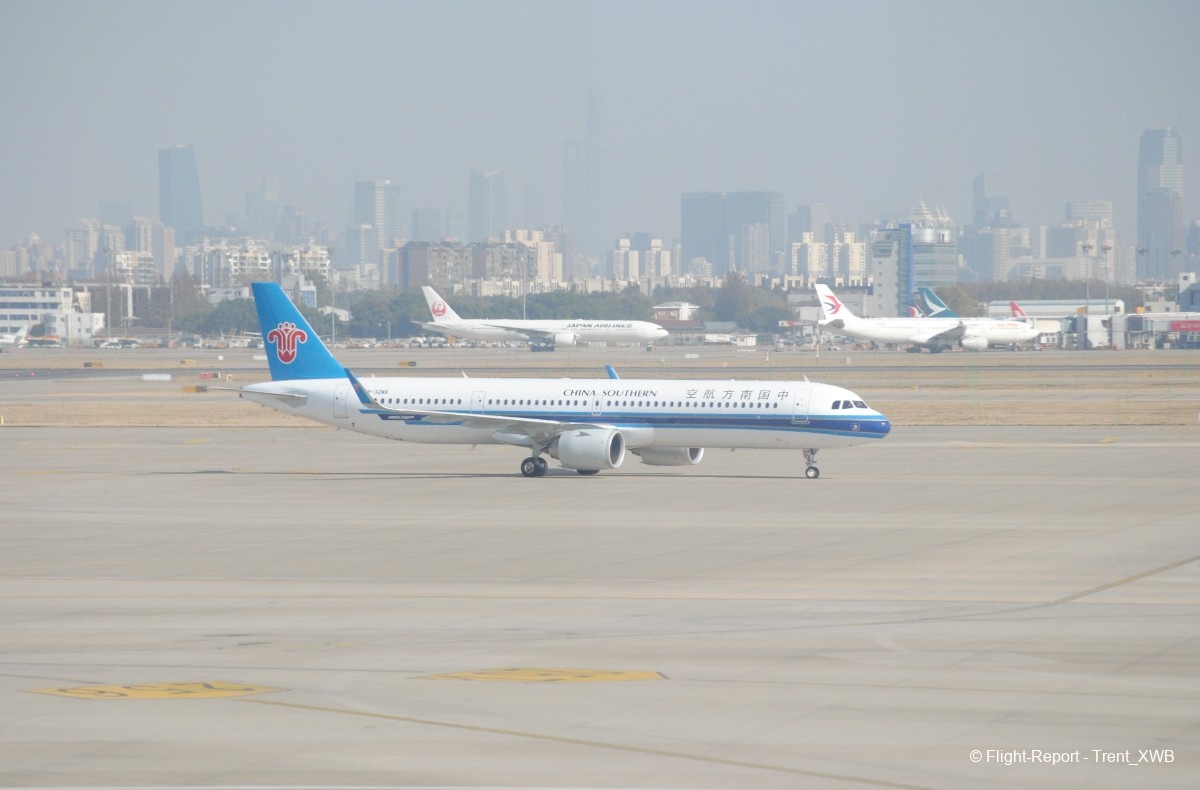
MU A319SL (B-6458) in "Magnificent Qinghai" livery. MU has 30 2012-2016-built A319s (with only 3 of them without sharklets) in C8_Y114 layout with Recaro 4400 recliners in business and Recaro 3510 seats in economy. One can also see CA B748 (B-2487), having just landed from PEK - this was my Jumbo.
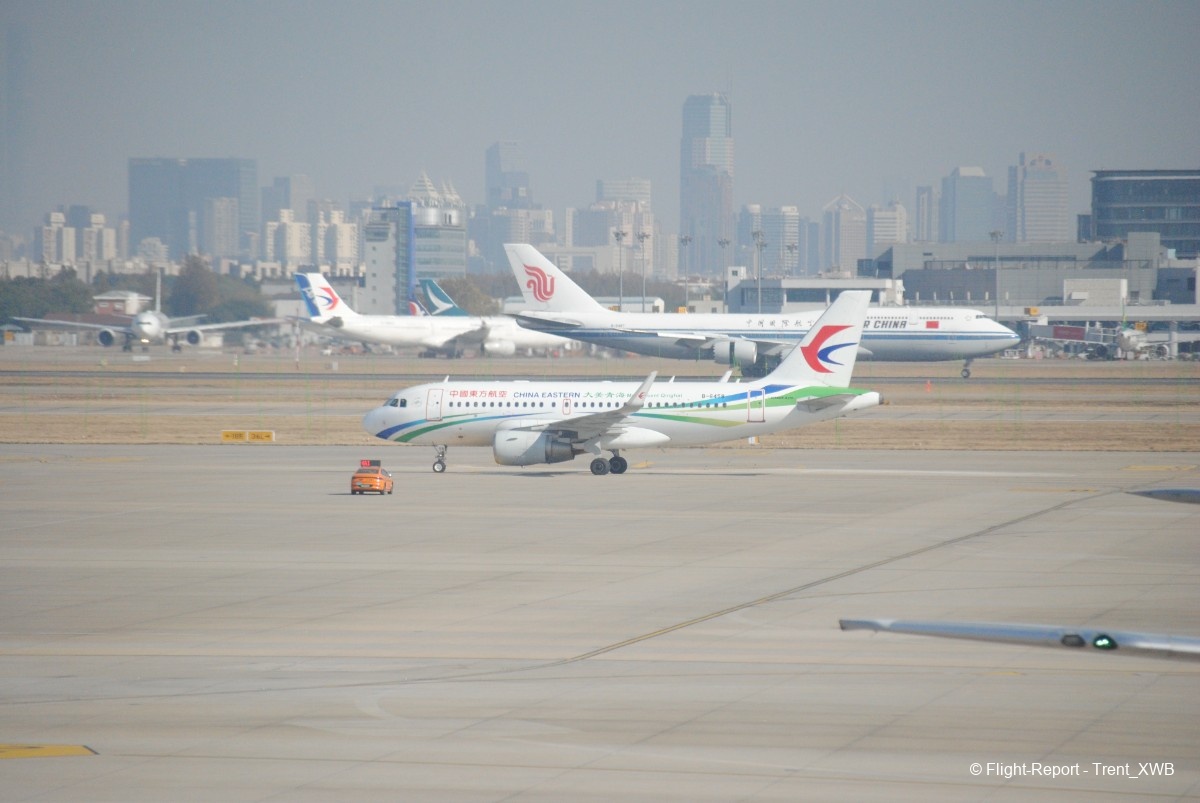
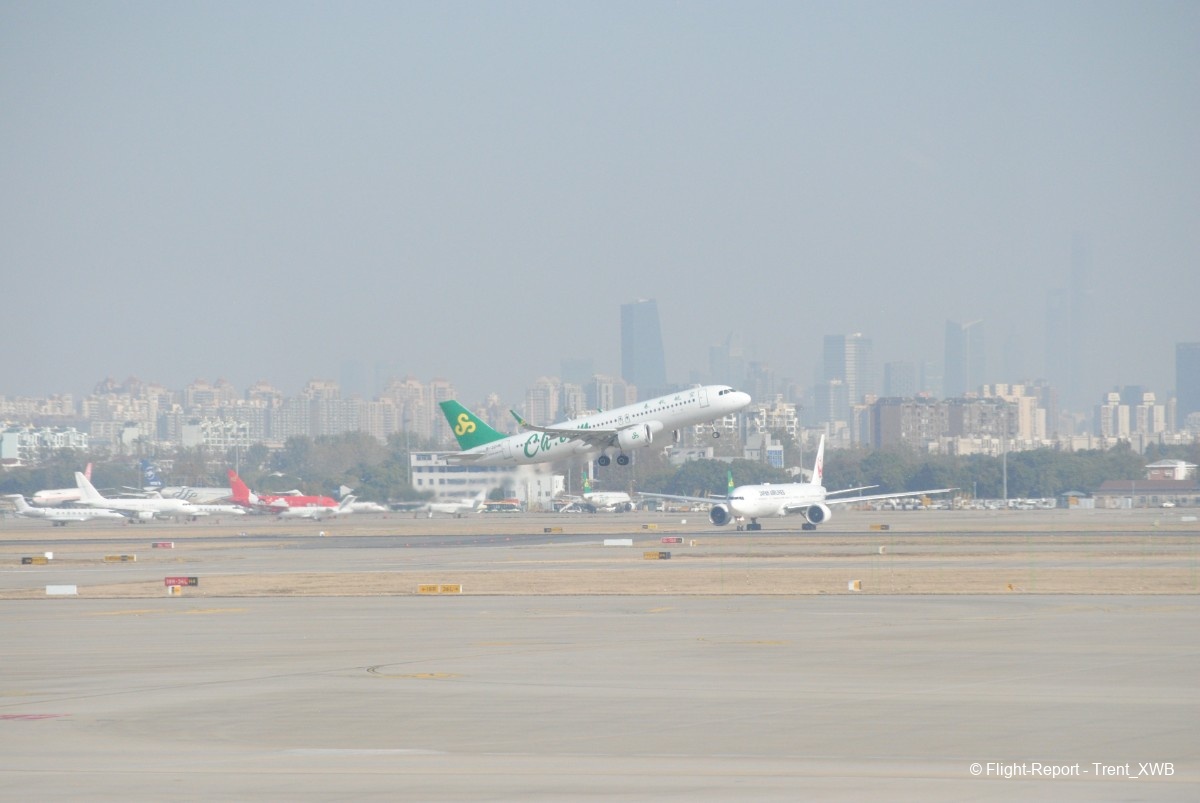
Spring Airlines A20N (B-32HK) taking off. 9H operates narrowbody-only fleet, consisting of of 12 A21Ns, 51 A20Ns and 74 A320s. 9H's livery is one of the strangest for non-Chinese people, as it doesn't have the airline's name in English, only the name of its website. On the backdrop is JL B77W (JA741J) departing for HND, a 9H A21N, 2 unidentified A319 (with one of them having beautiful red livery), some private jets and 2 A332s (with one of them being a MU's one in Skyteam livery).
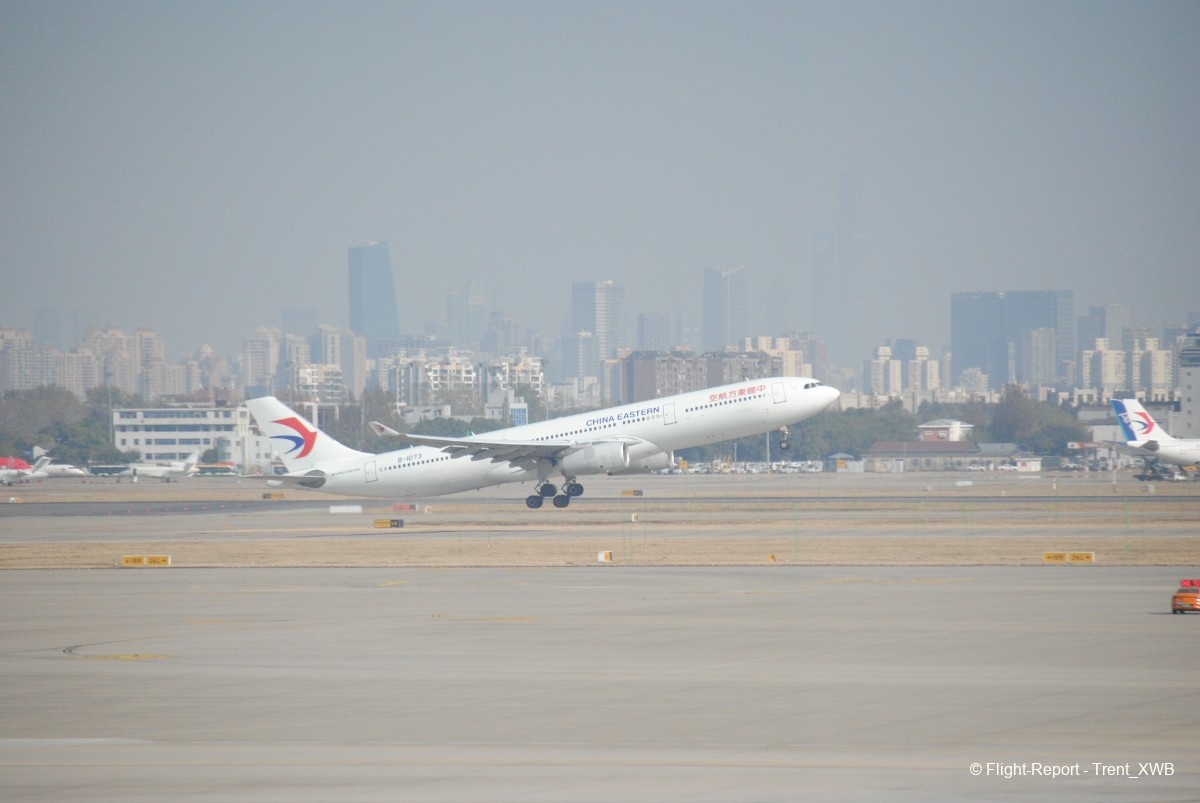
MU A333 (B-1073) taking off. It's one of newer MU A333s with C32_Y+32_Y230 layout, featuring Thompson Aero Vantage XL seats in business and comfortable Safran Z300 seats in "economy+" and economy. MU's standard livery is one of the blandest in the world but thankfully MU has a number of beautiful special liveries which make their aircrafts look much more interesting.
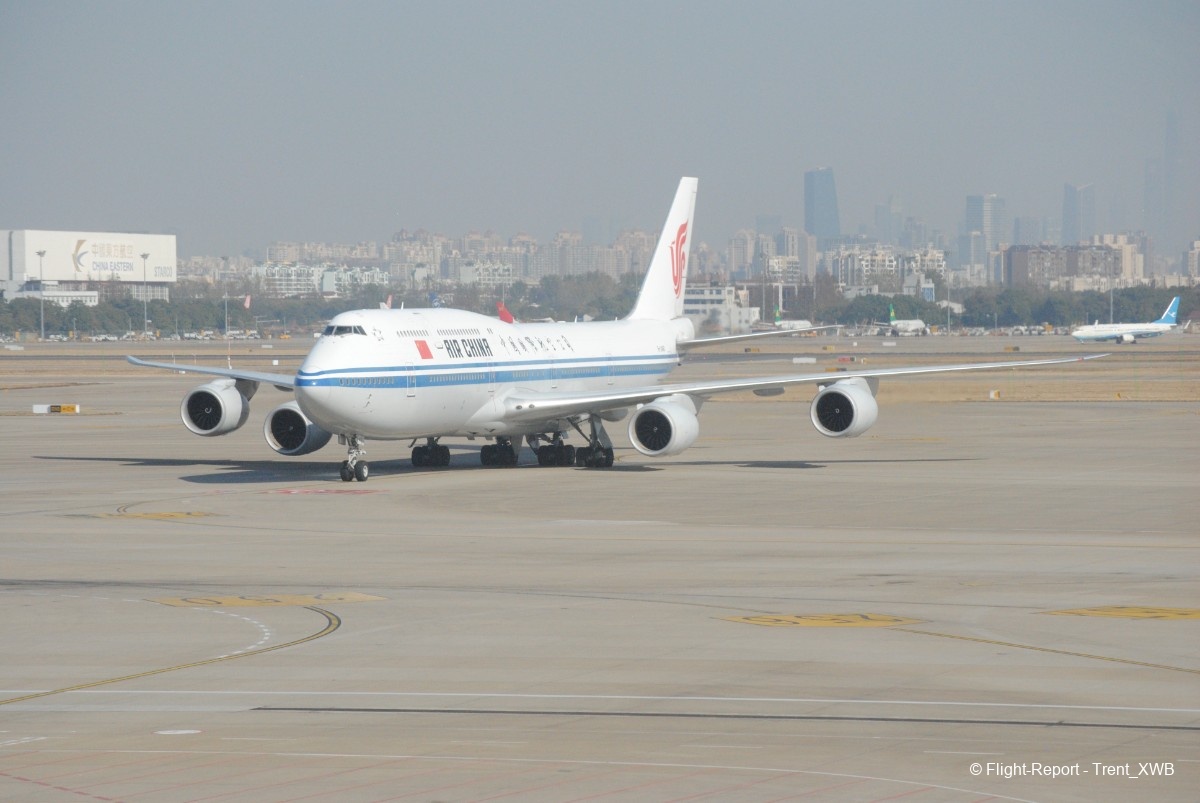
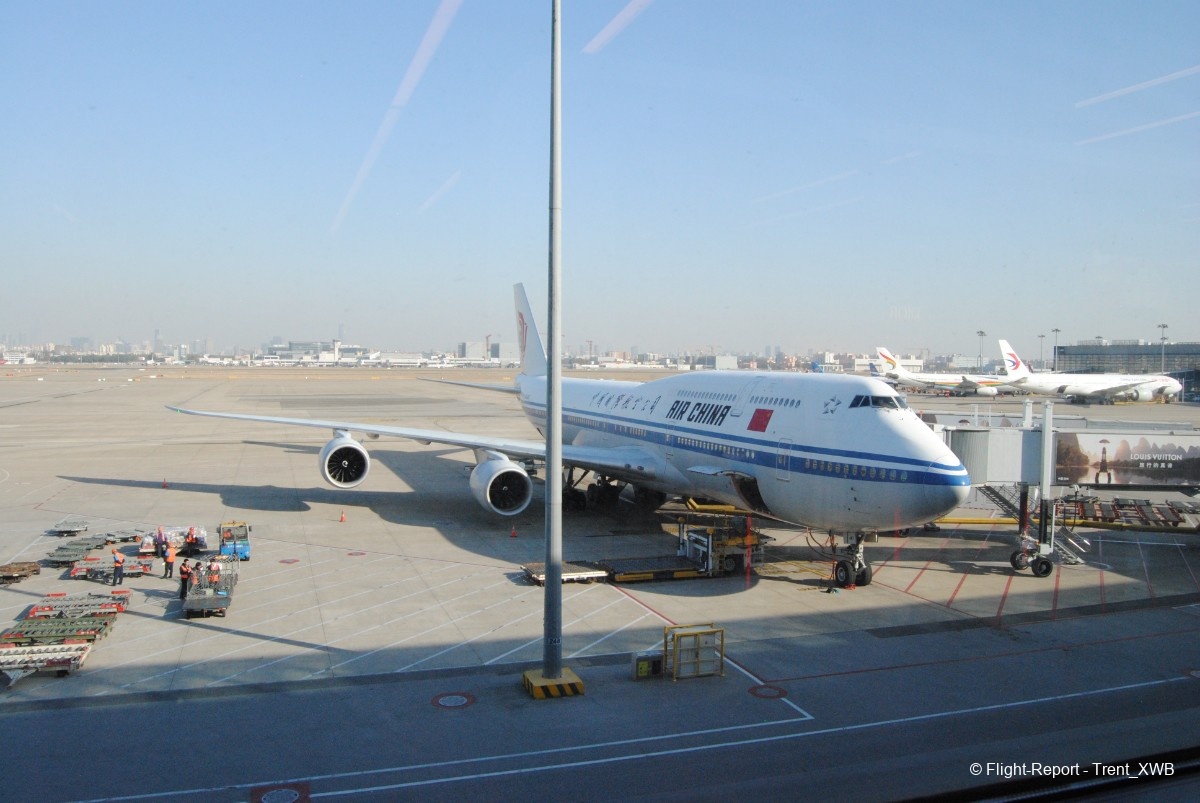
The Jumbo of today - B-2487 - appeared while taxiing to T1. I purposedly occupied a spot near gate 50 to be able to have the views from the best angle.
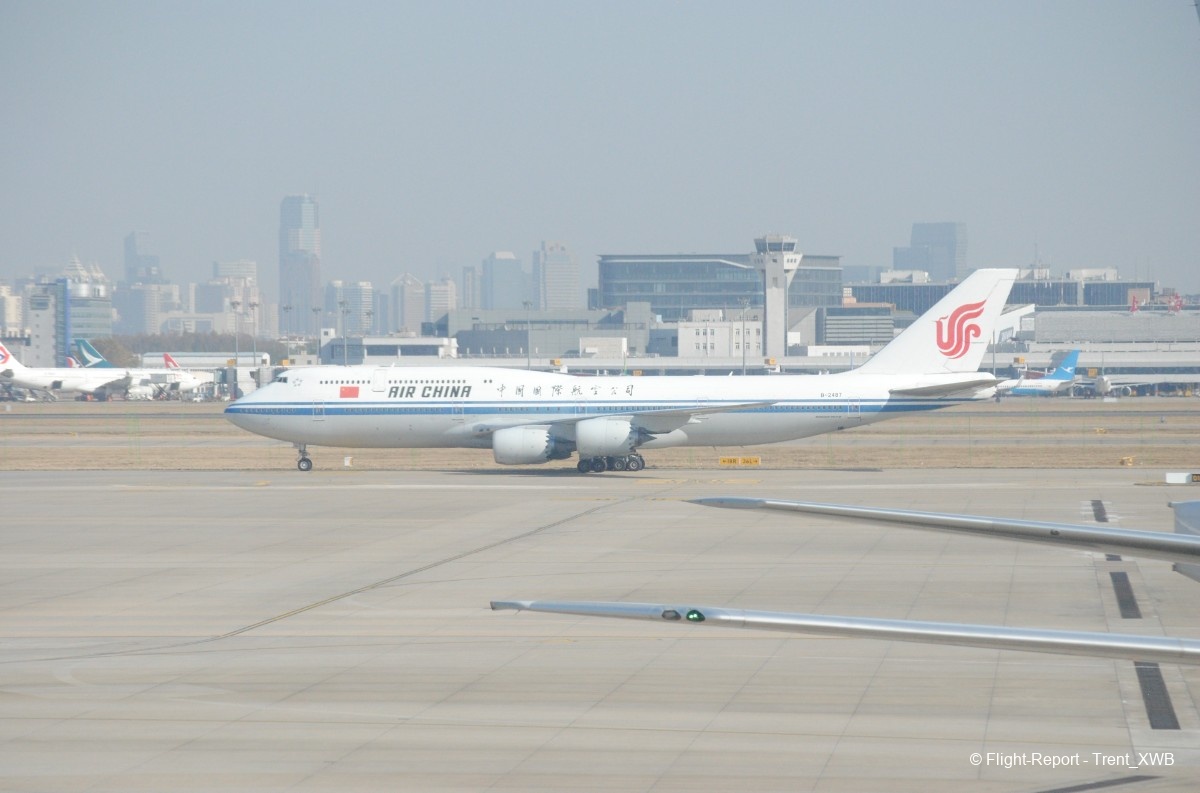
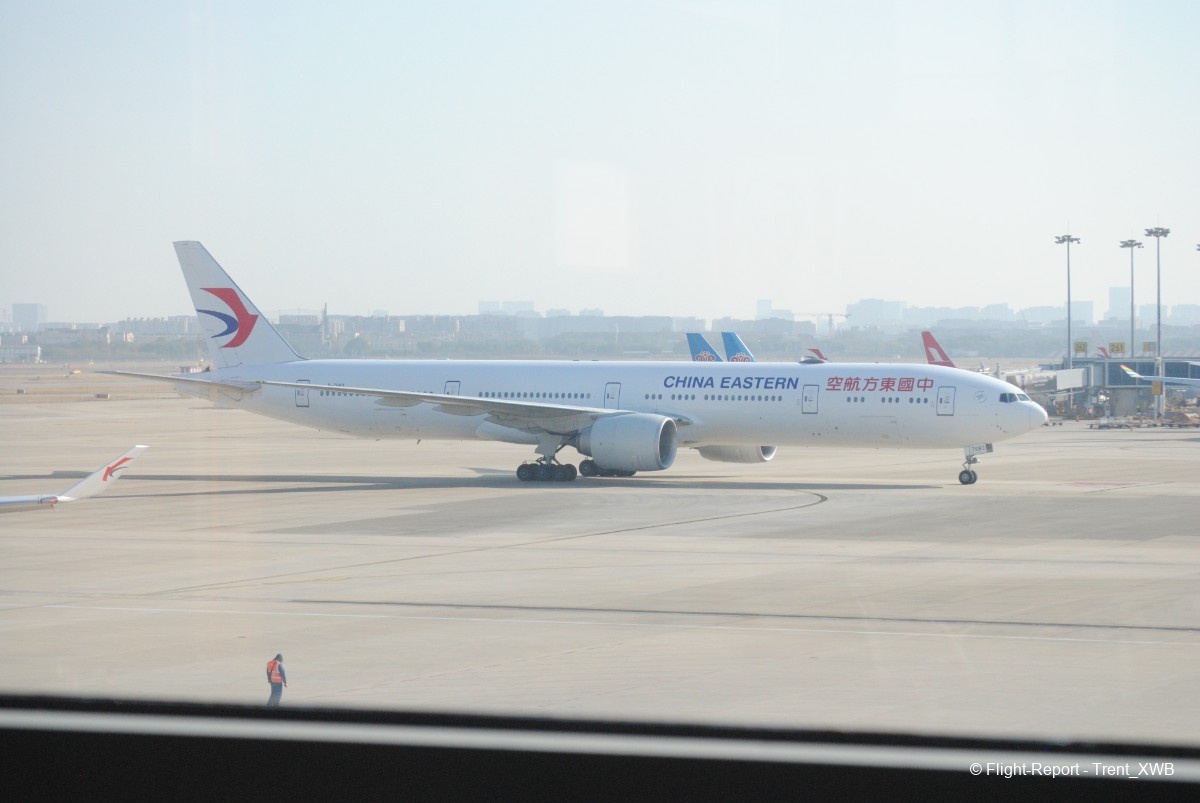
Magnificent views of the B748, taxiing to the very centre of T1 (gate 48). On the backdrop one can see a Xiamen Airlines B738. MF, based in XMN, is an airline relatively little-known outside of China, operating 6 B789s, 4 B788s, 17 A21Ns, 4 A20Ns, 28 B7M8s, 111 B738s and 4 B737s. The thing about MF is that it's the third of 3 Chinese airlines with first class (after CA and MU), and the MF's aircraft type, having first is B788, not B789! MF's B788s with F4_C18_Y215 layout, featuring Apollo suites (which are not really suites by today's standards) in first (reminding the old "Imperial" first class of now-long-defunct Russian airline Transaero), Zodiac Aura Lite seats in business and comfortable Weber 5751 seats in economy, are the only B788s with F in the world (needless to say that F is a rarity even on larger Dreamliners, as only BA has F in B78Xs and only EY and BA have F in B789s). At the same time MF B789s, having C30_Y257 layout with Collins Super Diamond seats in business, are rather ordinary ones.
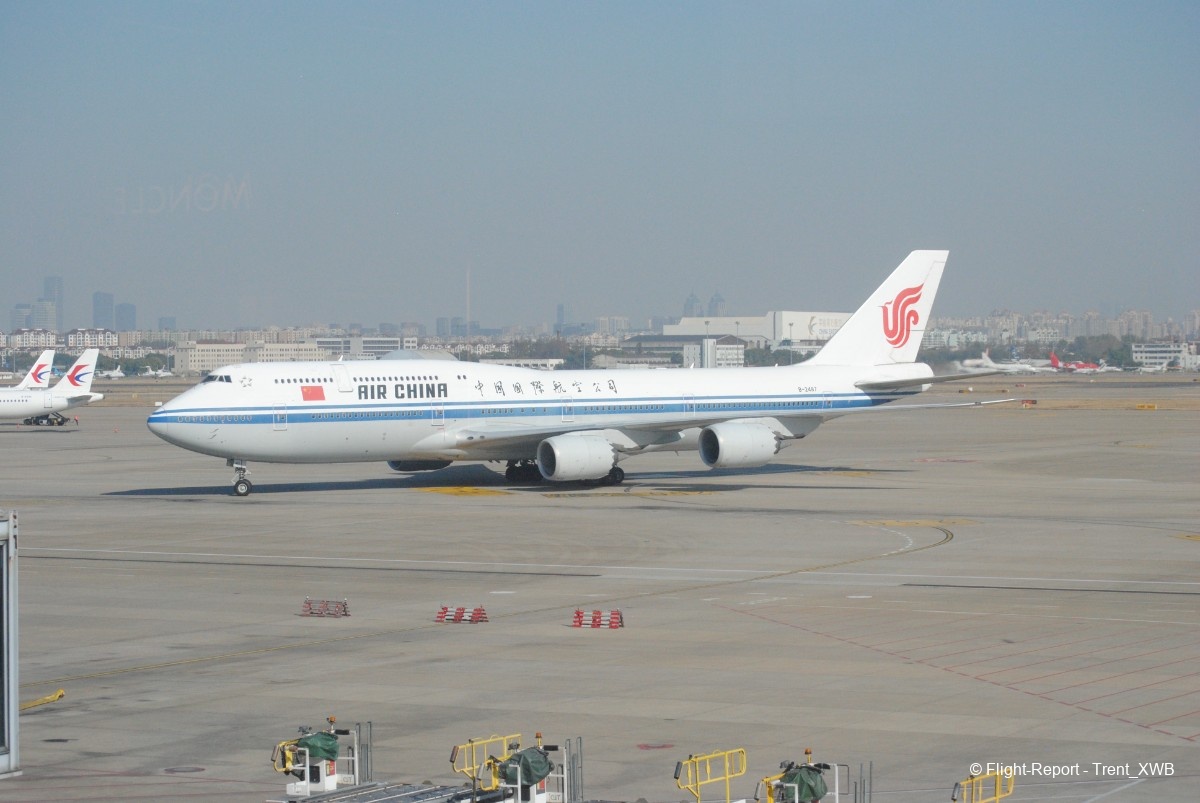
CZ A333 (B-8360), departing from T1. Looking at the numerous RR-powered A333s and A332s of various Chinese carriers, one can think that all the Chinese-registered A330ceos are RR-powered. This photo proves this wrong: CZ has 16 2013-2017-built PW-powered A333s in C30_Y253 layout with Zodiac/Safran Aura Lite seats in business and comfortable Weber 5751 seats in economy. PW-powered A330ceos are quite rare birds in the world, but in East and South-East Asia they are not uncommon: besides CZ, KE has 17 PW-powered A333s (6 2014-2015-built and 11 old 1999-2003-built), OZ has 14 PW-powered A333s (2005-2014-built) and MH has 13 PW-powered A333s (2011-2014-built), 3 PW-powered passenger A332s (2007-2010-built) and 3 unique factory-built PW-powered A332Fs (2011-2012). Outside of this region, only TK has 4 PW-powered A332s (2007-2008-built) and DL has 21 PW-powered A333s (2003-2007-built) and 11 PW-powered A332s (2004-2006-built).
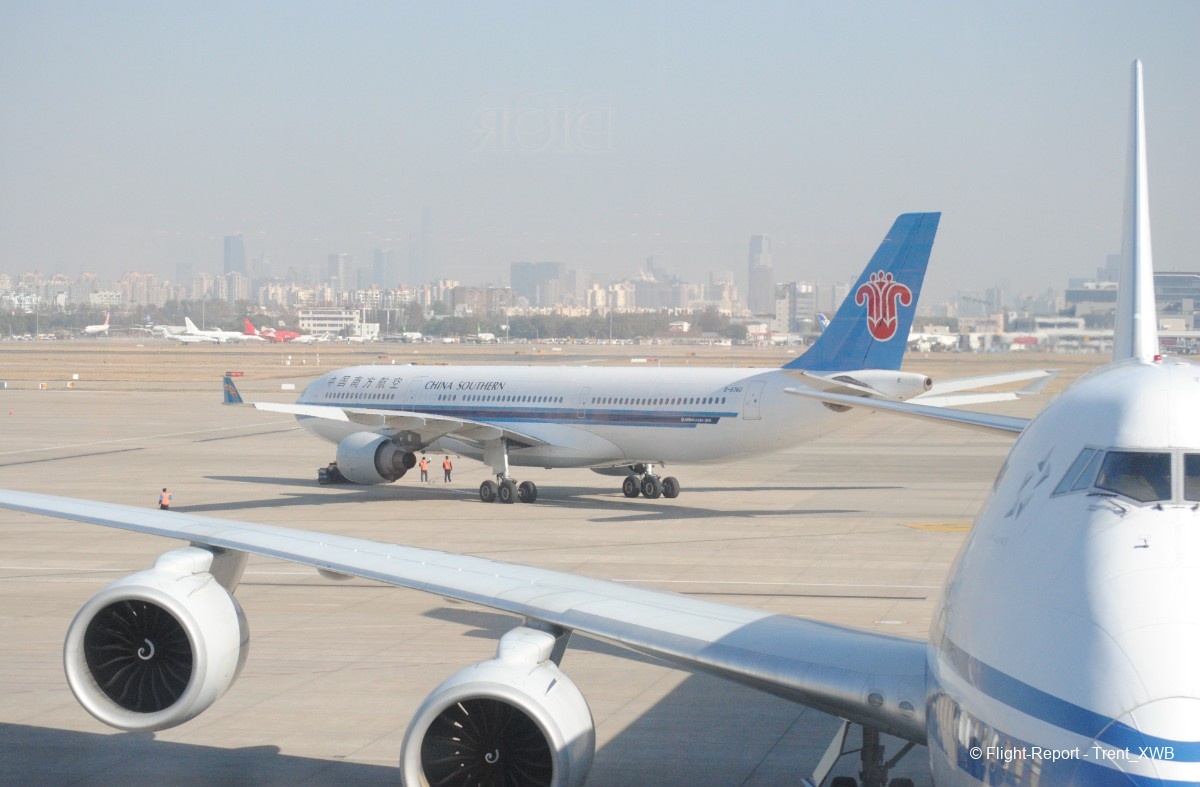
Lucky Air A333 (B-1059), departing from T1 for KMG. 8L has just 4 2017-2018-built A333s in C24_Y279 layout (there's a video on youtube from where one can see that the business class features 1-2-1 reverse herringbone seats, but the economy class cannot be clearly seen). 8L livery looks like a "copy-paste" of BA livery, but in different colors, and it led to some dispute between BA and 8L in the past.
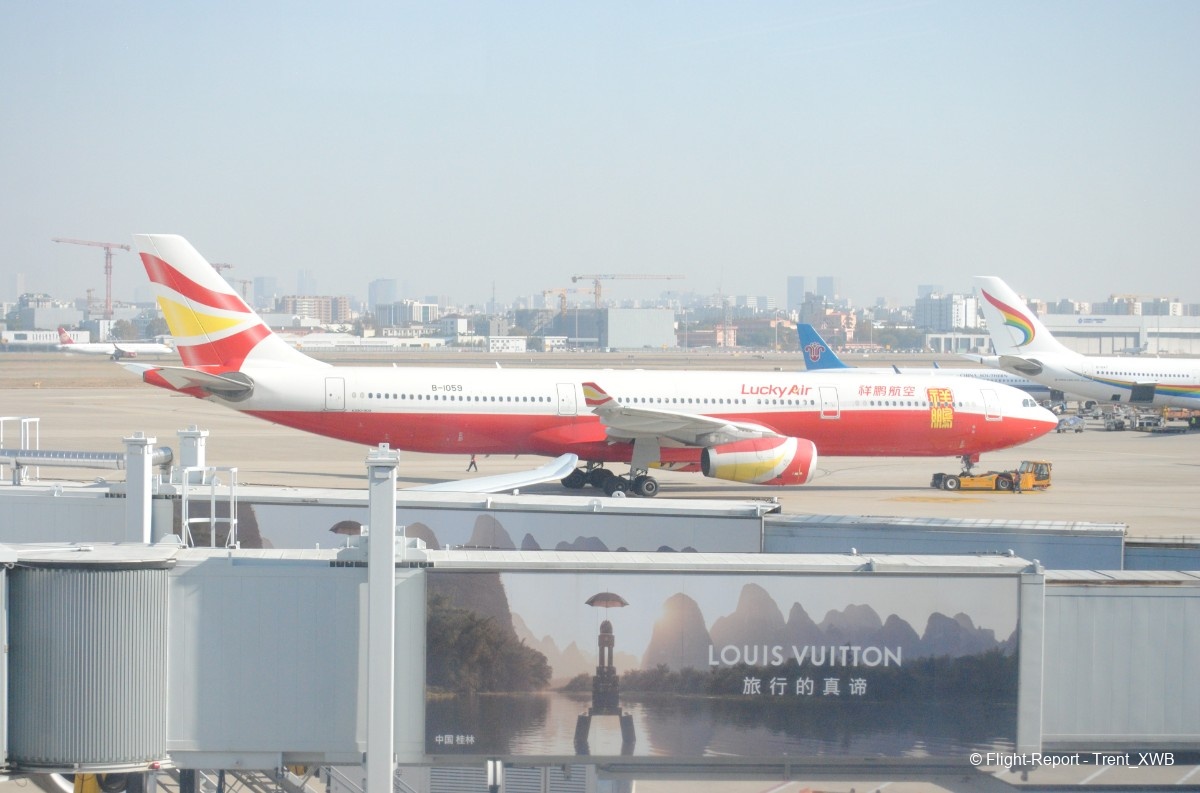
CA B789 (B-7898), departing T1 for PEK. CA has 14 2016-2018-built B789s in C30_Y+34_Y229 layout, featuring Collins Parallel Diamond seats in business (similar to the business seats in CA B748s and B77Ws) and comfortable Safran Z300 seats in "economy plus" and economy.
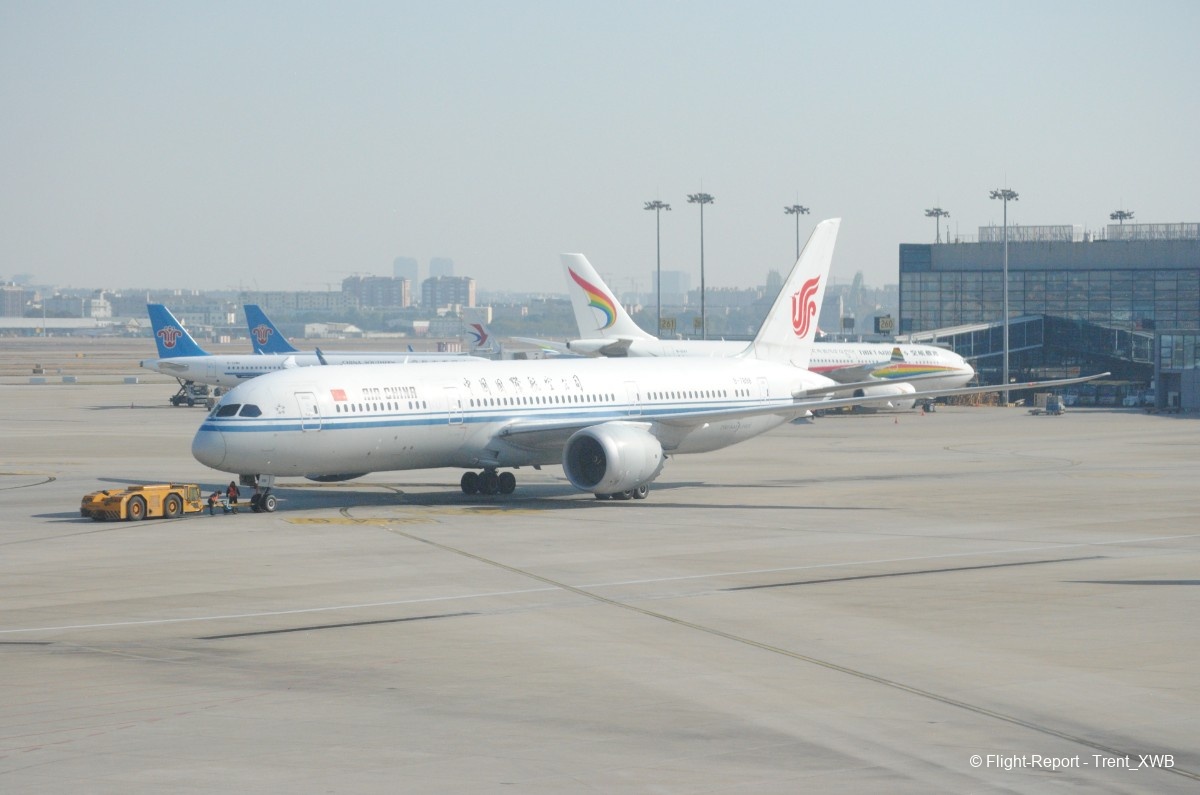
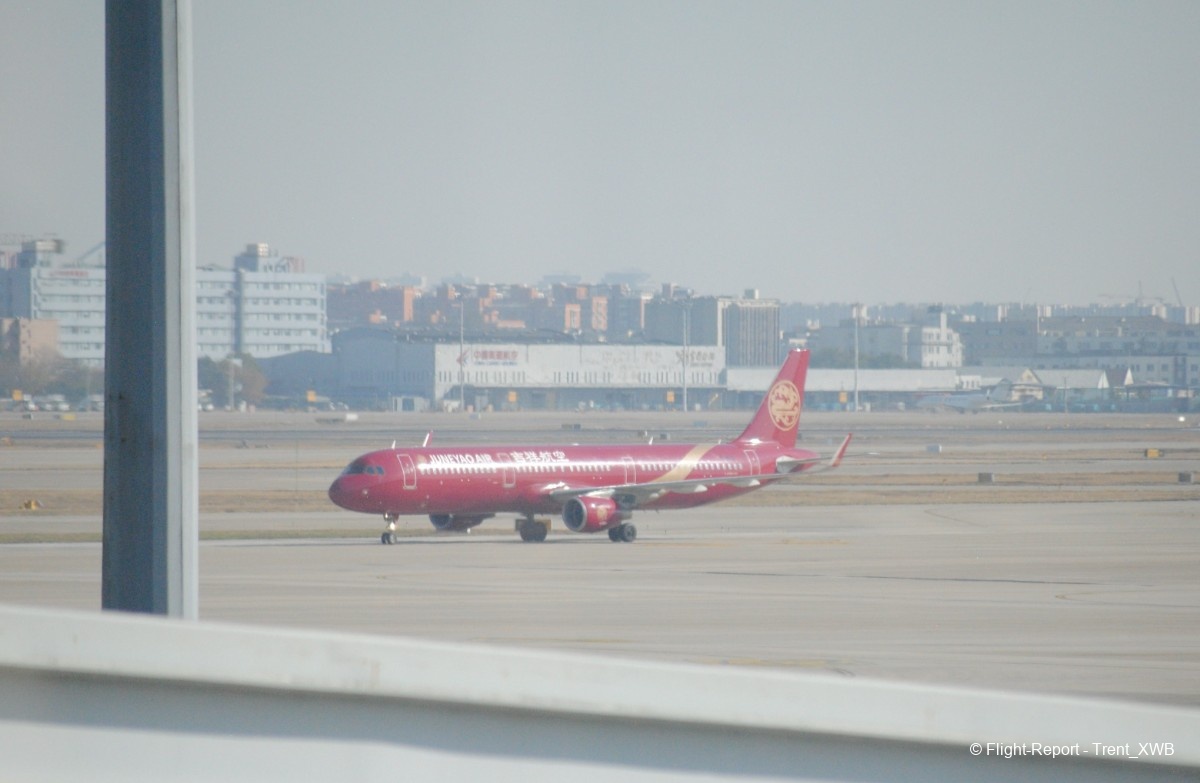
Juneyao A321SL (B-1872 or B-8317) in the beautiful "Oriental Ruby" livery.
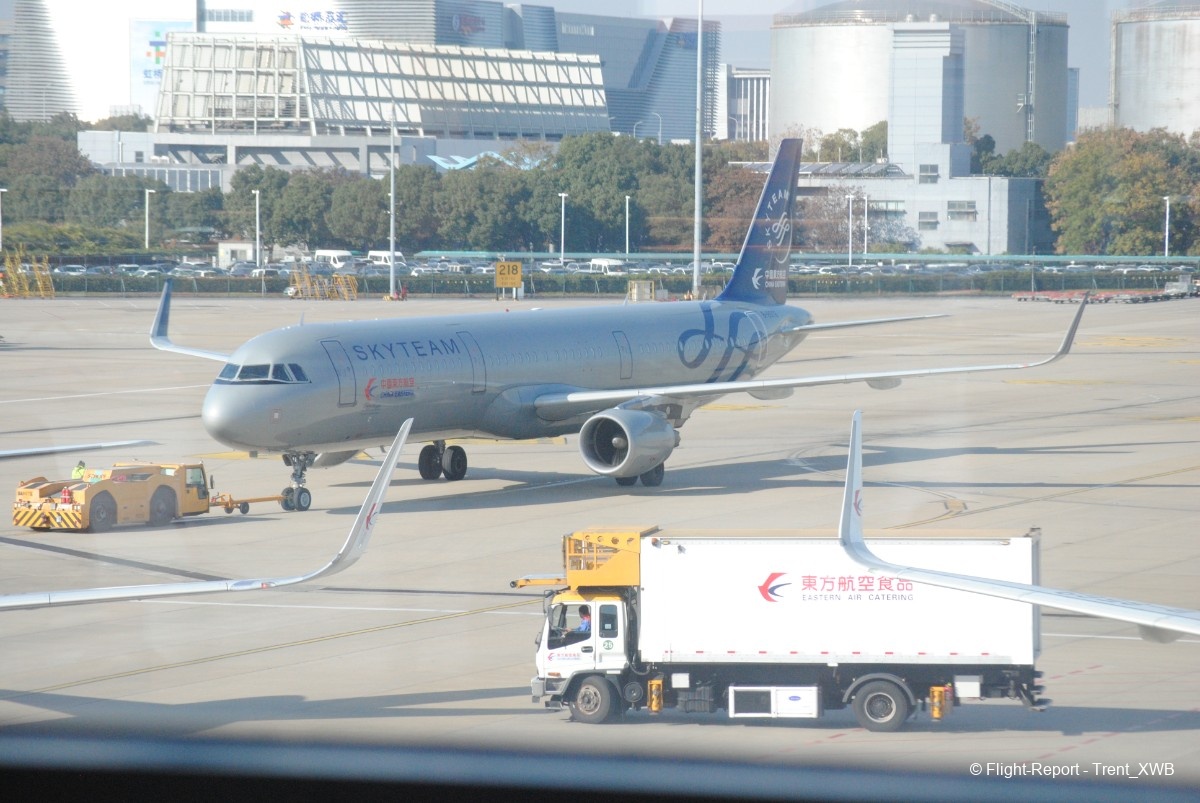
MU A321SL (B-8976) in Skyteam livery (MU has arguably the best implementation of this livery among all the member airlines). MU has 50 2013-2017-built A321SLs in C12_Y170 layout. Also MU has 21 2005-2012-built A321s without sharklets.
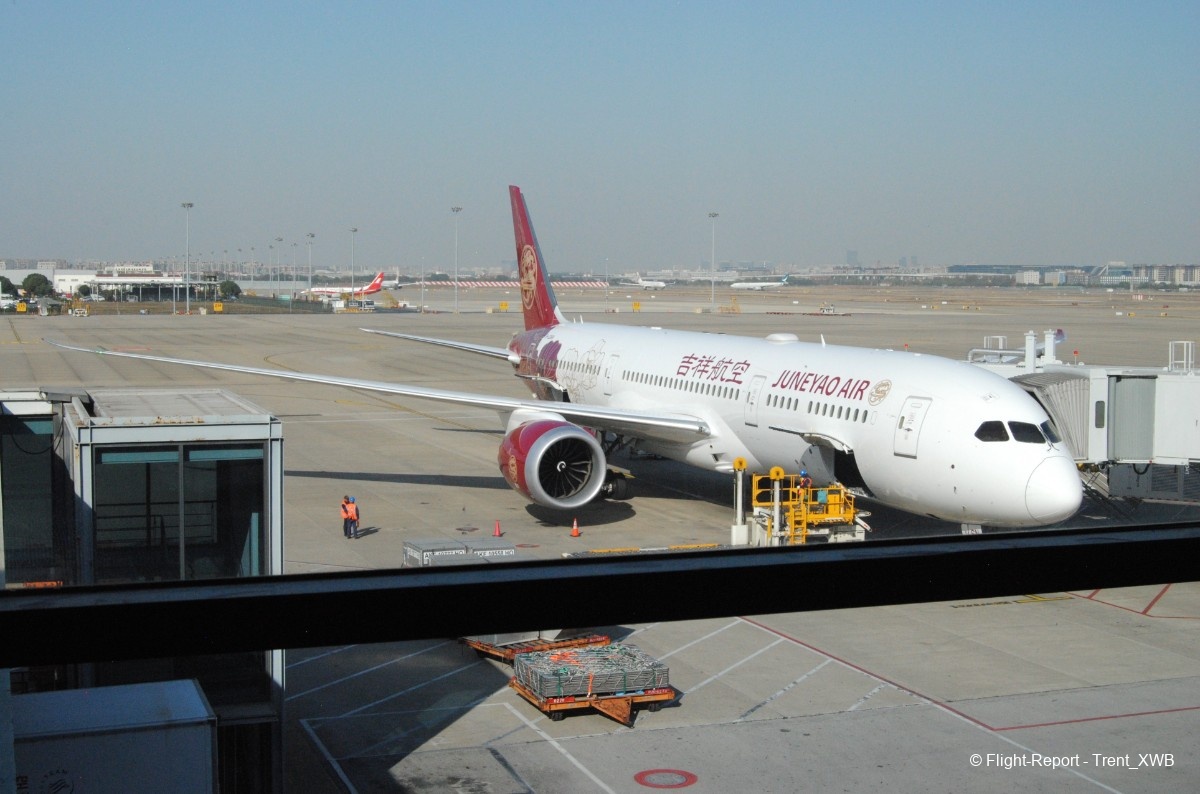
Juneyao B789 (B-226N) in "Blossoming China" livery. HO has 10 2018-2020-built B789 in C29_Y295 layout (featuring Thompson Aero Vantage XL seats in business and uncomfortable Recaro CL3710 seats in economy) with all of them having beautiful special liveries. On the backdrop one can see a FM B738.
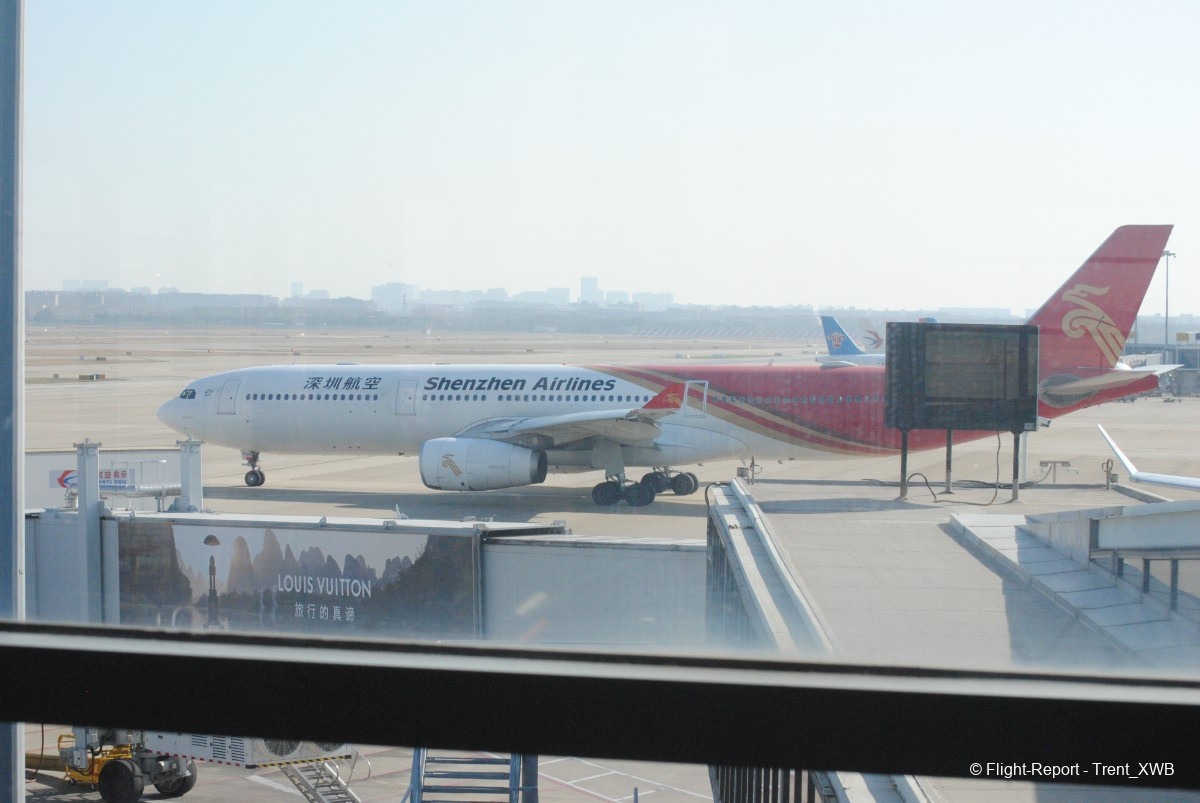
Shenzhen Airlines A333 (B-302E), departing for SZX. ZH has 6 2017-2018-built A333s in C18_Y+24_Y267 layout, featuring Collins Parallel Diamond seats in 2-2-2 in business class and comfortable Collins Pinnacle seats in "economy plus" and economy.
MU's second-youngest B77W (B-7883), arriving to T1. MU has 20 2014-2017-built B77Ws in 3-class F6_C52_Y258 layout, featuring by far the best first class suites in China (and also very competitive by the current world's standards), large business cabin with 1-2-1 Safran Cirrus II reverse herringbone seats (far from cutting-edge) and Safran Z300 seats in 3-4-3 layout in economy (comfortable seats offset some drawbacks of the laterally densified layout). In March 2024 I flew MU's second-oldest B77W on long-haul PVG-AKL flight in economy, and it was very pleasant flight due to the comfortable seat model and high level of service and of the crew hospitality. Since early December 2025 MU launched additional frequency to AKL (also on B77Ws) 2 times/week, continuing to EZE, thus making it the world's longest 1-stop direct flight (MU plans to increase its frequency to 4 times/week).
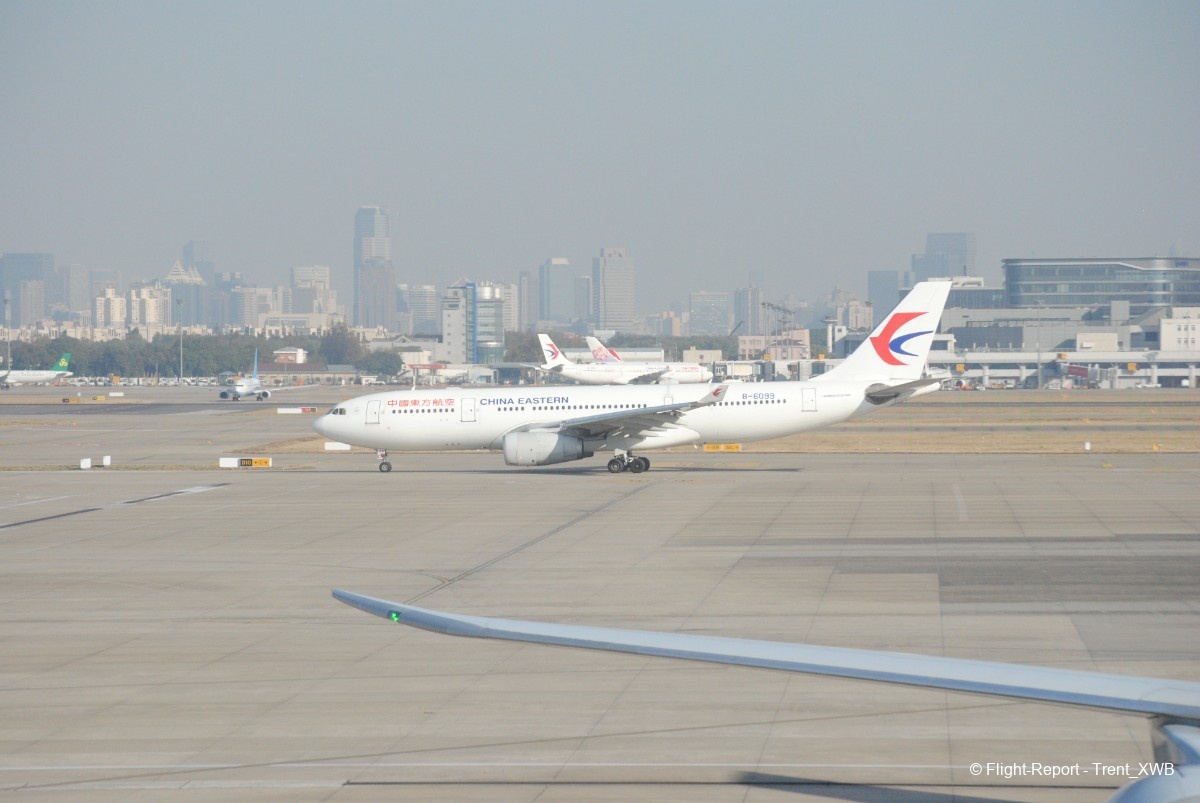
MU A332 (B-6099) - the second-oldest A332 in MU's fleet. It has C24_Y236 layout with obsolete B/E Aerospace Minipod angle-lie seats in business in 2-2-2 layout and comfortable Weber 5751 seats in economy. MU is the only big Chinese airline that guarantees comfortable economy seats throughout all the widebody fleet, as in Y their B77Ws have Safran Z300, A359s and B789s have Collins Pinnacle, A333s have Safran Z300 and Weber 5751 and A332s have Weber 5751 seats. On the backdrop one can see T2 with a MU A333 and a CI A333 (from TSA) as an illustration of the ties between mainland China and Taiwan despite the political rhetoric.
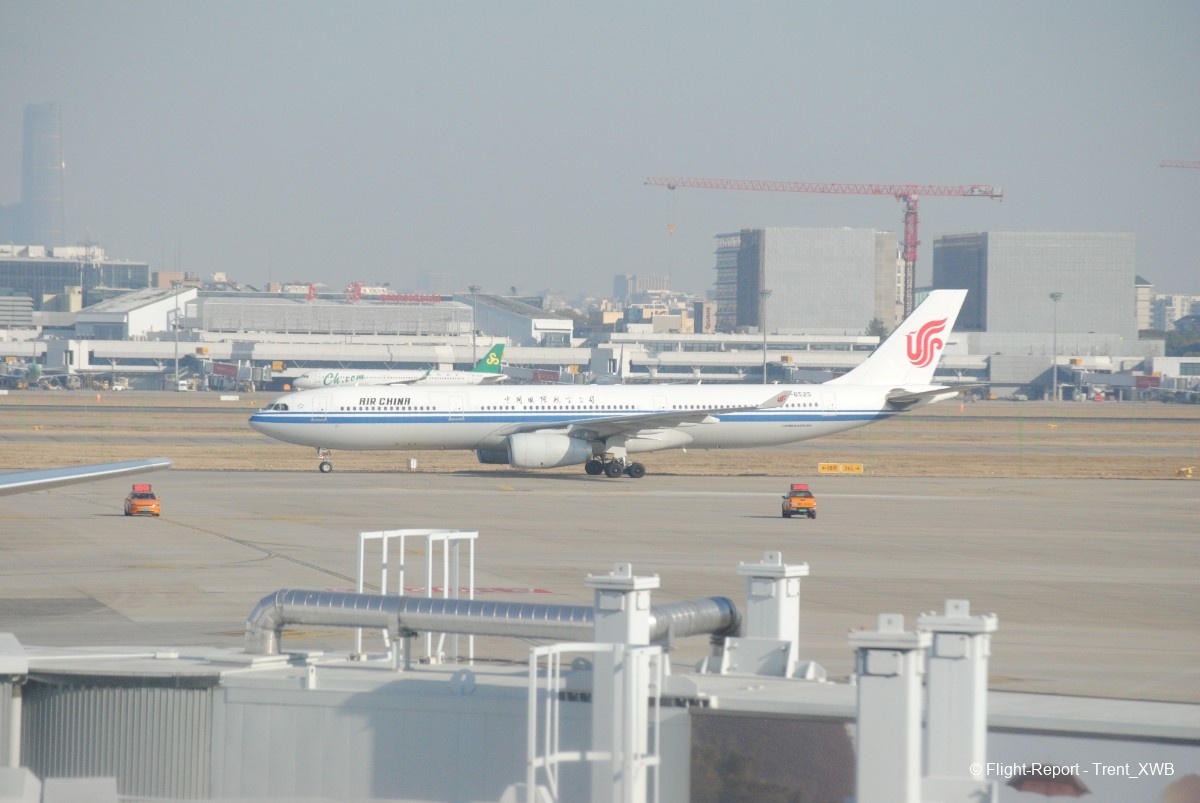
CA A333 (B-6525) - one of the CA's oldest A333, having C36_Y+20_Y255 layout with obsolete Recaro CL6510 recliners in business (2-2-2 layout) and obsolete subpar Sicma Airgonomics seats in "economy plus" and economy. This is one of the worst layouts of CA A333s, but, at least, 2011-built CA A333s seemingly have IFE and headrests throughout the entire economy class, whereas 2010-built ones seemingly don't have IFE and headrests in regular economy (they are present only in "economy plus"), making the cabin especially unpleasant. One may have noticed that this aircraft doesn't have PRC flag on the fuselage which means it's allowed to serve flights to Taiwan. Though, CA can occasionaly put these older A333s on some longer intra-Asian flights like PEK-SIN (6 hours). On the backdrop one can see T2 and A21N of Spring Airlines.
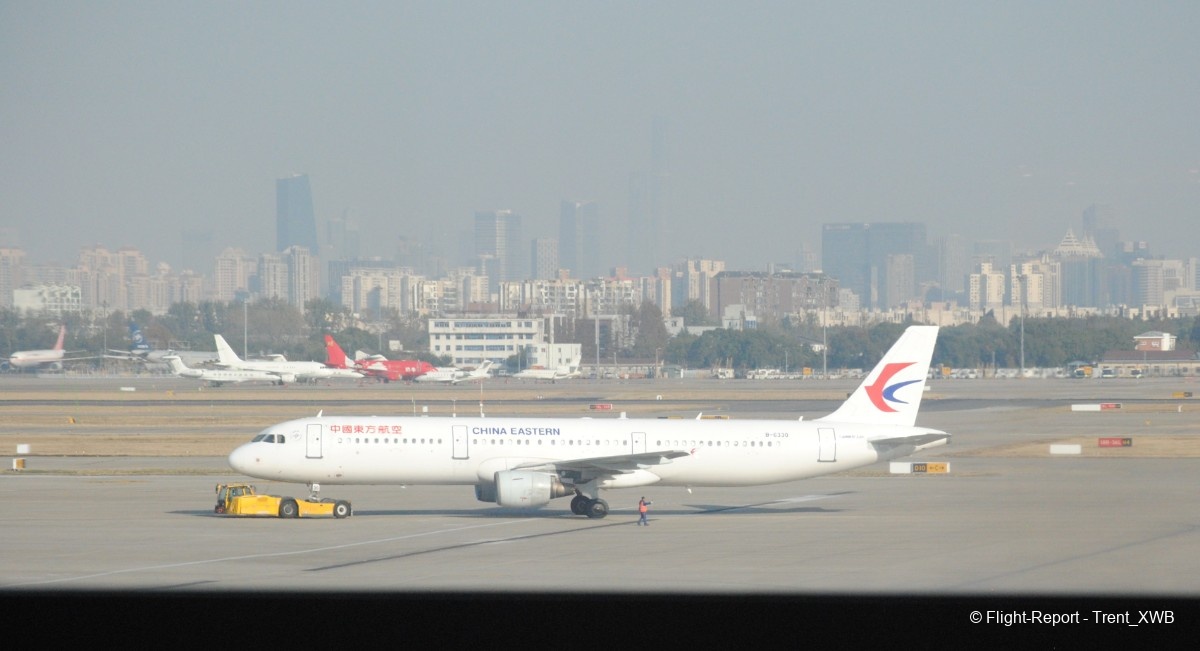
2007-built MU A321 (B-6330) in C20_Y155 layout with relatively large business.
The Aircraft
My flight CA1558 SHA-PEK was operated by 2014-built B748 (B-2487) - CA's second-oldest B748. In November 2025 3 CA B748s were active, all 2014-built: B-2485, B-2486, B-2487, whereas 2015-built ones - B-2482 and 2480 - were parked. Symbolically, CA's 3 first B77Ws, delivered in 2012, have B-2085, B-2086 and B-2087 regs. In Mandarin 8 means auspiciousness and happiness, 5 means "me", 6 means "smooth", 7 means "even" and thus numbers 85, 86 and 87 can be considered as good ones.
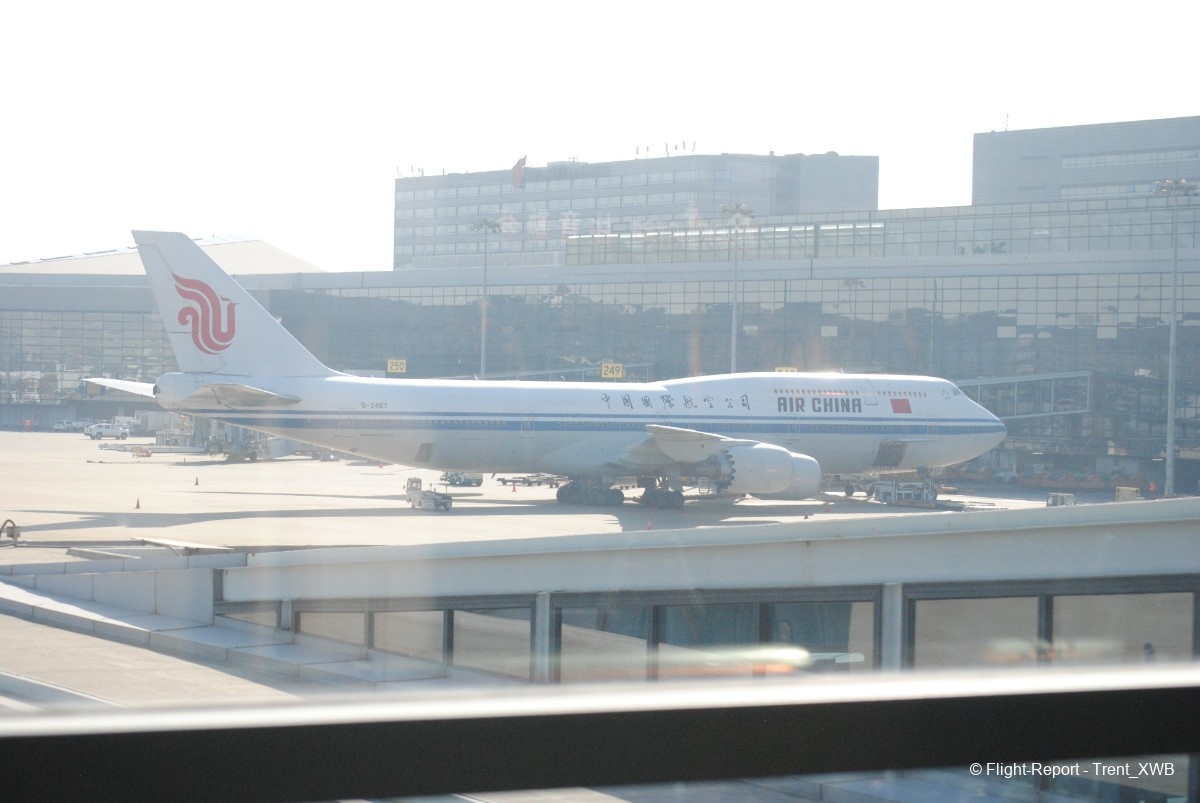
The configuration of T1's piers gave a possibility to see the Jumbo, parked at gate 48 in the very center of T1, from various angles.
Lateral views of the world's longest passengers aircraft (which will soon cede this title to the marginally longer B779 - if and when the latter will be eventually certified!) are truly impressive.
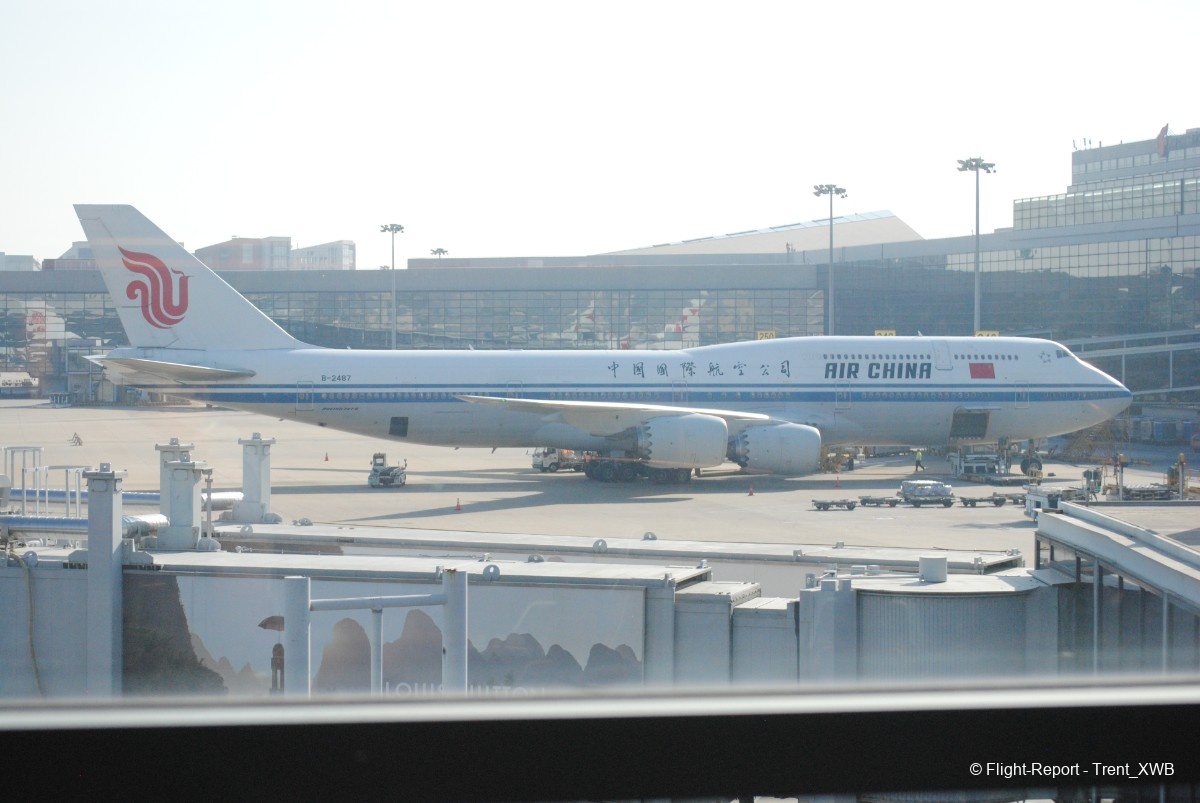
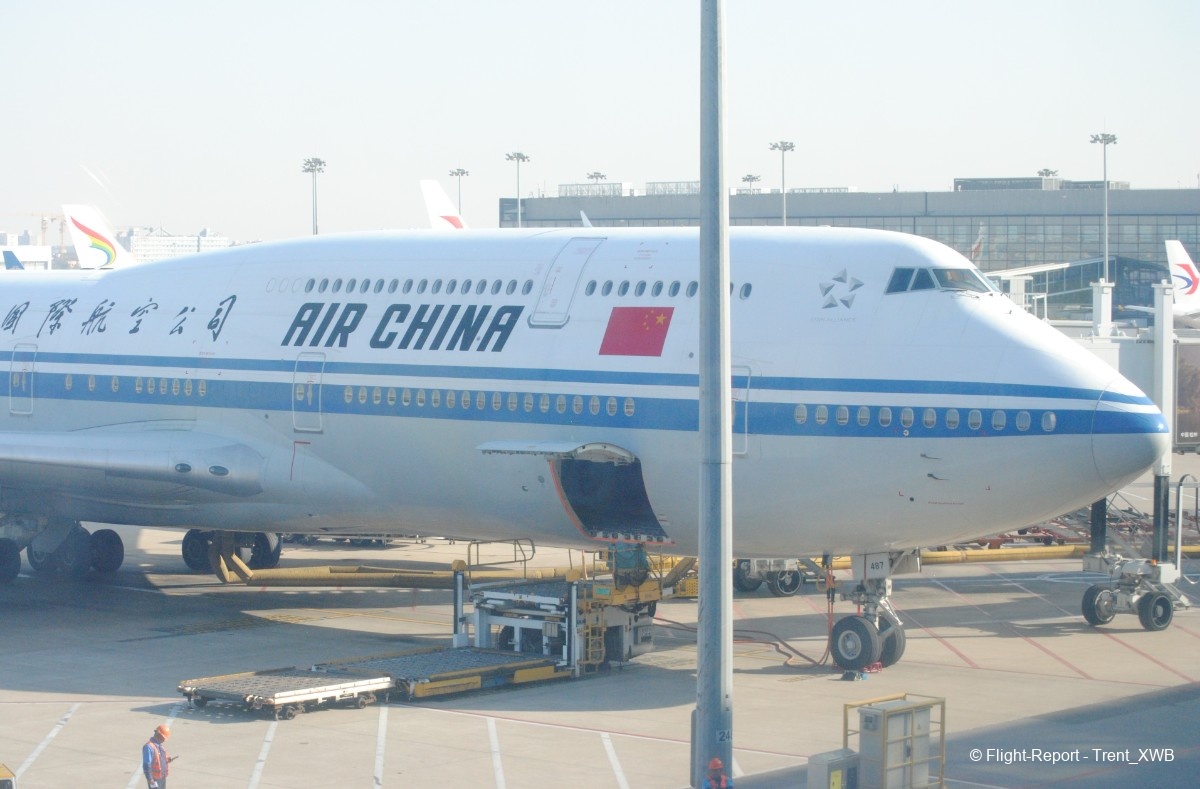
The Jumbo's distinctive hump with a large PRC flag.
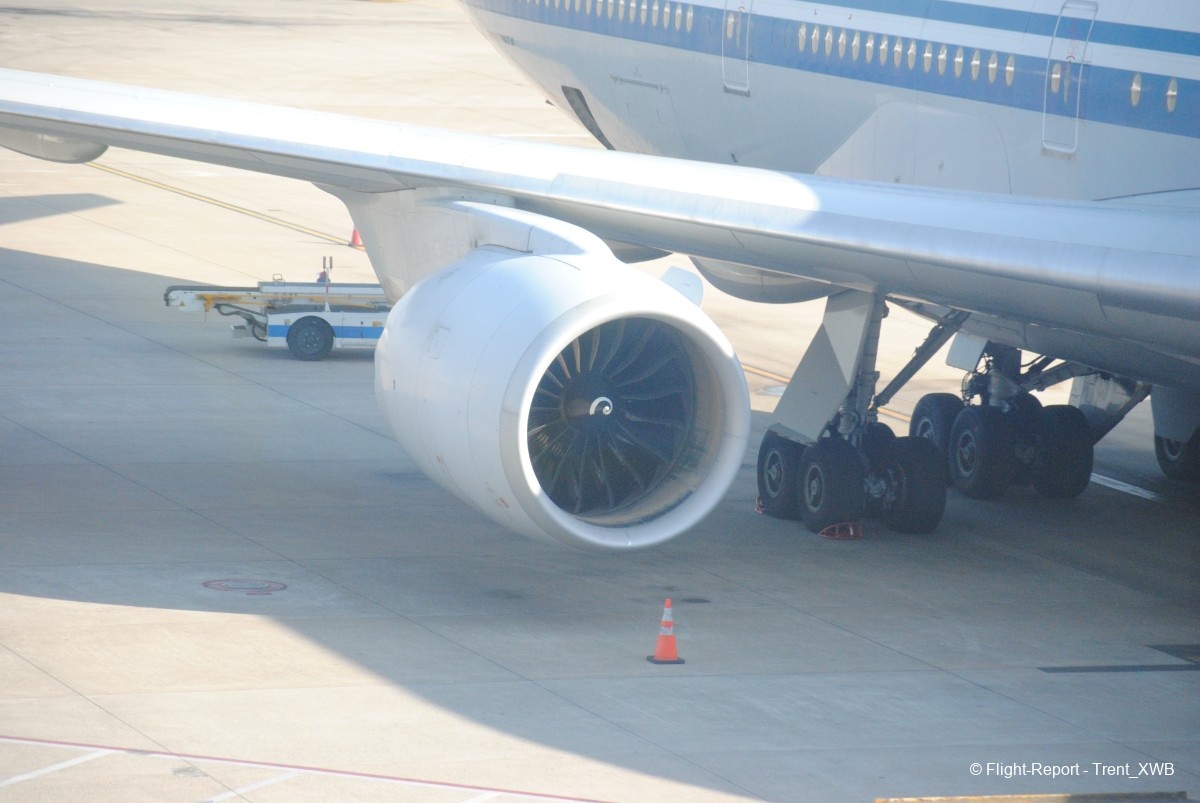
The inner starboard GEnX engine and the Jumbo's 16 wheels (4x 4-wheeled bogeys) MLG, purposed to bear almost 448-tonne MTOW.
The outer starboard GEnX engine, partially lightened by almost evening sun.
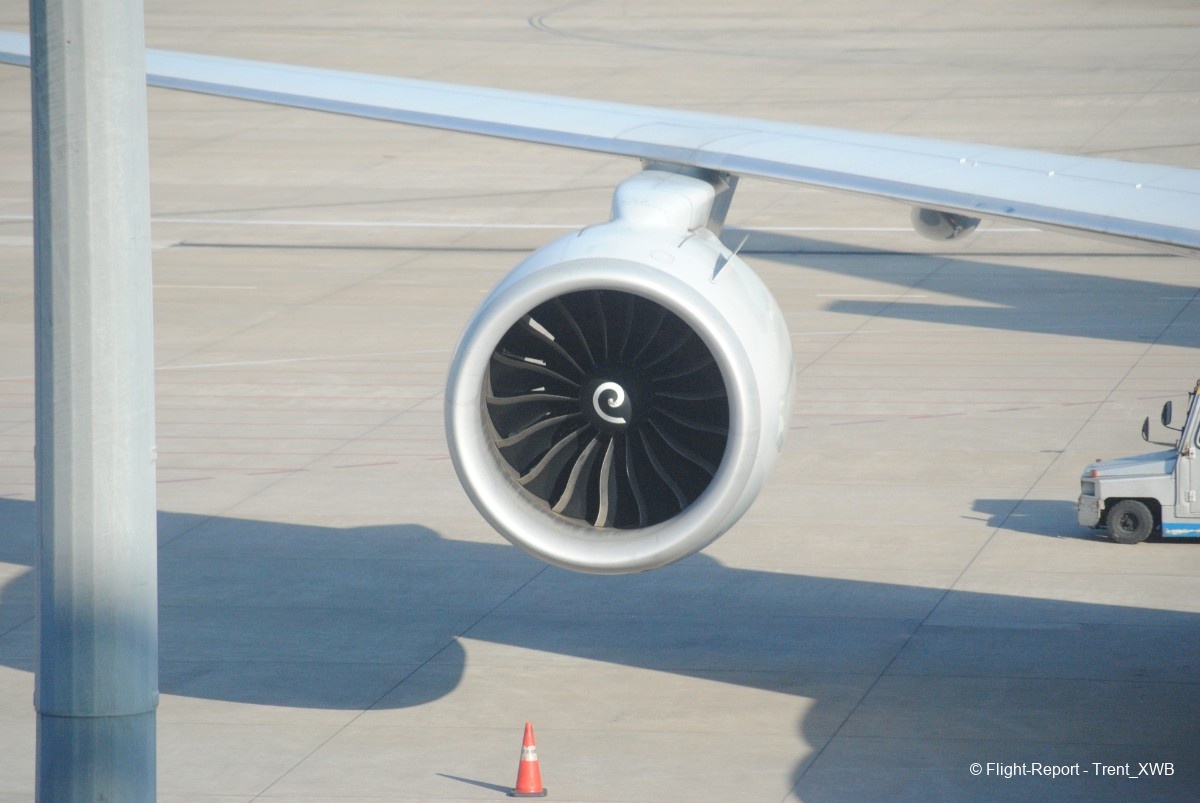
Views of the Jumbo from the adjacent gate 47.
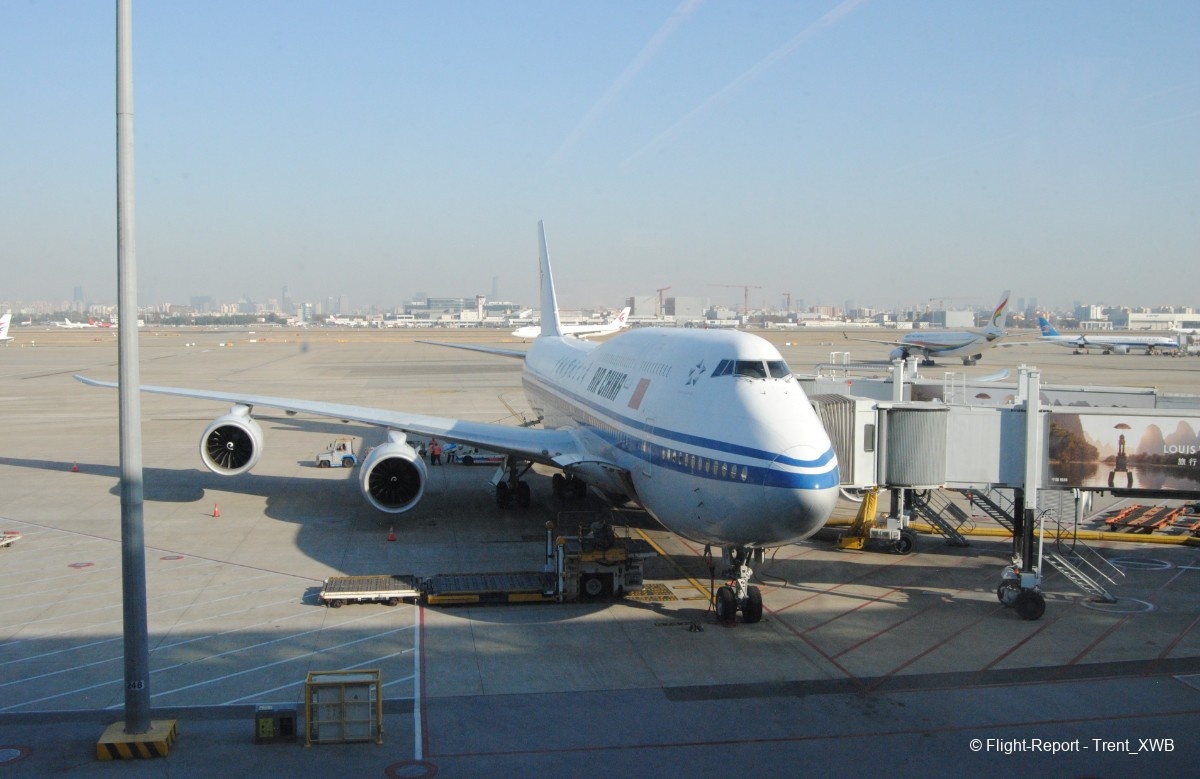
Boarding
Boarding was from gate 48, where CA always park its B748s when they serve SHA. The gates have FaceID system, and the staff used it this time, but it expectedly it failed on me and had to show my passport to the staff to be boarded.
View of the Jumbo's wing and portside engines from the jetbridge. On the backdrop is the pier of gates 56-70 with MU B77W (B-7883).
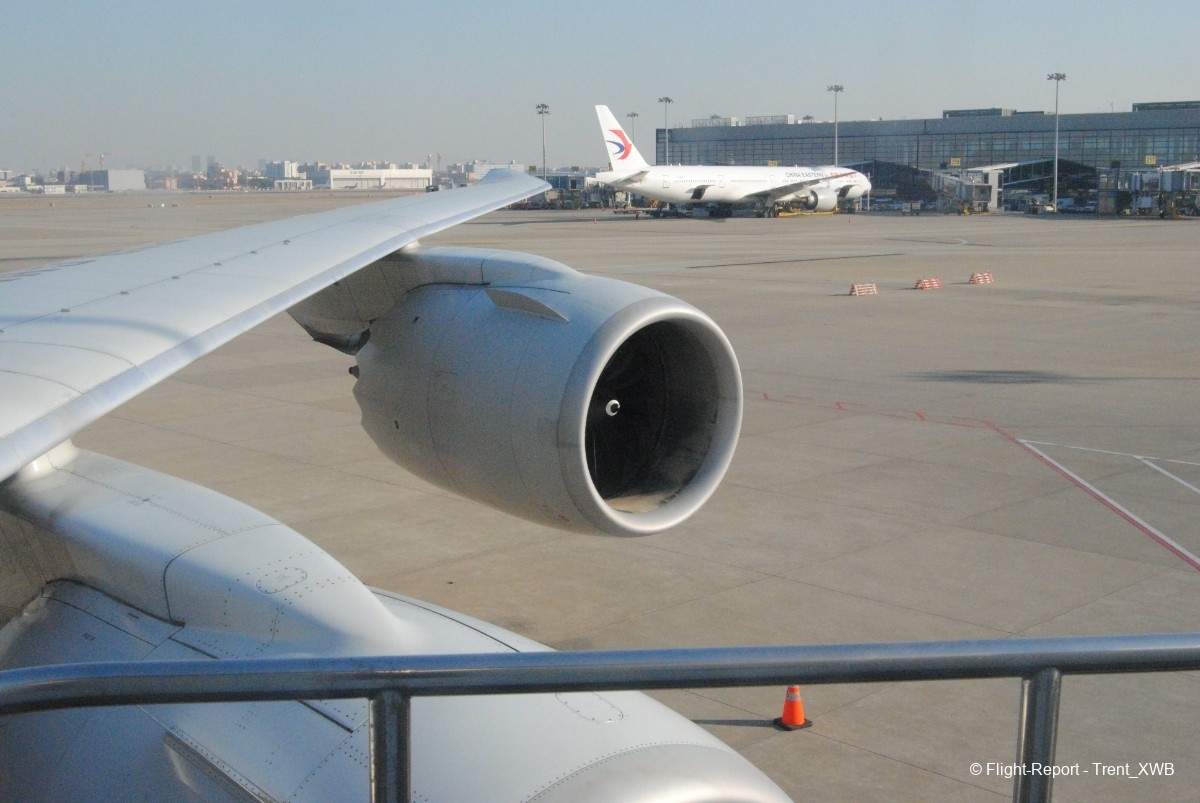
The First Class Cabin
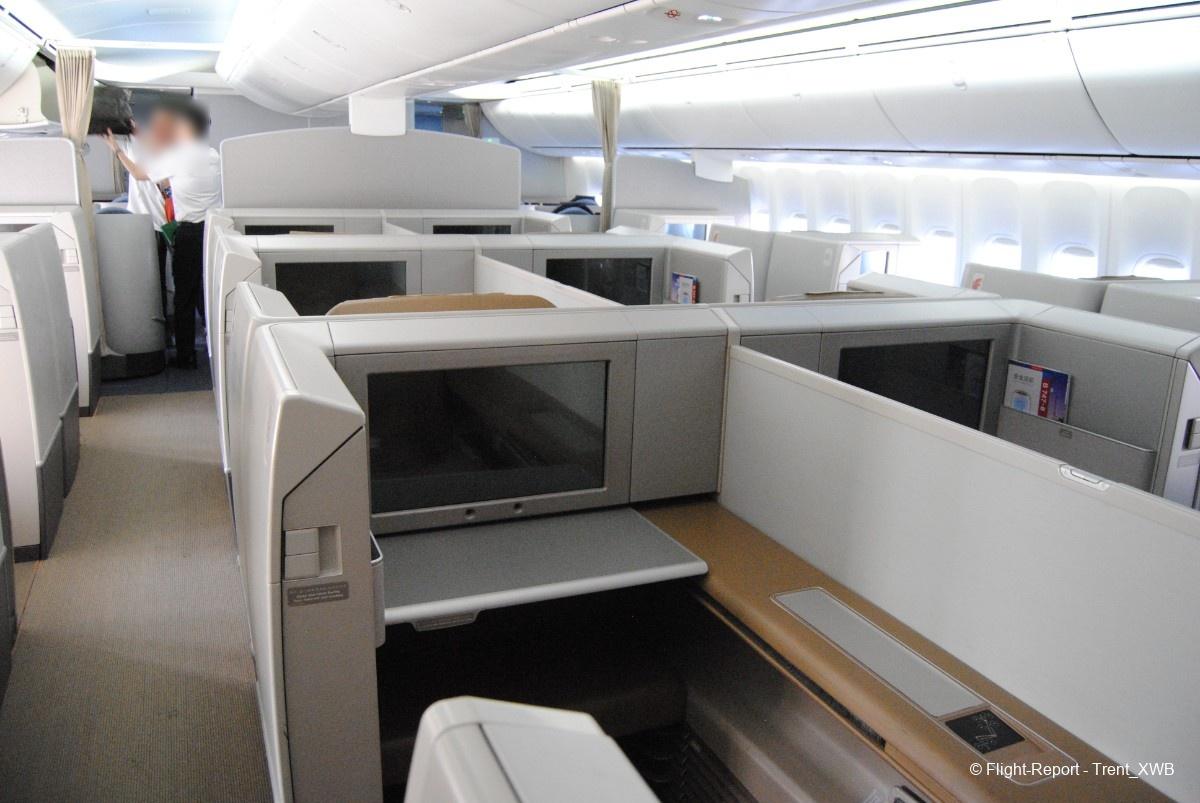
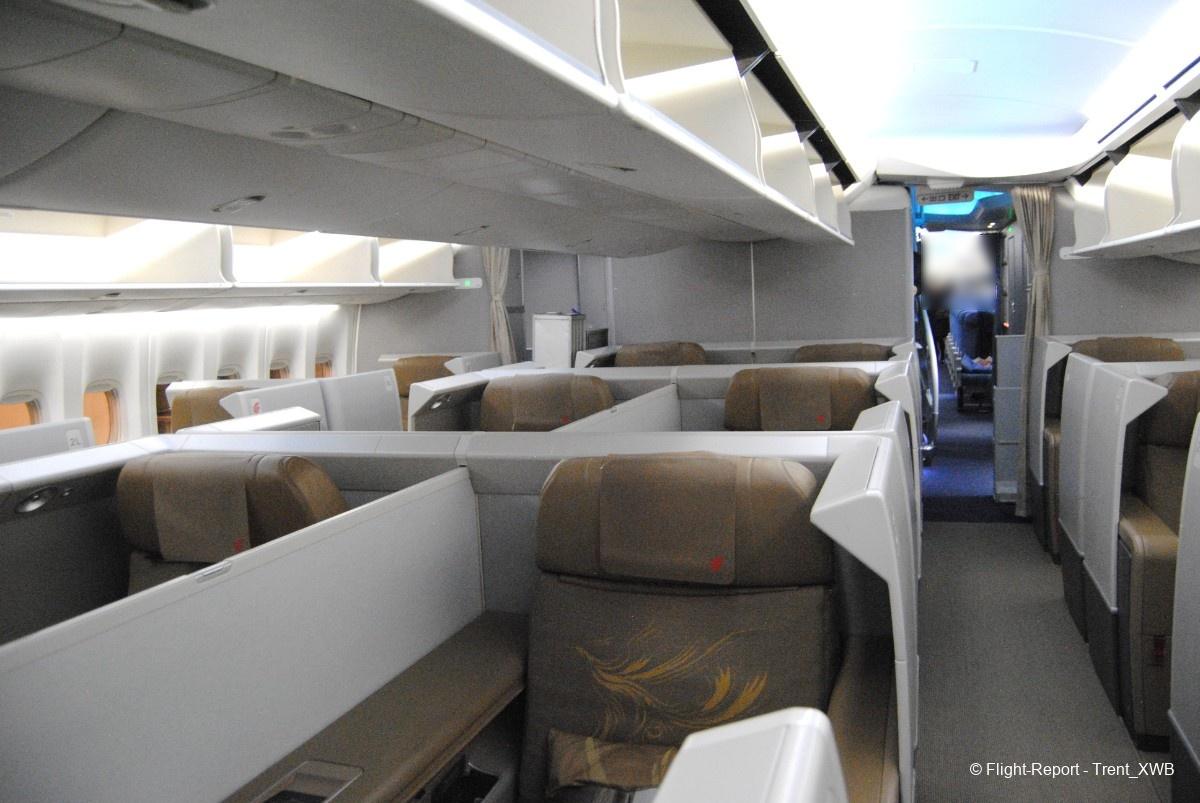
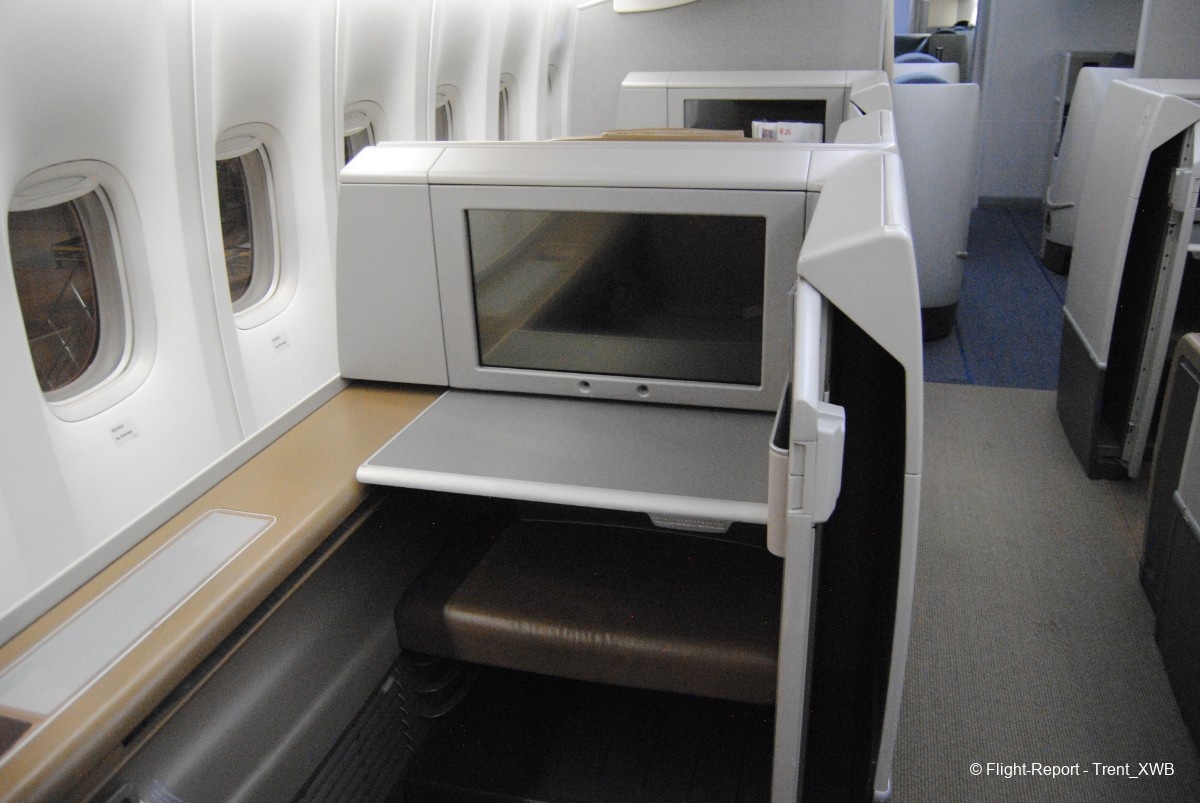
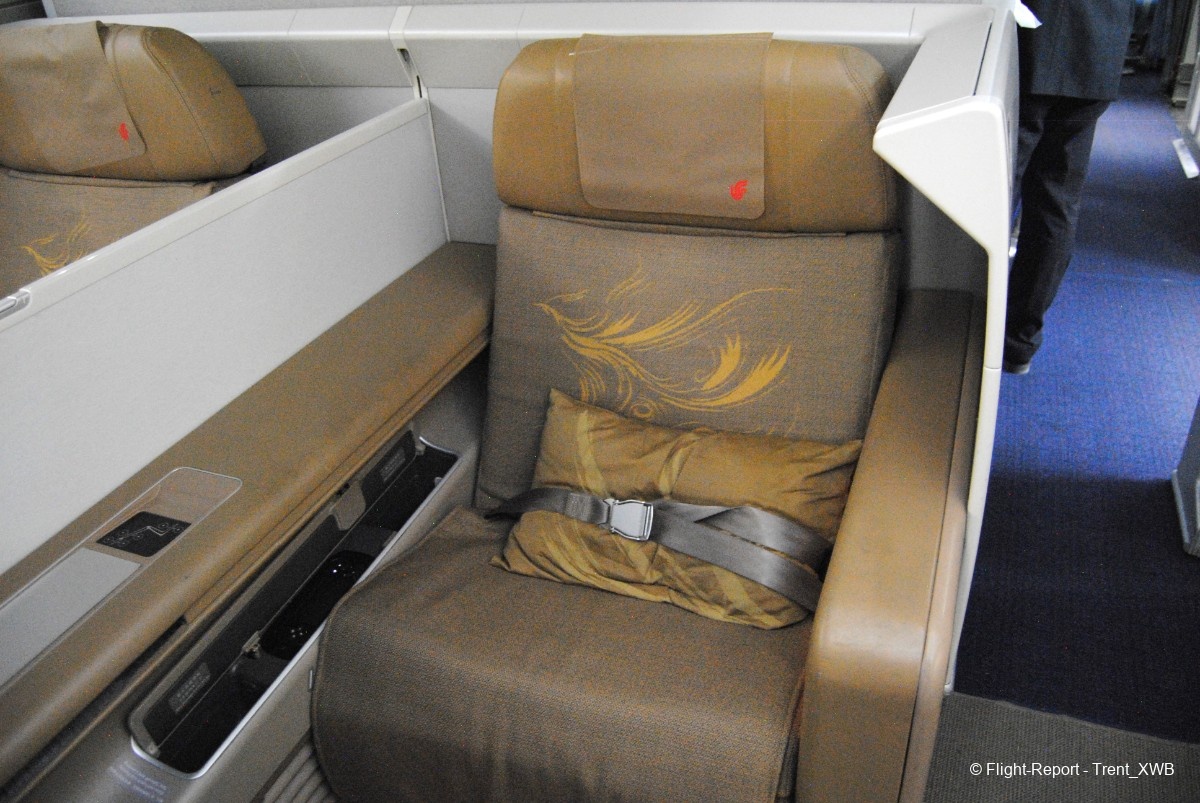
A glance on the first class cabin, which, let's remind, has nonstandard location before 2L/R doors and consists of 12 Zodiac Aerospace Venus suites, which look rather like "business plus" ones by today's standard due to the quite low walls and the absence of privacy doors.
The Stair
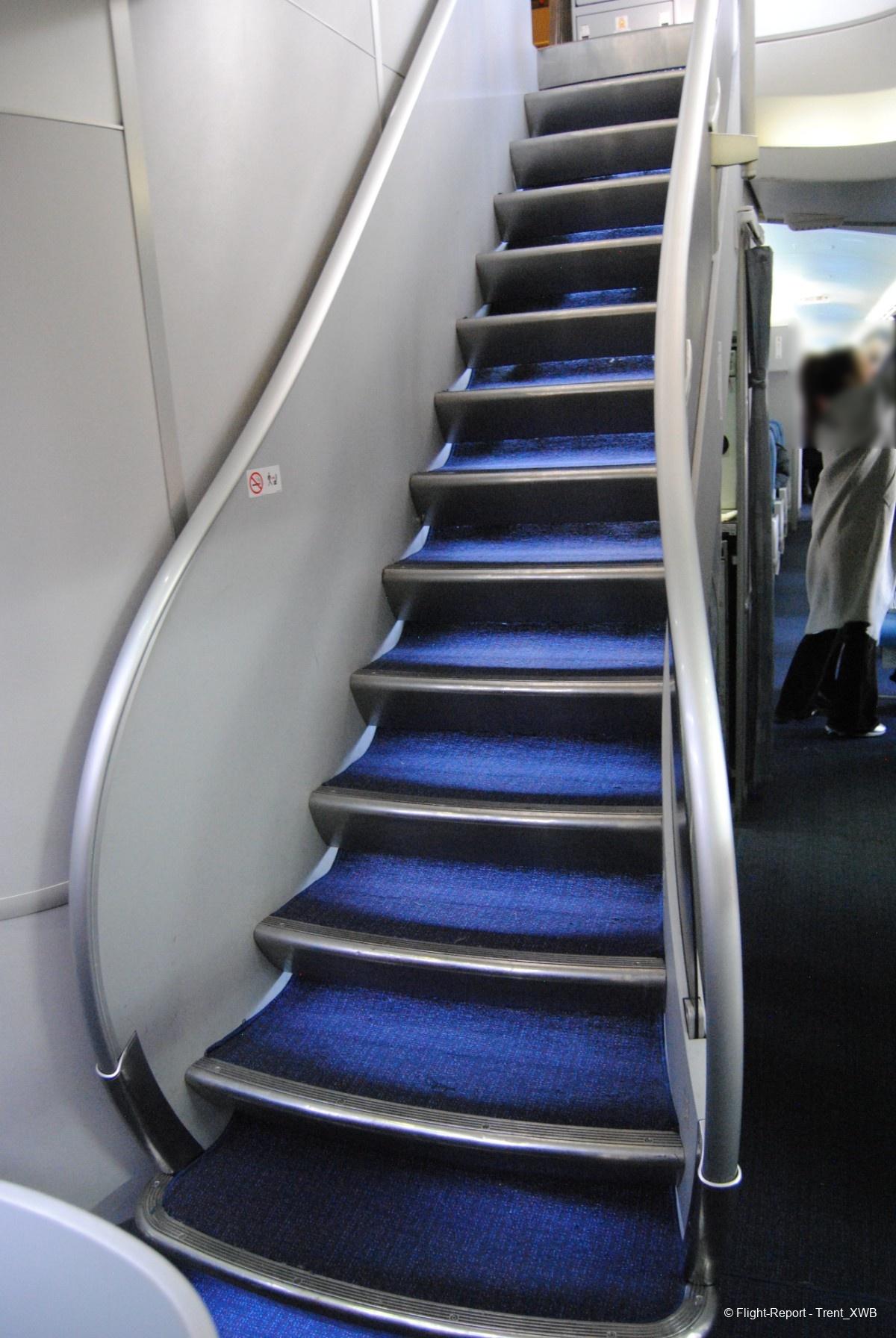
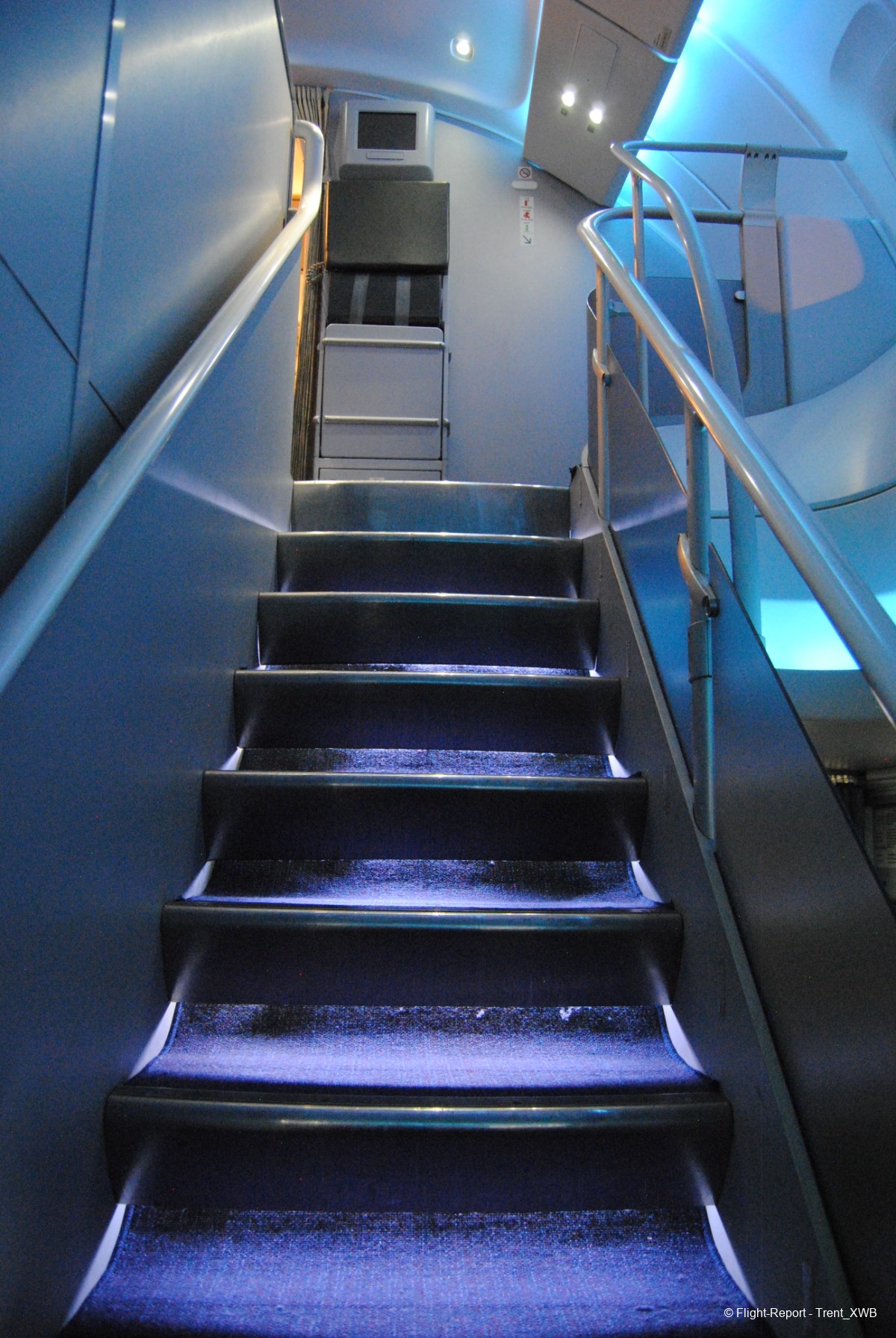
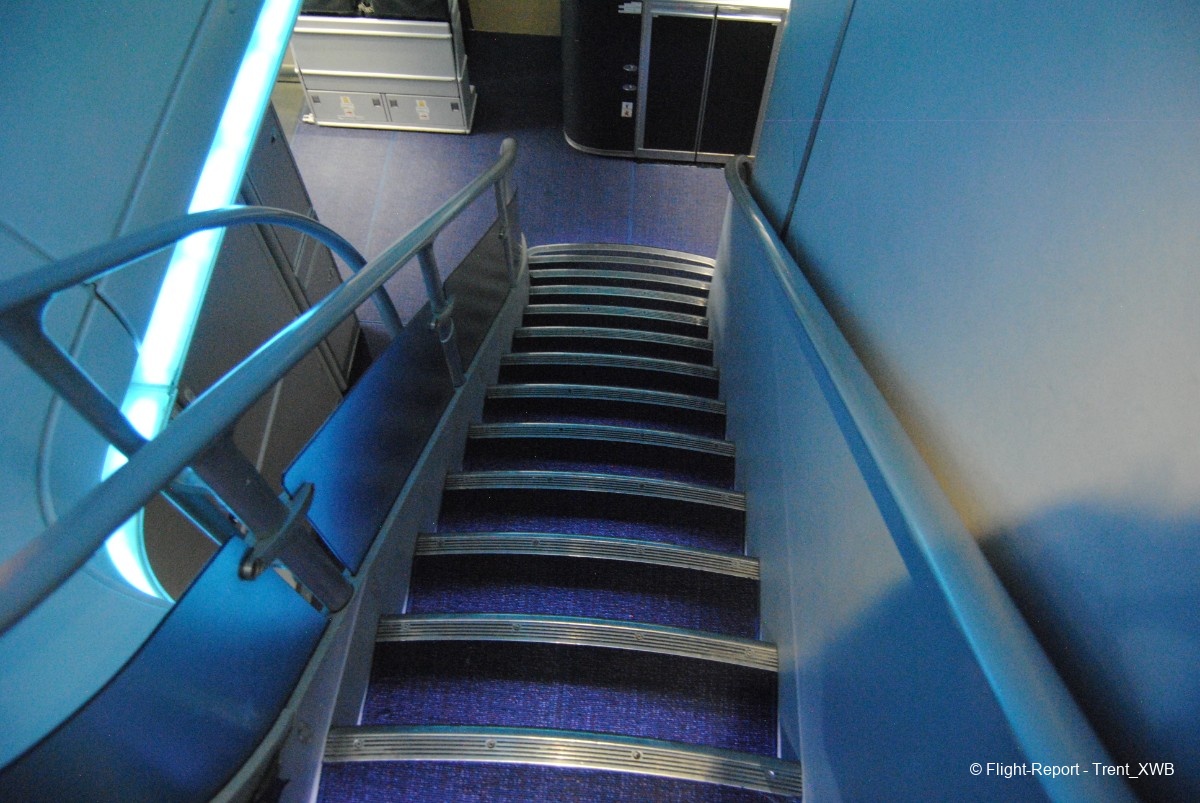
A glance on the stair - one of the most iconic elements of the Jumbo.
The Economy Plus Cabin
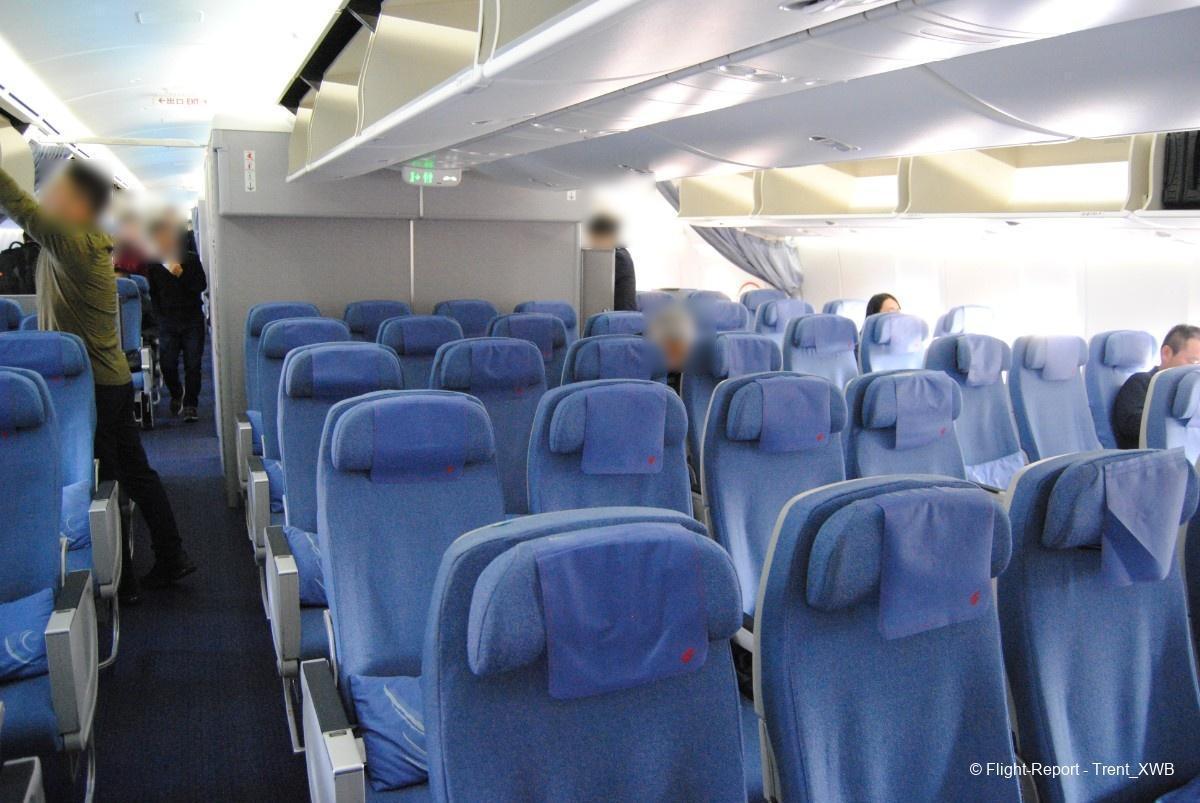
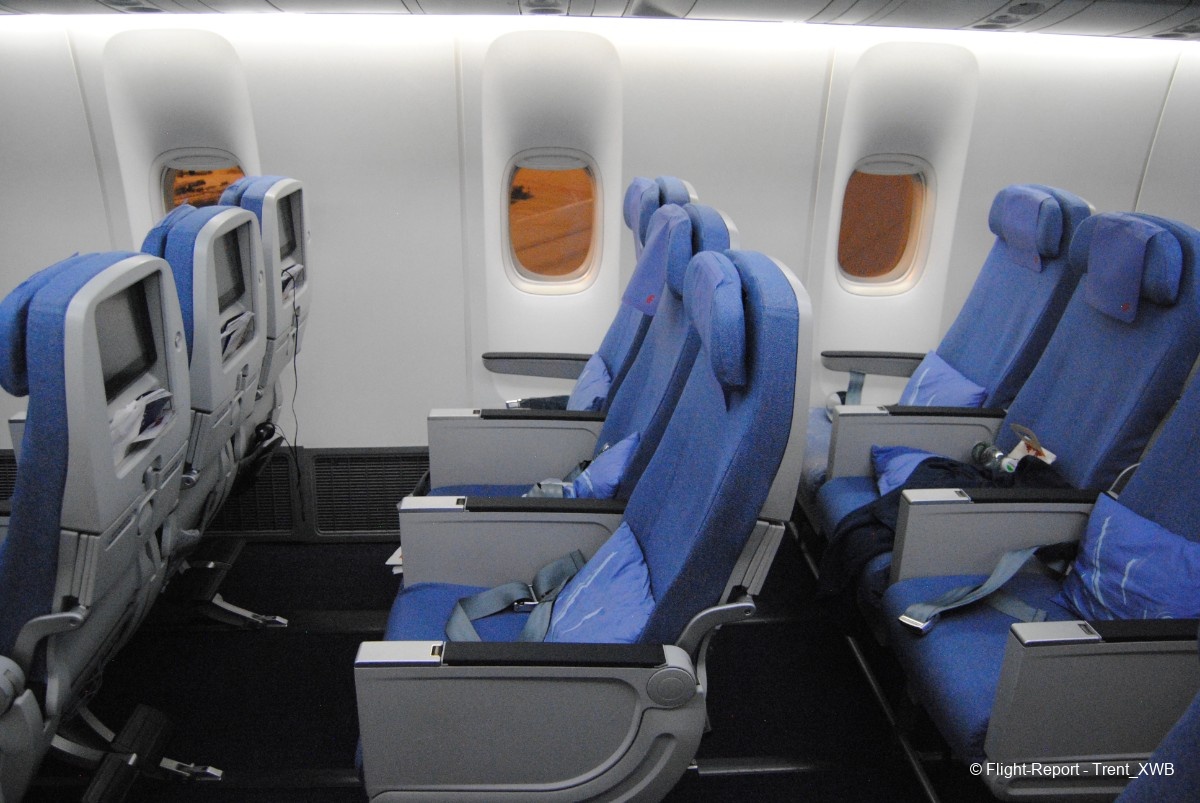
After the stair the "economy plus" cabin is located, consisting of 66 B/E Aerospace Star Plus seats in 3-4-3 layout (similar to the regular economy's layout). All the seatblocks here are bulkhead ones with fixed armrests, containing tray tables. The reason is that generous row pitch makes the use of seatback tray tables inconvenient. CA markets this cabin as "premium economy" and charges triple prices compared with regular economy fares, but one has to be aware that this cabin is nowhere near premium economy, it's nothing more than "economy plus". A true premium economy cabin requires at least one seat less per row than regular economy. The "economy plus" cabin is separated from the regular economy by a "cluster" of 4 lavatories.
The Economy Class
The regular economy class consists of 233 B/E Aerospace Star Plus seats in 3-4-3 layout, distributed between 2 cabins: the smaller front one between 3L/R and 4L/R doors and the large rear one between 4L/R and 5L/R doors.
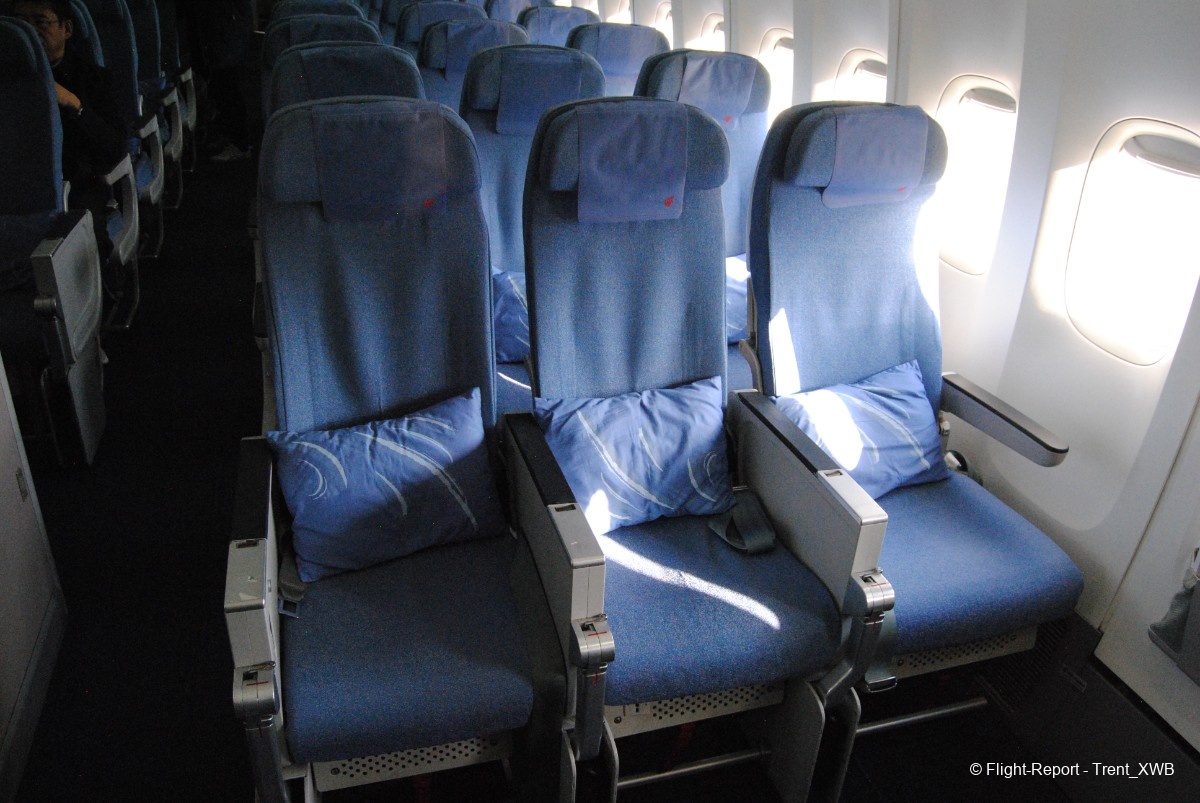
General view of the rear large economy cabin. One can notice the absence of the remnants of the original phoenix upholstery. Just dull blue…
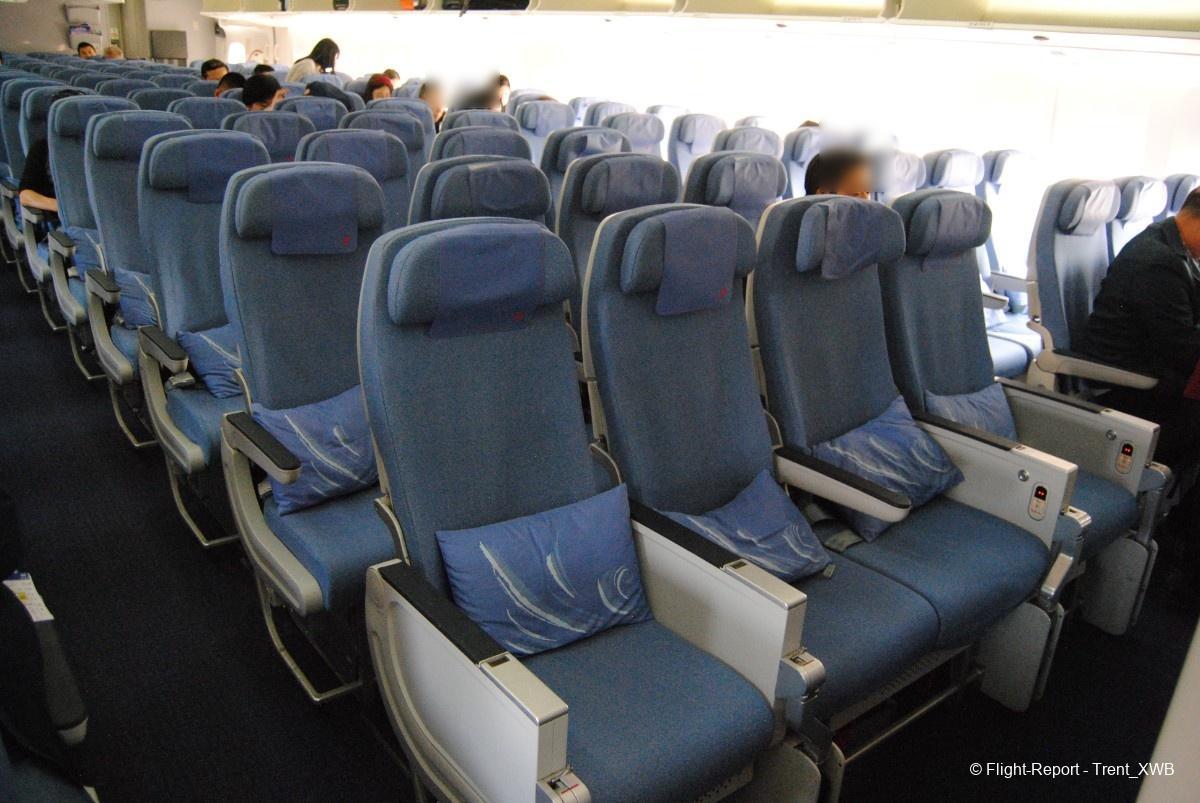
Row 50 - the front row of this cabin - has only left seat triplet. Again, no traces of the phoenix upholstery.
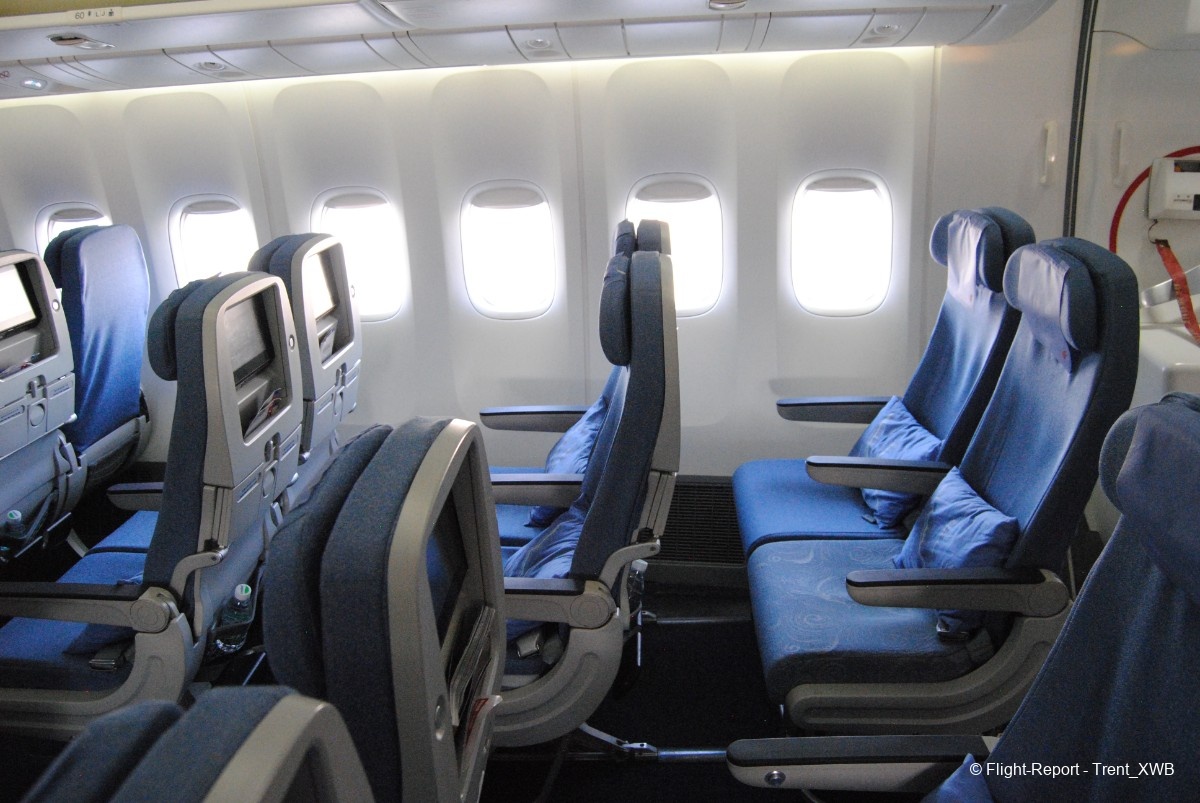
Due to the fuselage tapering, the rearmost rows 60-62 have duo lateral seatblocks (B/C and J/K) instead of triplets, aligned with the aisle. Thus, B and K seats have huge gaps to the wall which significantly boosts the space, but becomes inconvenient if the passenger wants to look into the window or to lean on the wall while sleeping. As one can see, seat 62J has remnants of the original phoenix upholstery.
The Economy Seat: B/E Aerospace Star Plus
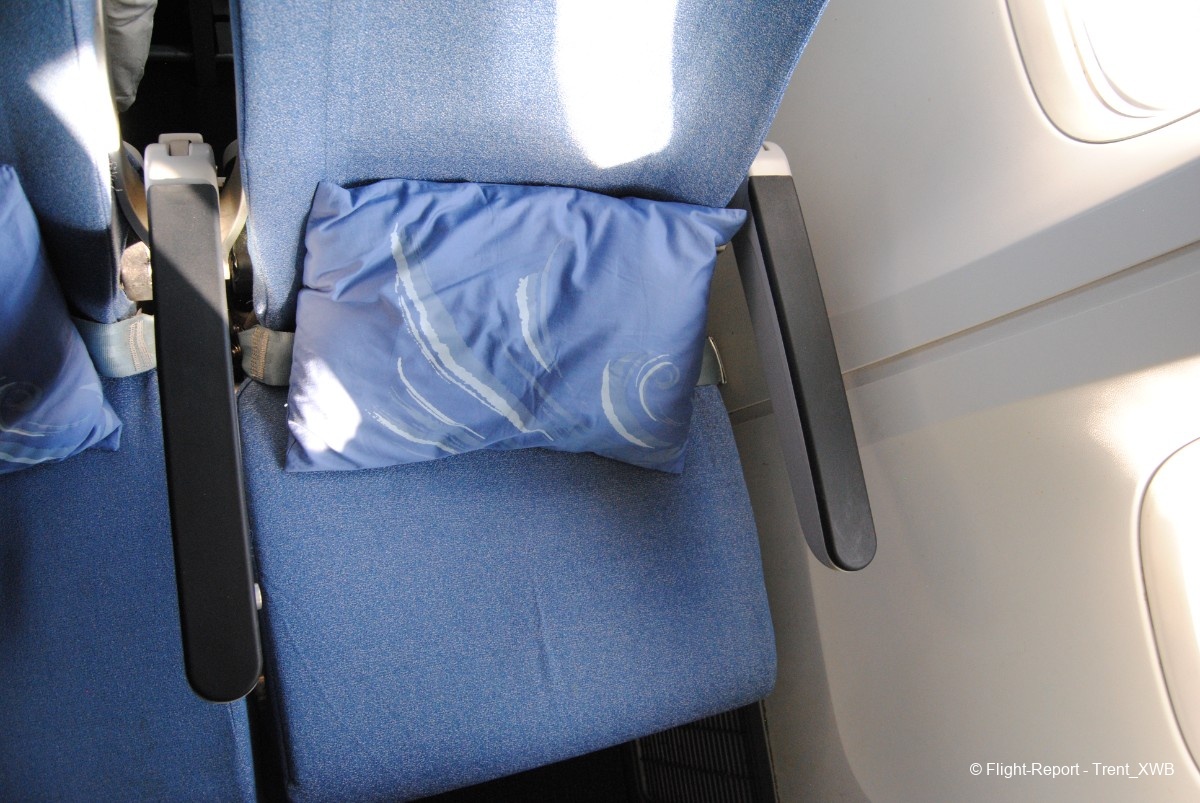
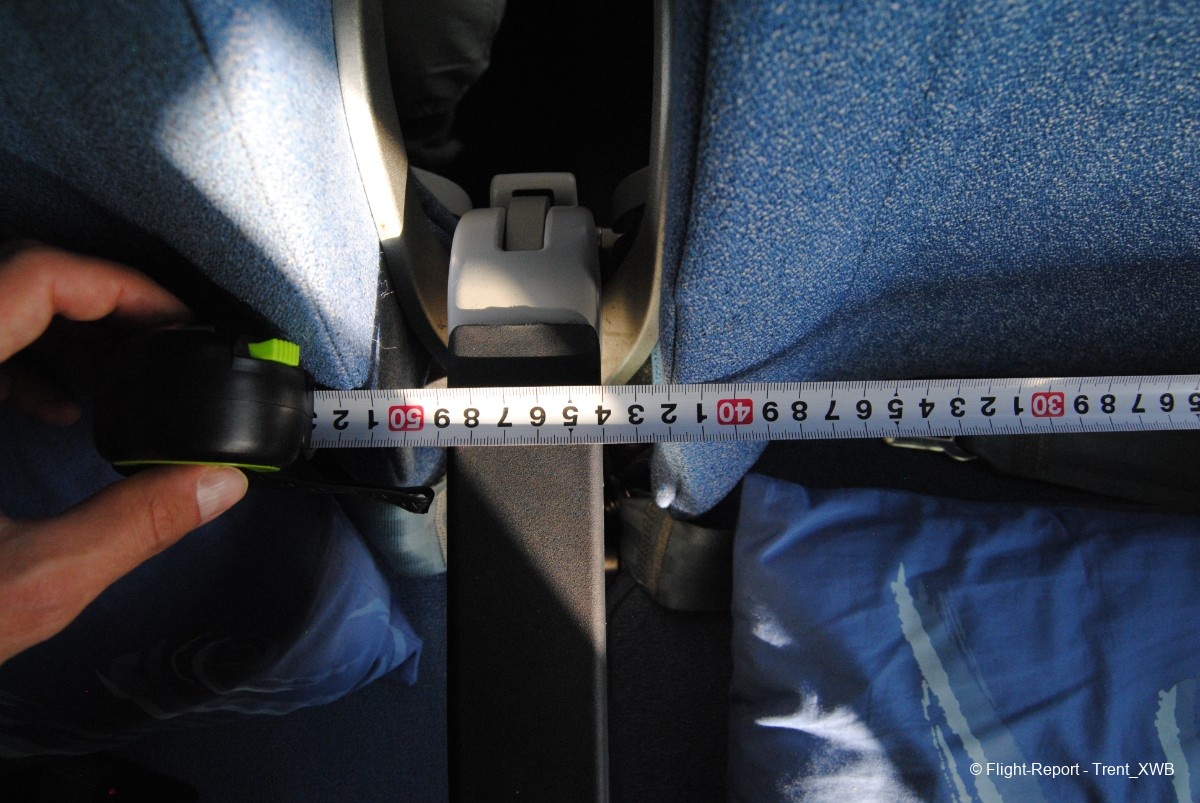
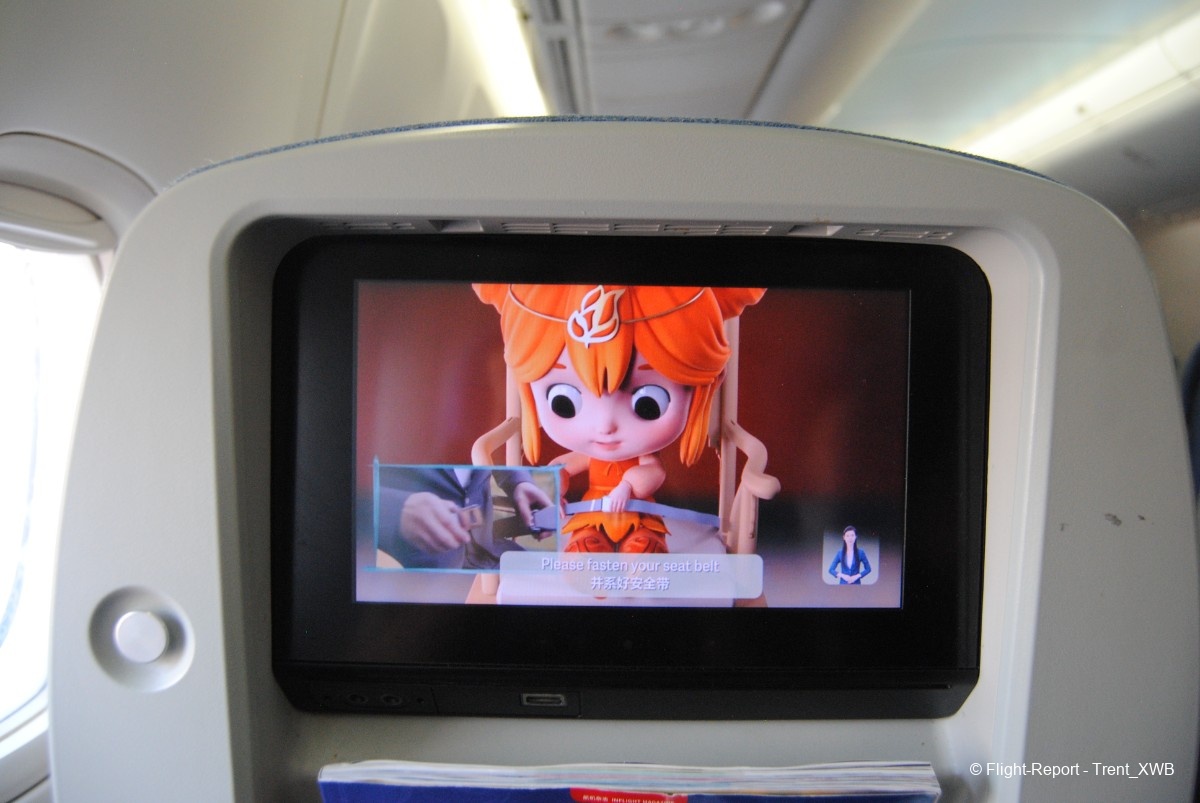
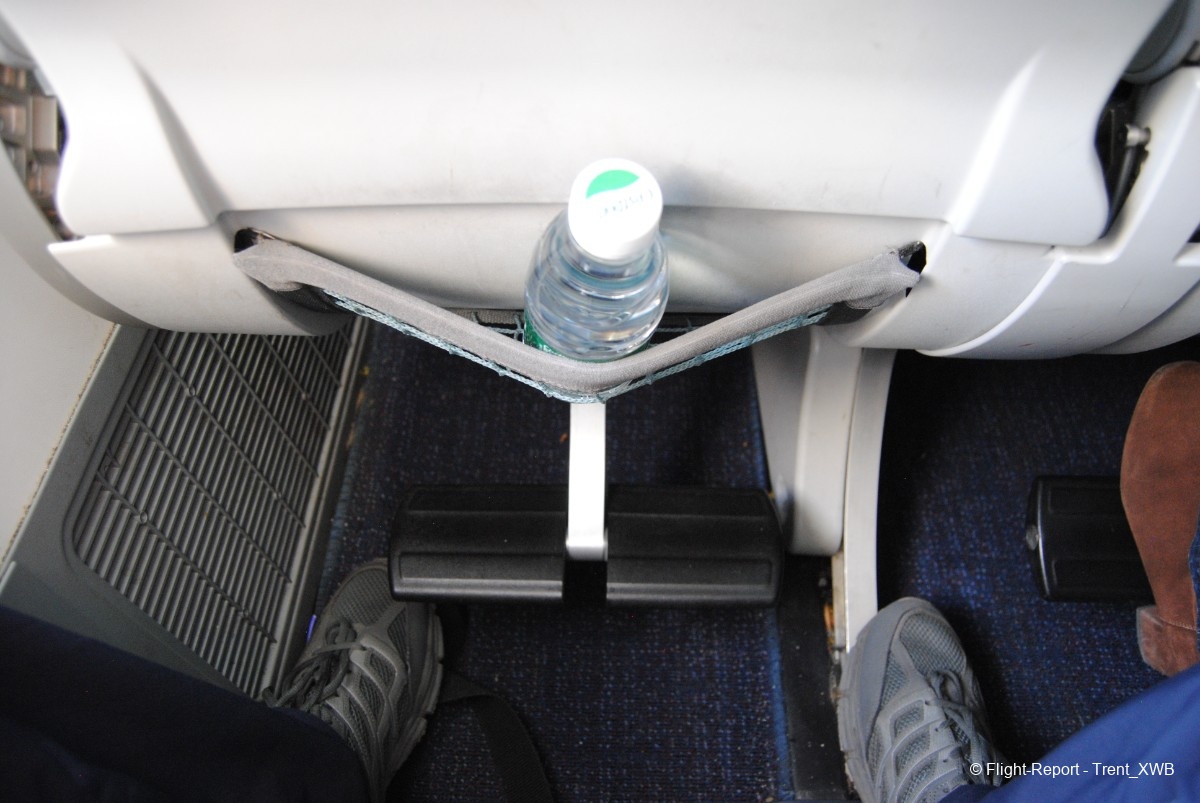
My seat this time was 45A in the front smaller economy cabin just behind the wing. As said earlier, the seat model is B/E Aerospace Star Plus, which is essentially a deeply modified (and significantly worsened in terms of comfort) Collins Pinnacle, designed under the influence of Lufthansa. In the preceding FR I've covered in details the provenance of this seat model. The seat has adjustable headrest, fabric upholstery (without any remnants of the original phoenix upholstery), Panasonic eX3 IFE (on the 3rd photo is a screenshot from safety video) with USB port, coat hanger, upper literature compartment, bi-fold tray table with cup holder, lower soft seatpocket, adjustable legrest and underseat universal power socket. The IFE is powered by an underseat box, which is, thankfully, quite slim and not bothersome. Whereas on the preceding CA1557 flight on B-2485 the seat had laterally dangling armrests, this time they were sturdy and in much better condition, thus giving the possibility to precisely measure the seatwidth, which is, expectedly, 17.3" - the same as in 3-3-3 Dreamliners. The row pitch is very good. As on the preceding flight, the seat felt hard and rather uncomfortable. But, anyway, a short domestic flight under 2 hours is not a longhaul flight to/from JFK, IAD or FRA, so in this case it was more than OK. Waiting on the seat was pillow with fragment of phoenix on its fabric. In the seat pocket there was a little bottle of water, and I immediately emptied it as I was thirsty. Though, I later regretted about not filling an additional bottle earlier while being inside T1, as this small amount of water turned to be not enough.
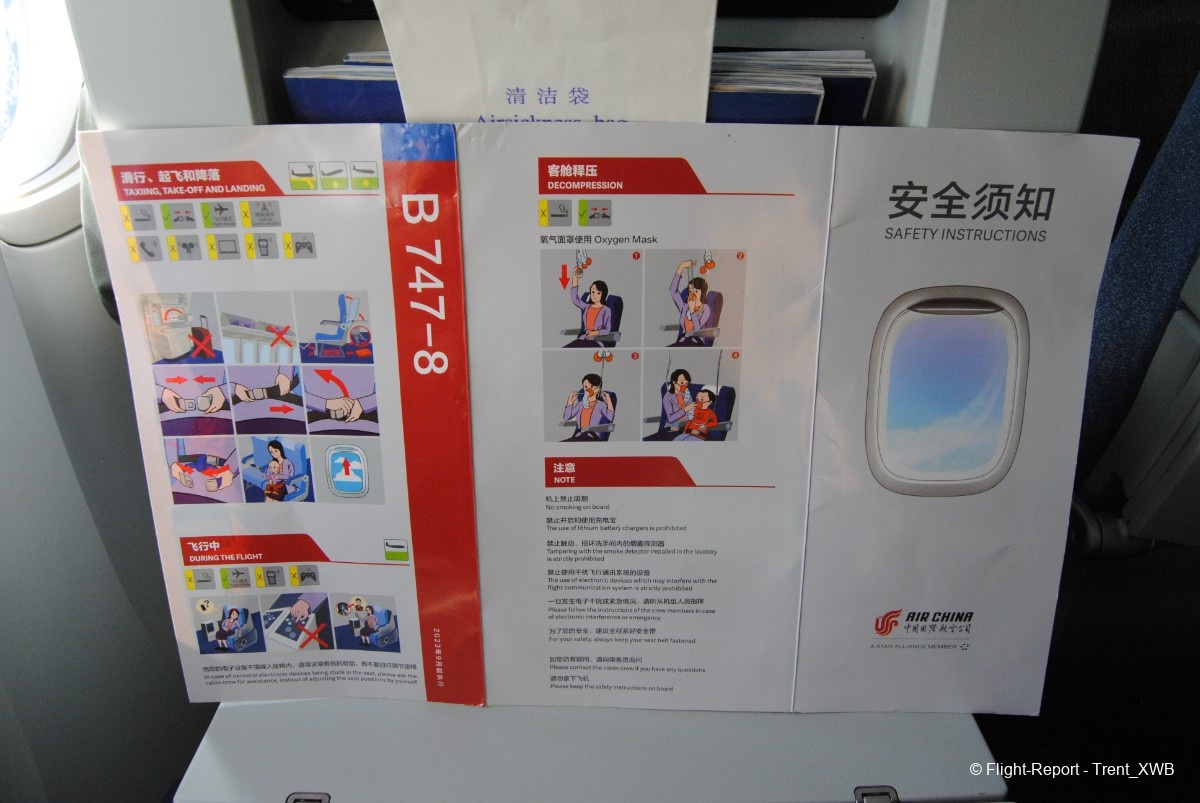
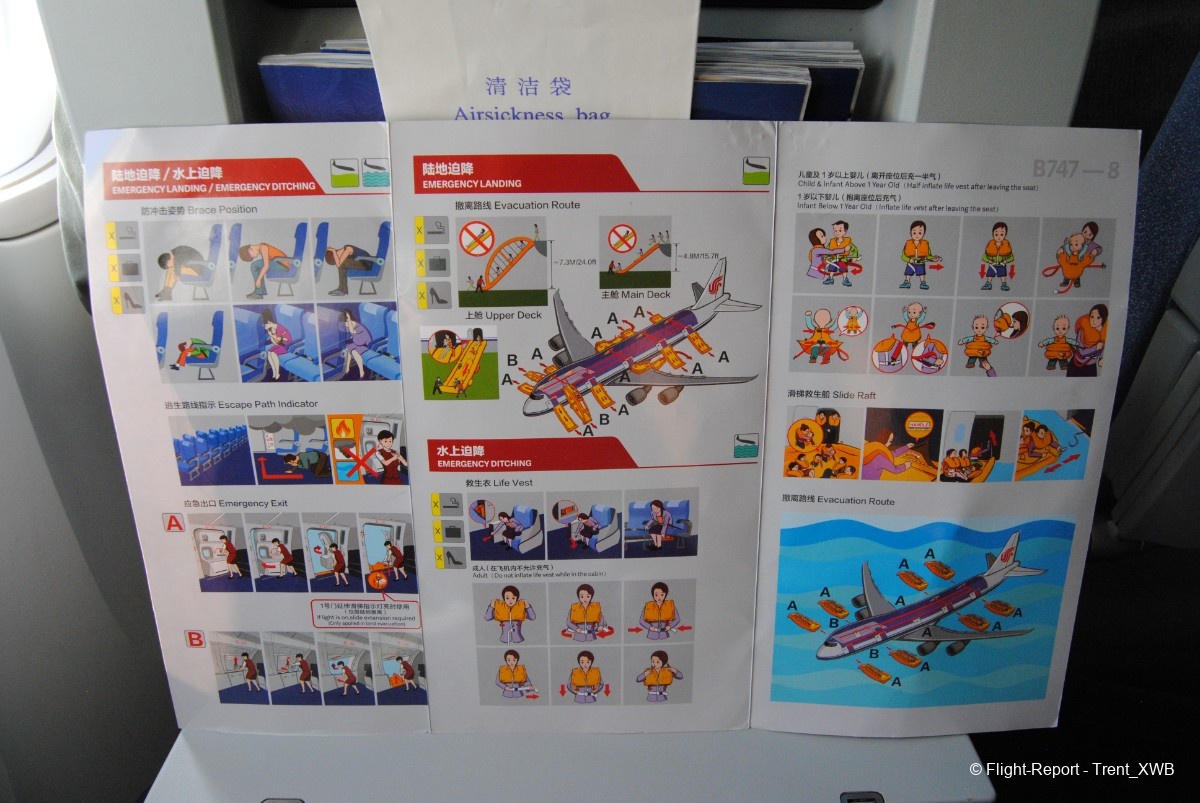
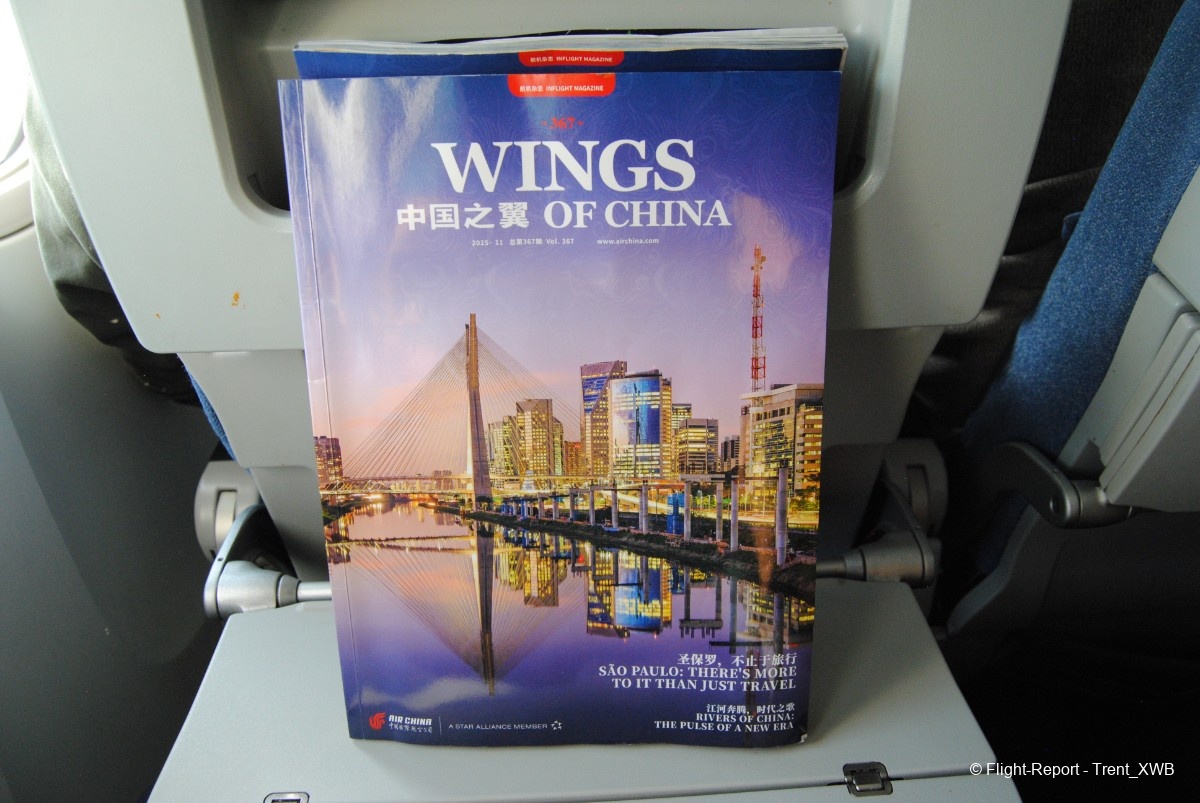
The content of the literature compartment: safety card, inflight magazine "Wings of China" (promoting Sao Paulo: CA flies from PEK to GRU via MAD on B789s, making one of the world's longest 1-stop direct flights after MU's PVG-AKL-EZE) and waste bag.
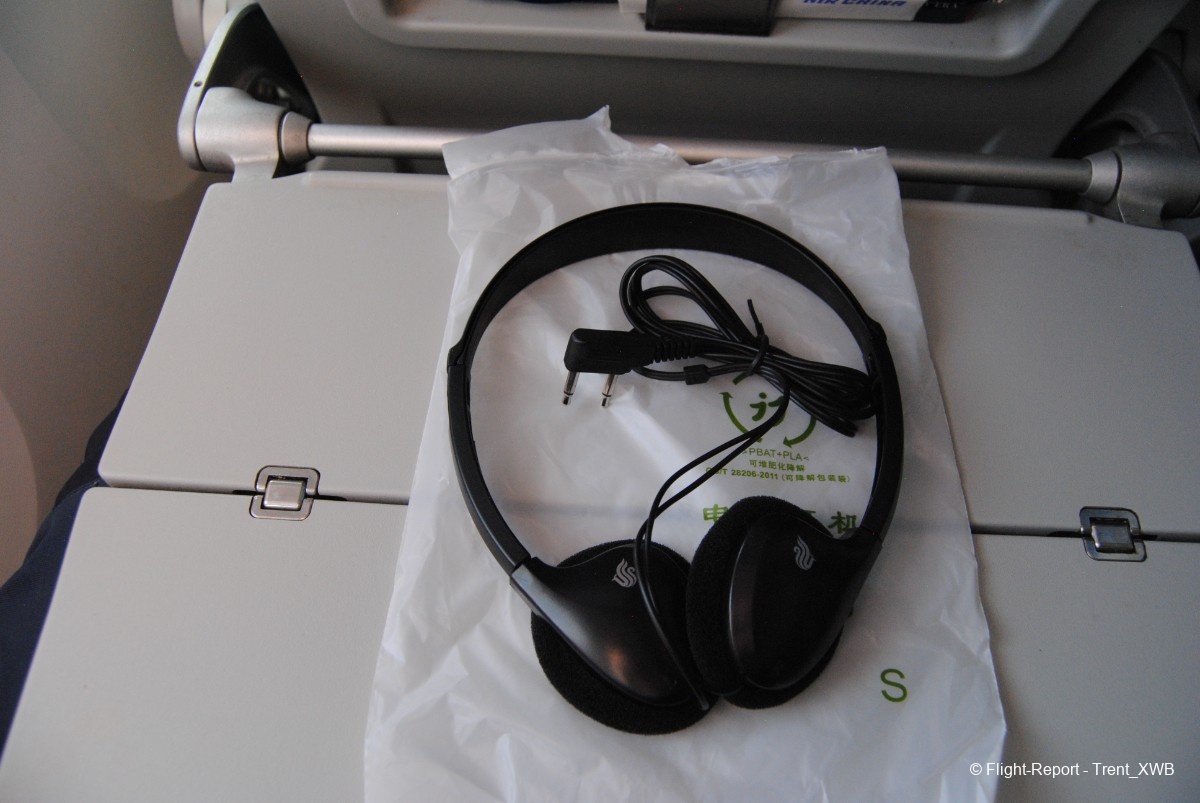
The crew handed headsed of rather good quality.
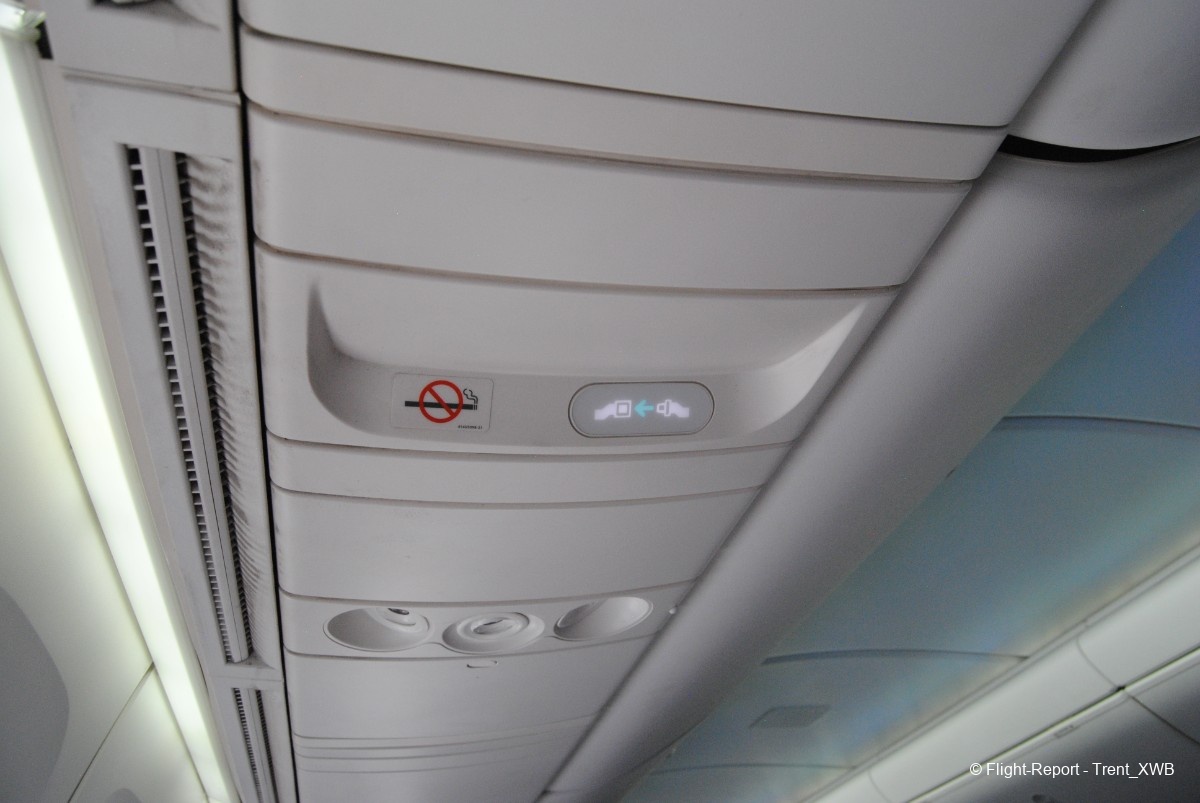
The overhead panel is standard for B748, without airvents.
Seat 45A provides a good wing view. Though, the outer engine is not visible at all from here. For comparison, row 47 (the last row of this cabin) provides a bit better angle, where a bit of the engine is visible.
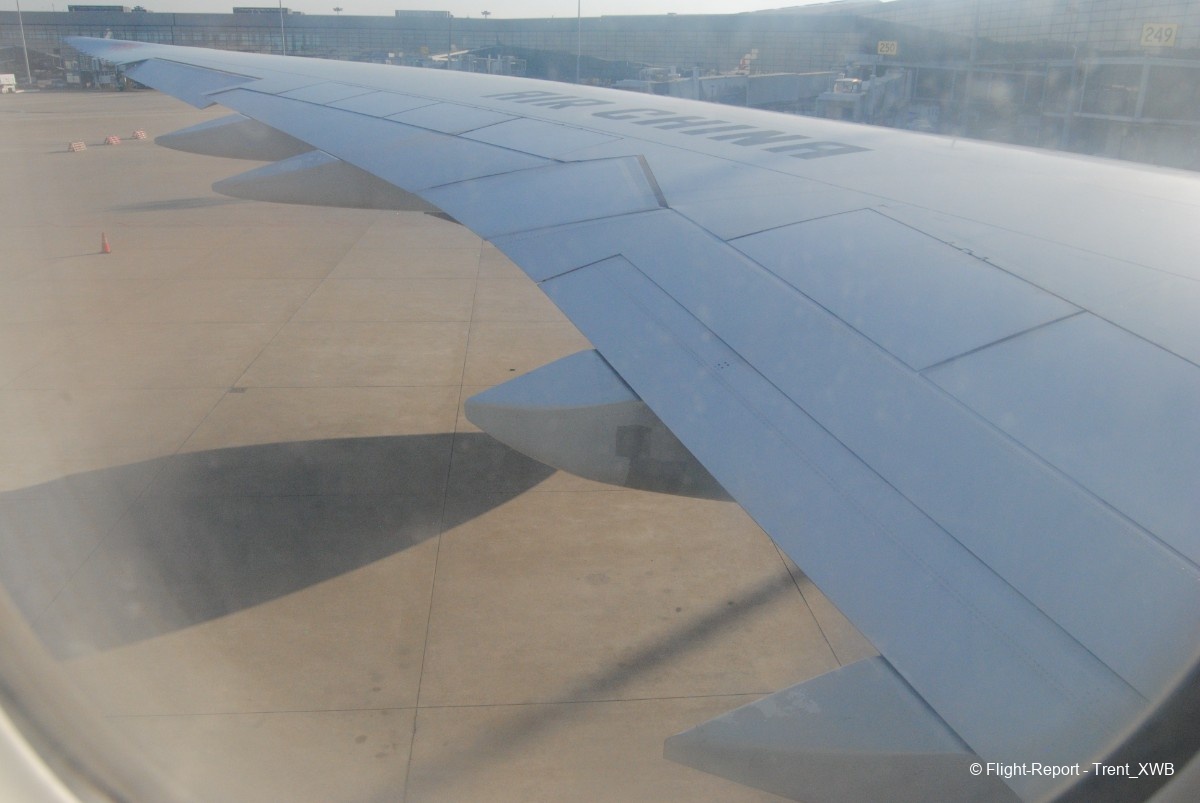
The Flight
Pushback begins and safety video is played (I refer to the preceding FR, where some screenshots of this video are presented), and I continue planespotting during pushback and taxi.
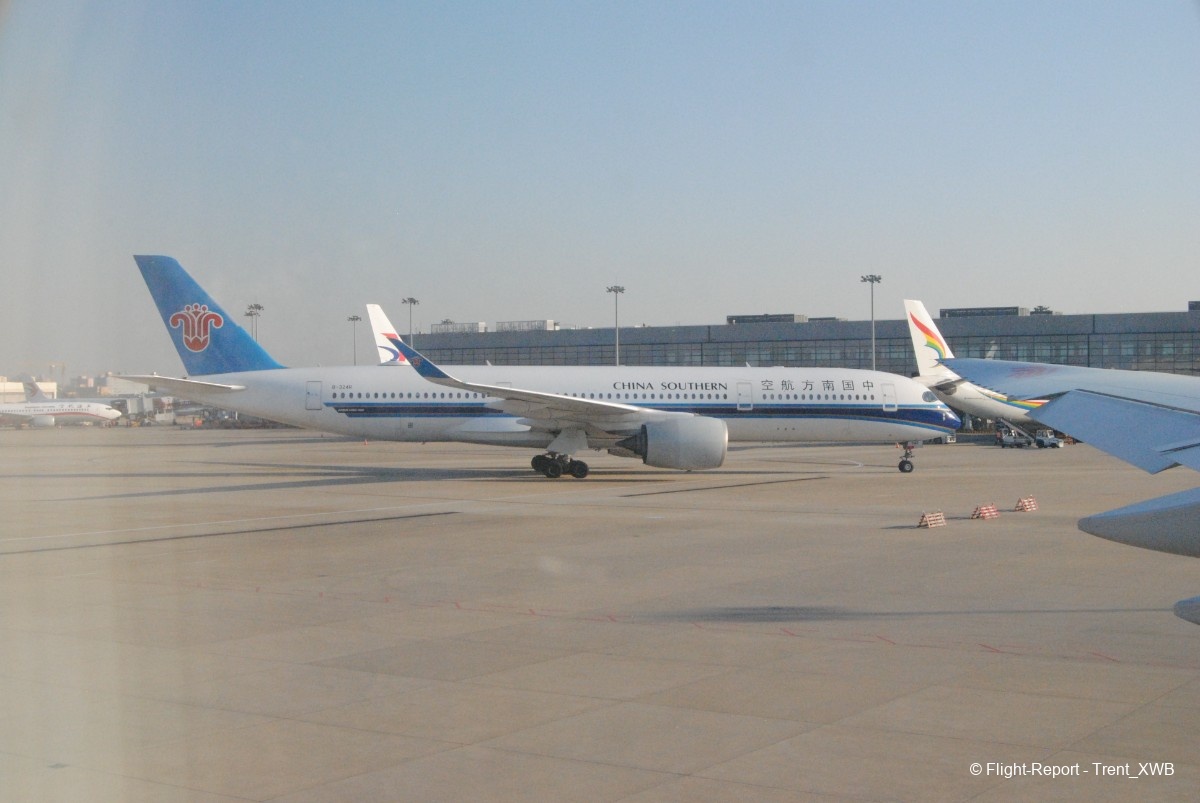
CZ A359 (B-324R), arriving to T1 from CAN. CZ has 20 2019-2023-built A359s. The first half of them has 3-class C28_W24_Y262 layout, featuring Recaro CL6710 seats in business, Recaro PL3530 recliners in premium economy and uncomfortable Recaro CL3710 seats in economy; the second half of them has 2-class C28_Y307 layout without premium economy, featuring the same seat models in business and economy. B-324R is the first CZ's A359 without premium economy. CZ - the largest airline in Asia and world's 4th-largest airline in terms of fleet size - positions itself as the most premium of Chinese carriers and charges exorbitant prices for domestic flight compared to CA and MU; on the international routes their prices are also usually noticeably higher than CA and MU ones. Taking into account that almost half of CZ's widebody fleet - all A359s plus 9 RR-powered A333s - has awful seats in economy (Recaro CL3710), and A359 is the most frequent type on CZ flights to EU - I'd recommend to choose another Chinese carriers on EU flights, for example MU, where comfortable economy seats are guaranteed on any widebody type. On the other hand, CZ has the other half of the widebody fleet with really comfortable economy cabins: 15 B77Ws in 3-class C28_W28_Y305 layout (featuring Stelia Solstys seats in business, Collins Icon seats in premium economy and very spacious economy with comfortable Collins Pinnacle seats in 3-3-3 - the best economy cabin in China), 16 PW-powered A333s in C30_Y245 layout (featuring Zodiac/Safran Aura Lite seats in business and comfortable Weber 5751 seats in economy) and 21 B789s - 8 frames in 3-class C28_W28_Y220 layout (featuring Thompson Aero Vantage XL seats in business, Collins MiQ seats in premium economy and comfortable Collins Pinnacle seats in economy) and 13 frames in 2-class C28_Y269 layout (featuring the same seat models in business and economy). Flying one of CZ's B77Ws, PW-A333s and B789s must be a treat. But with the CZ's pricing one has to think a lot before pulling the trigger…
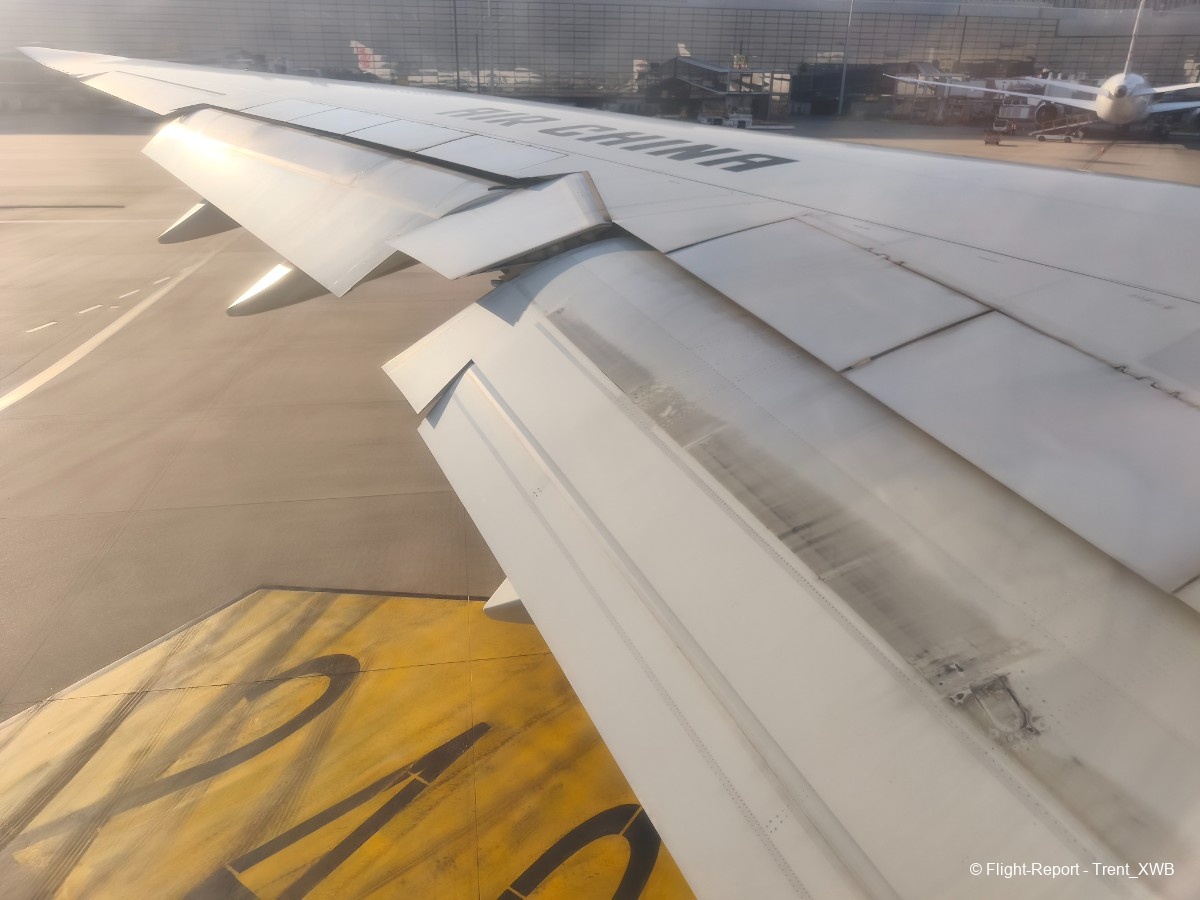
Check of control surfaces; flaps are set into takeoff config.
With the flaps in takeoff config one can clearly see how features of B777 and B787 wings were implemented into the classic B747 wing. One can also notice the reflection of the Jumbo in the facade of the central pier of T1, from where we've just departed.
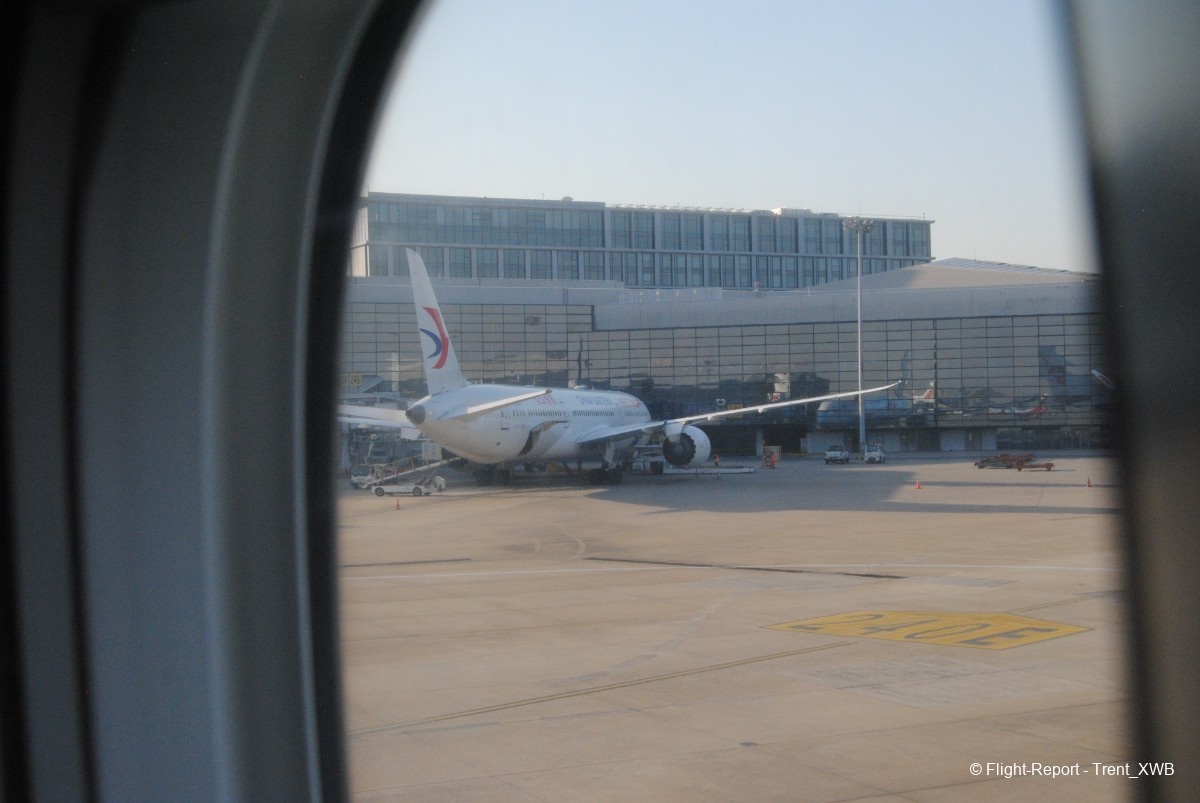
One of MU B789s. MU has 7 B789s with first 5 of them in 3.5-class C+4_C26_W28_Y227 layout (featuring suites with doors based on Thompson Aero Vantage XL seats in business with the front row being kind of the "business plus" - the best business class in China, Collins MiQ seats in premium economy and comfortable Collins Pinnacle seats in economy) and last 2 of them in 2.5 class C+4_C26_Y289 layout (featuring the same suites in business and the same seats in economy, but without premium economy). MU's subsidiary Shanghai Airlines (FM) has 10 B789s with the identical C+4_C26_W28_Y227 layout.
Taxiing past the pier of gates 26-40 with MU A333, HO A321SL, MU B738 and MU A321SL.
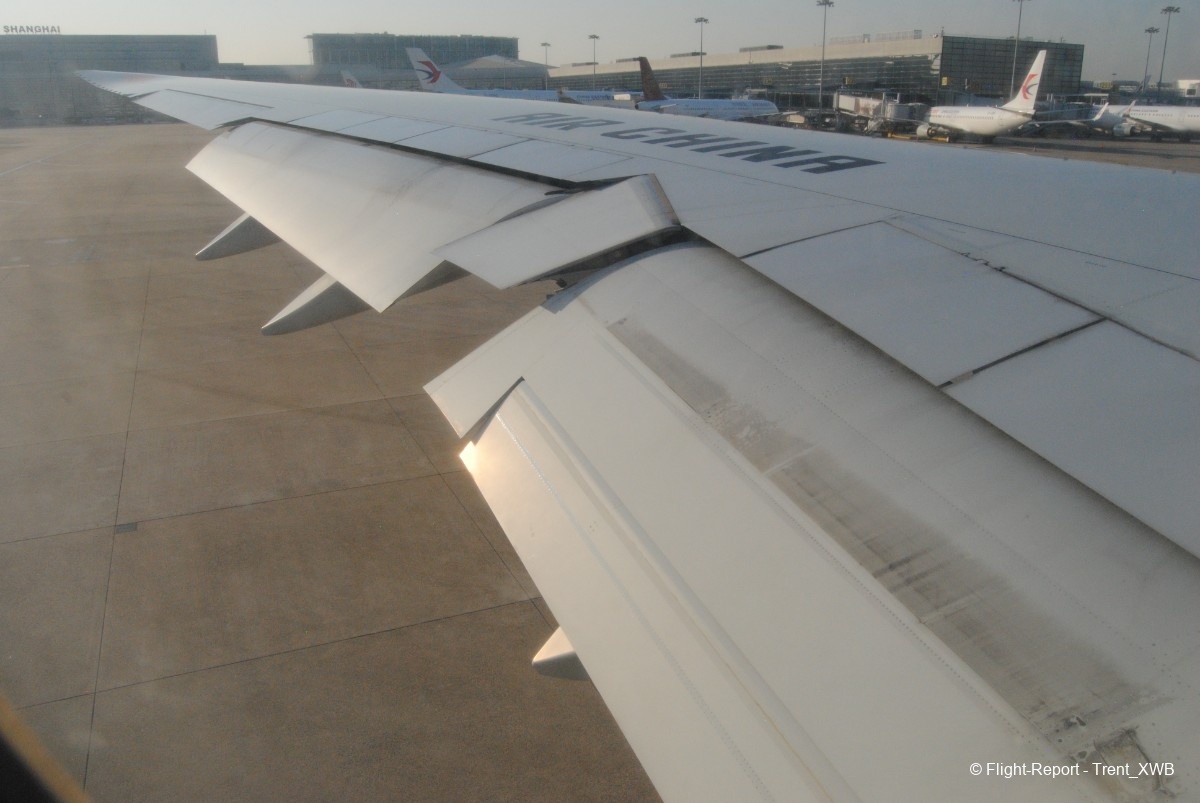
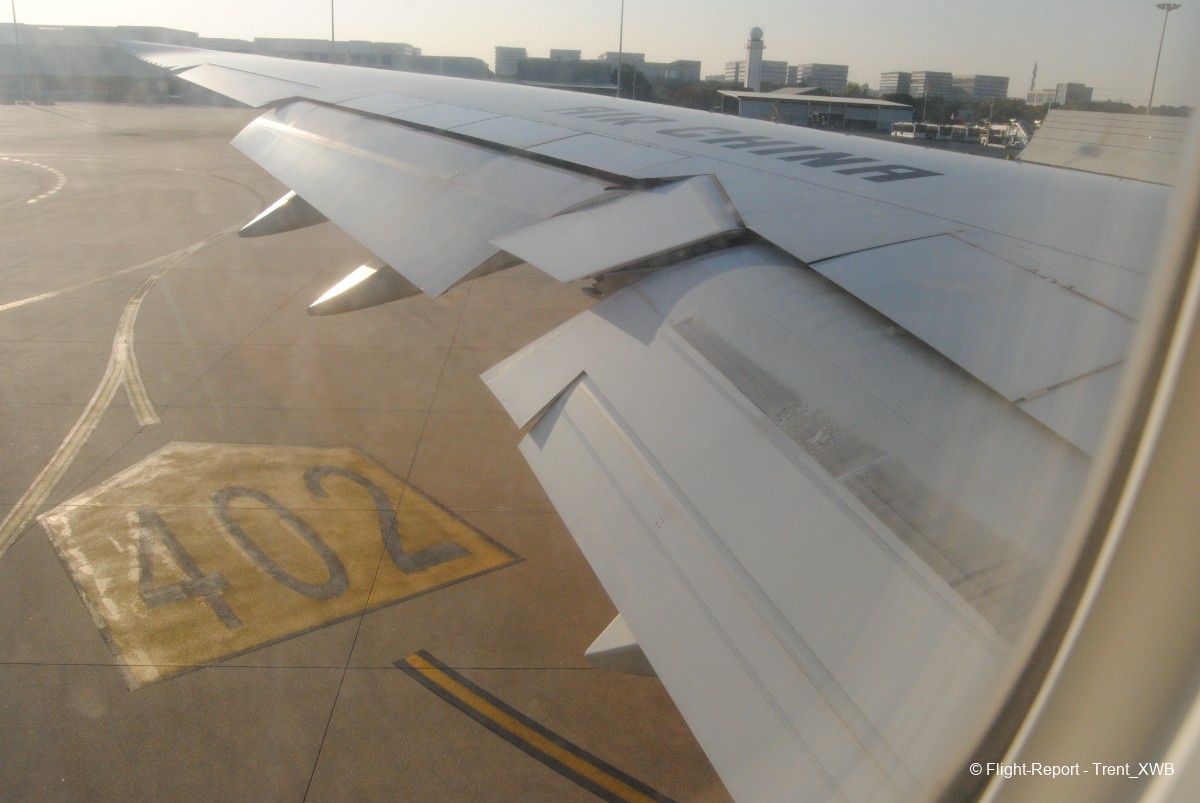
Lining up with the runway. One may notice that with the risen flaperon the outer engine becomes partially visible.
Takeoff video.
Taking off from runway 18R/36L, leaving our shadow behind.
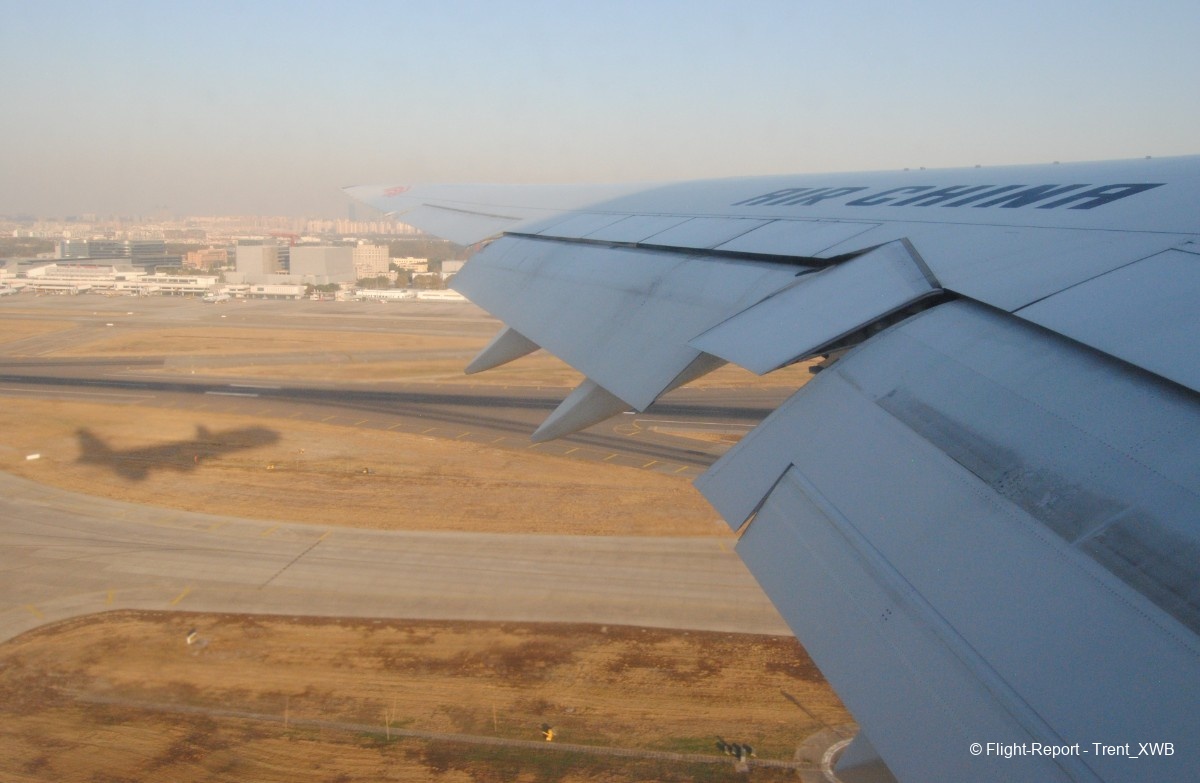
Overflying Shanghai metropolitan area before making a deep right turn.
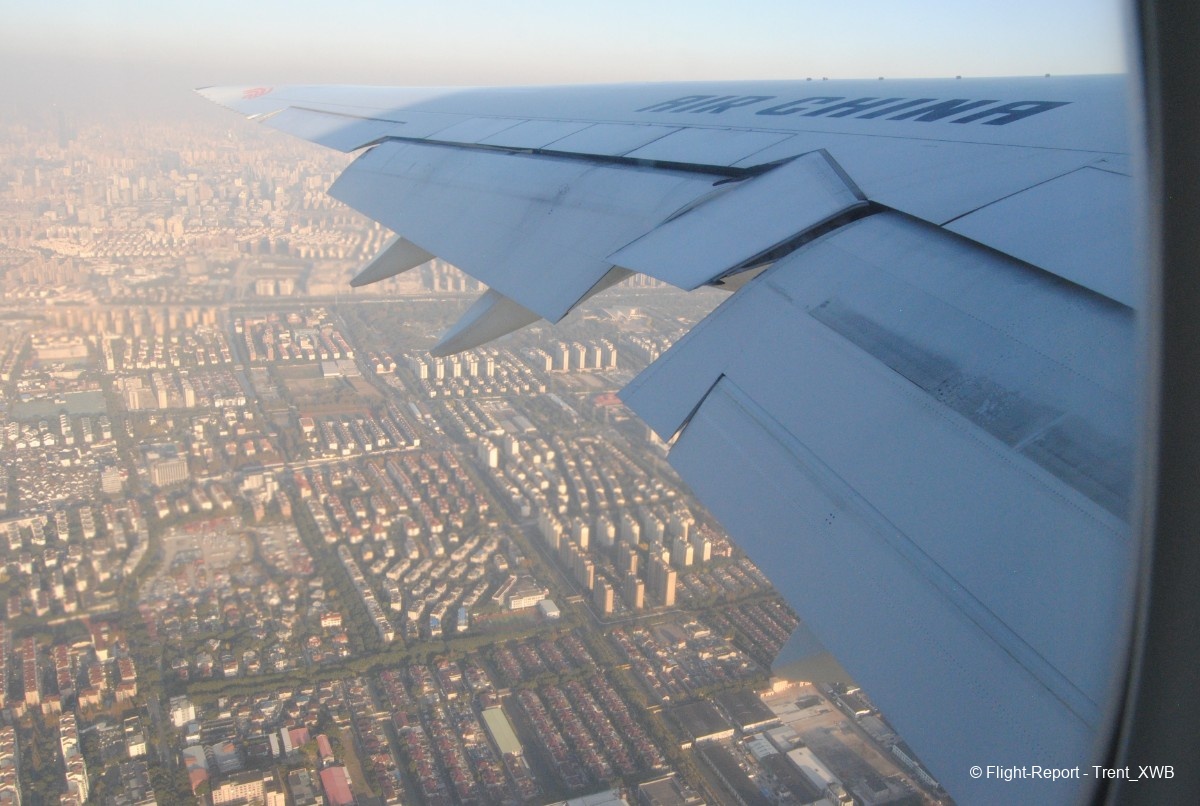
Lining up with the course towards PEK.
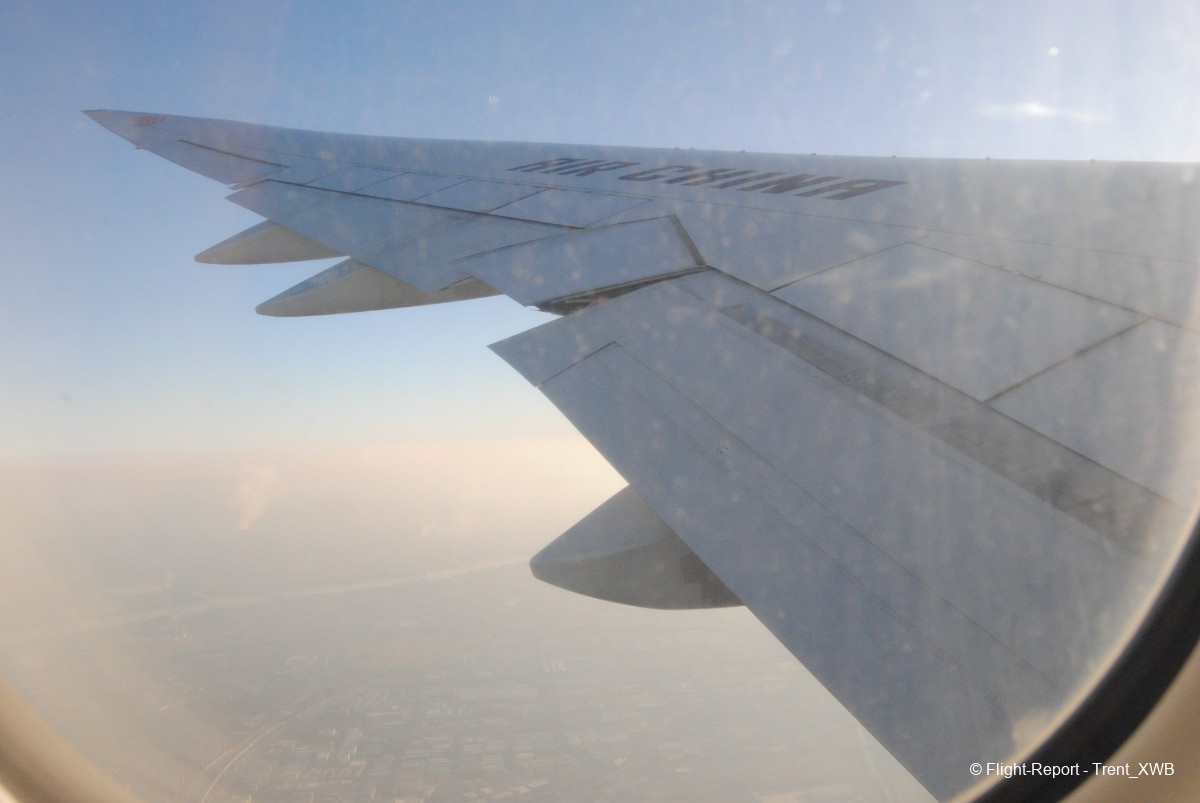
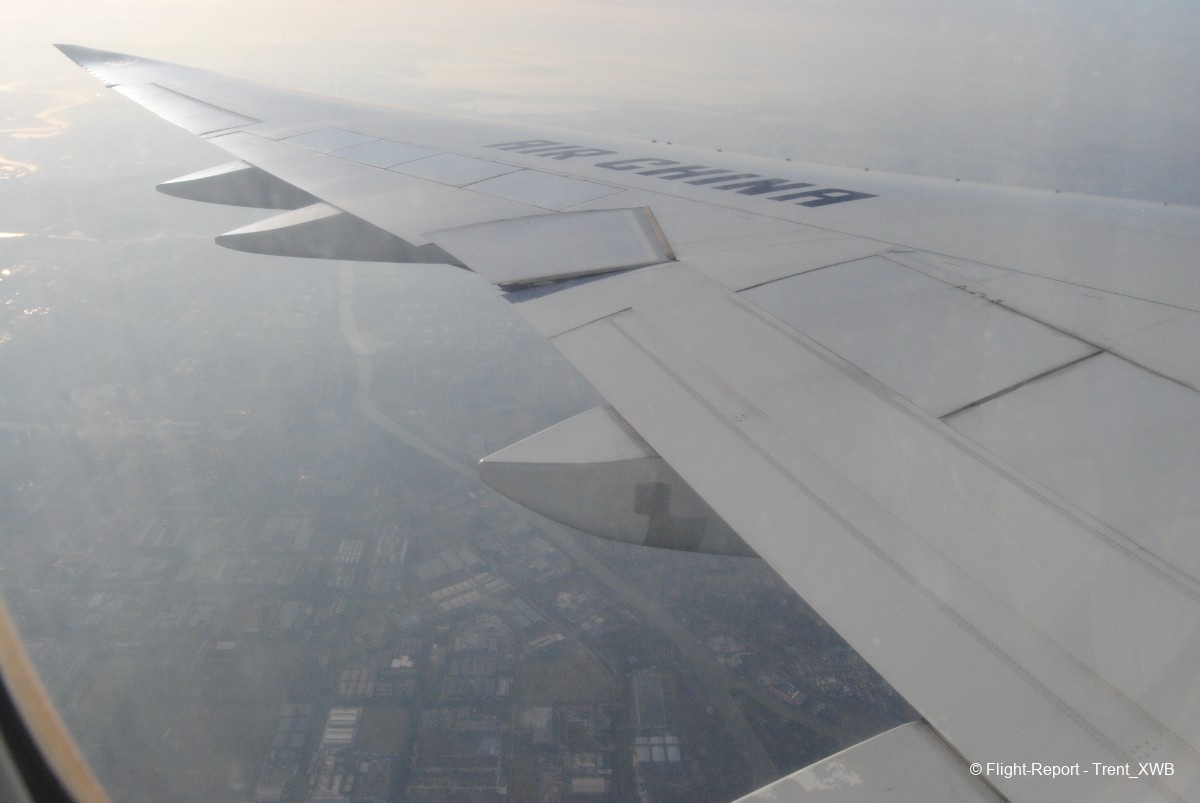
When flying in late November, CA1558 has very unfavorable lighting compared to CA1557. The evening sun is low and blinding, and the ground is hardly visible through the haze.
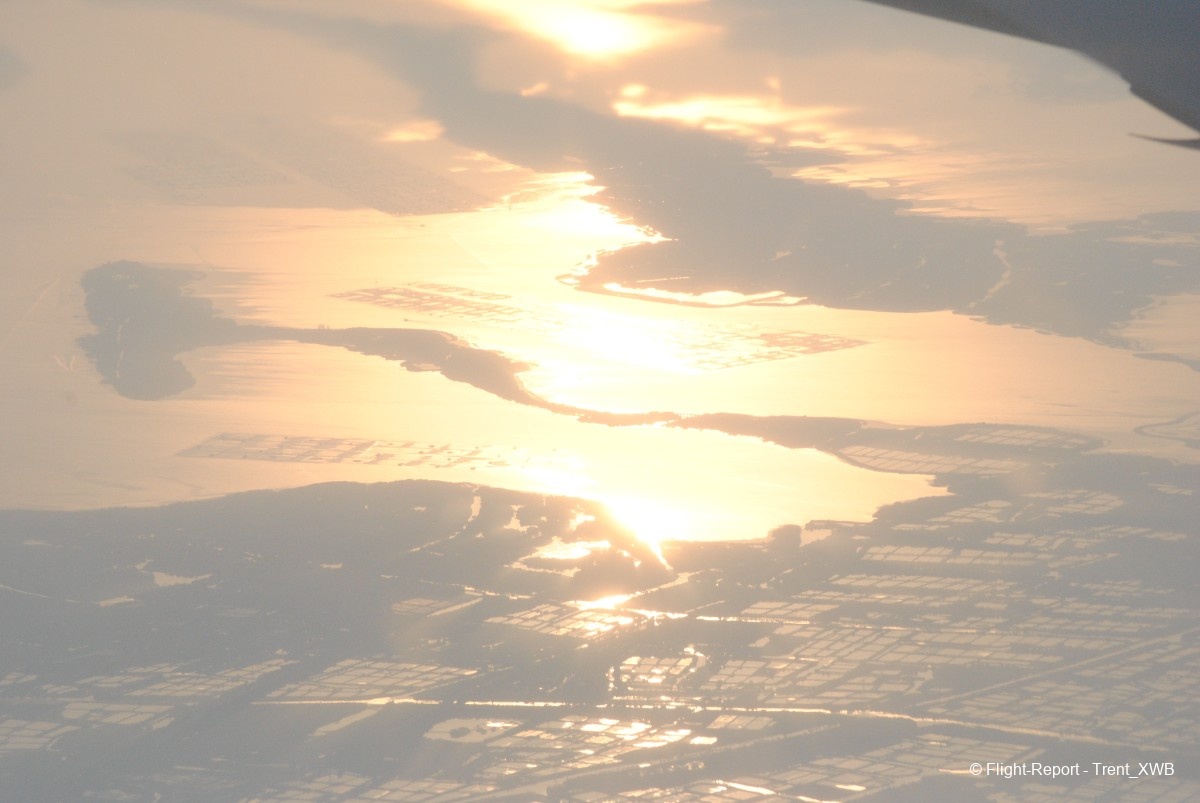
The only beautiful views during all the flight were while overflying large bodies of water and flooded rice fields with golden reflection of the evening sun somewhere near Yangtze river.
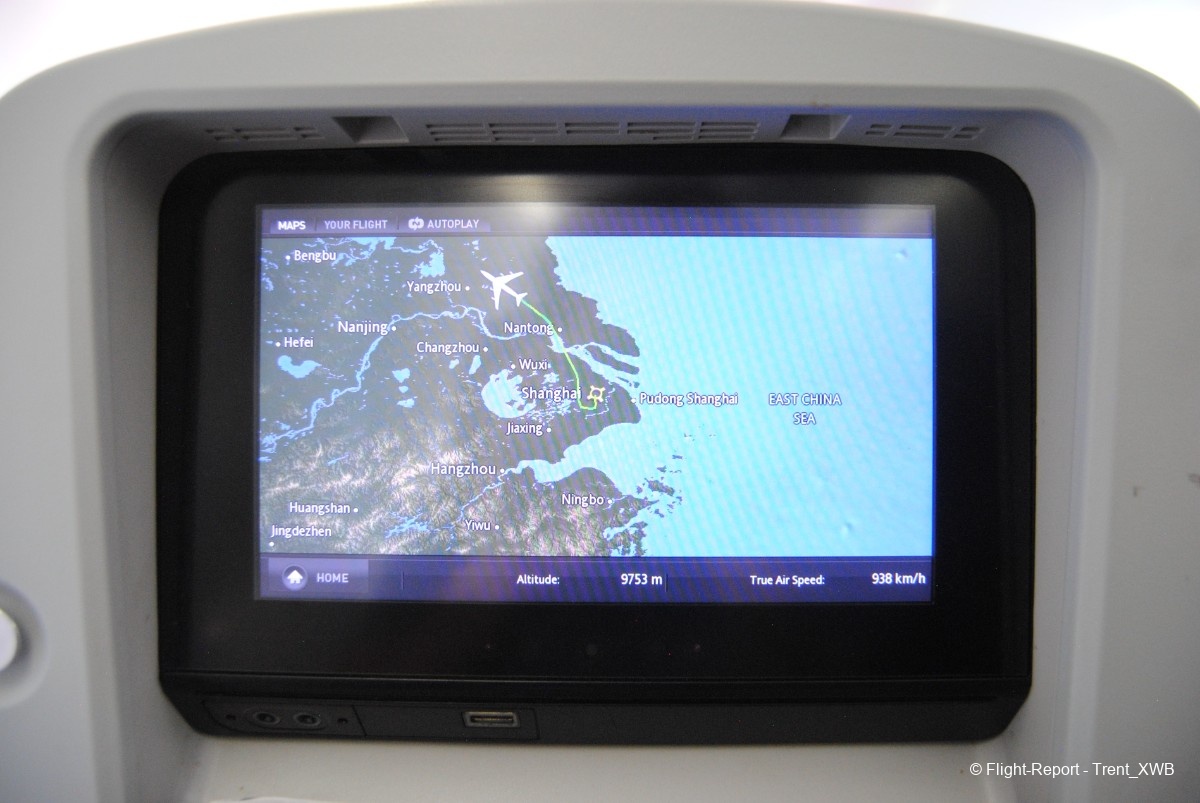
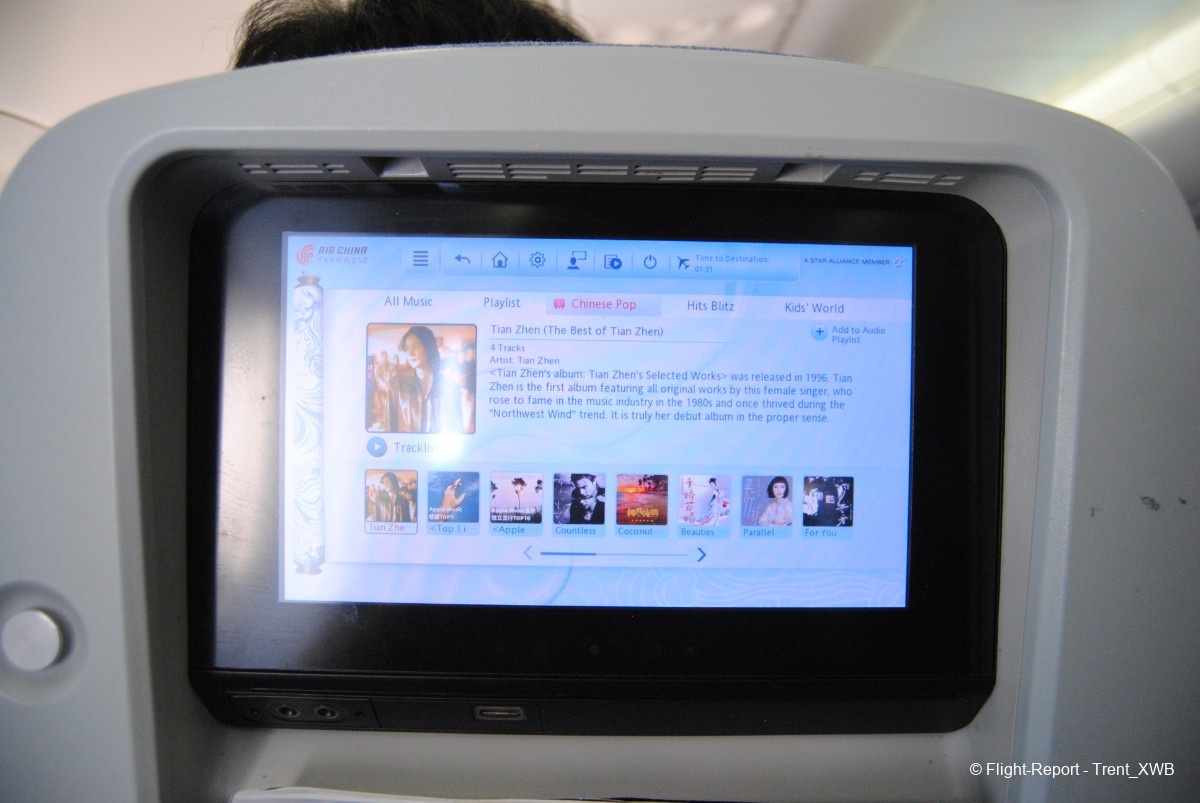
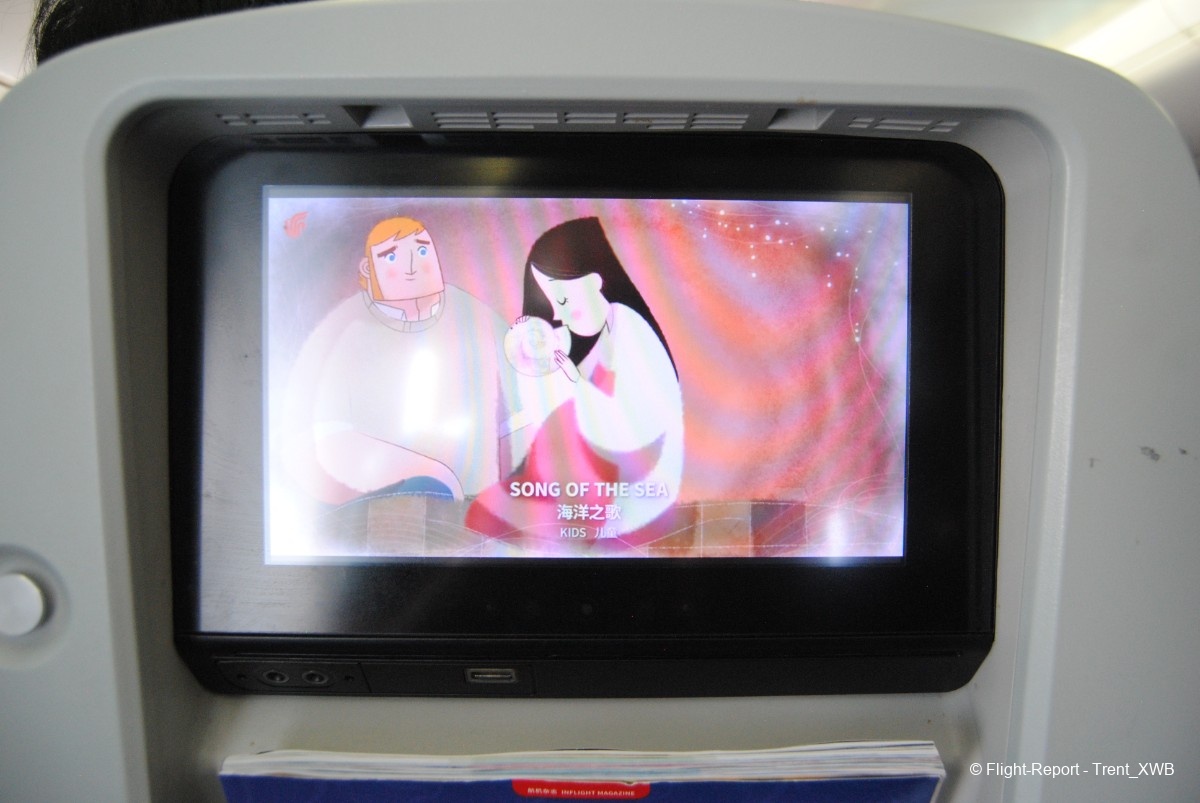
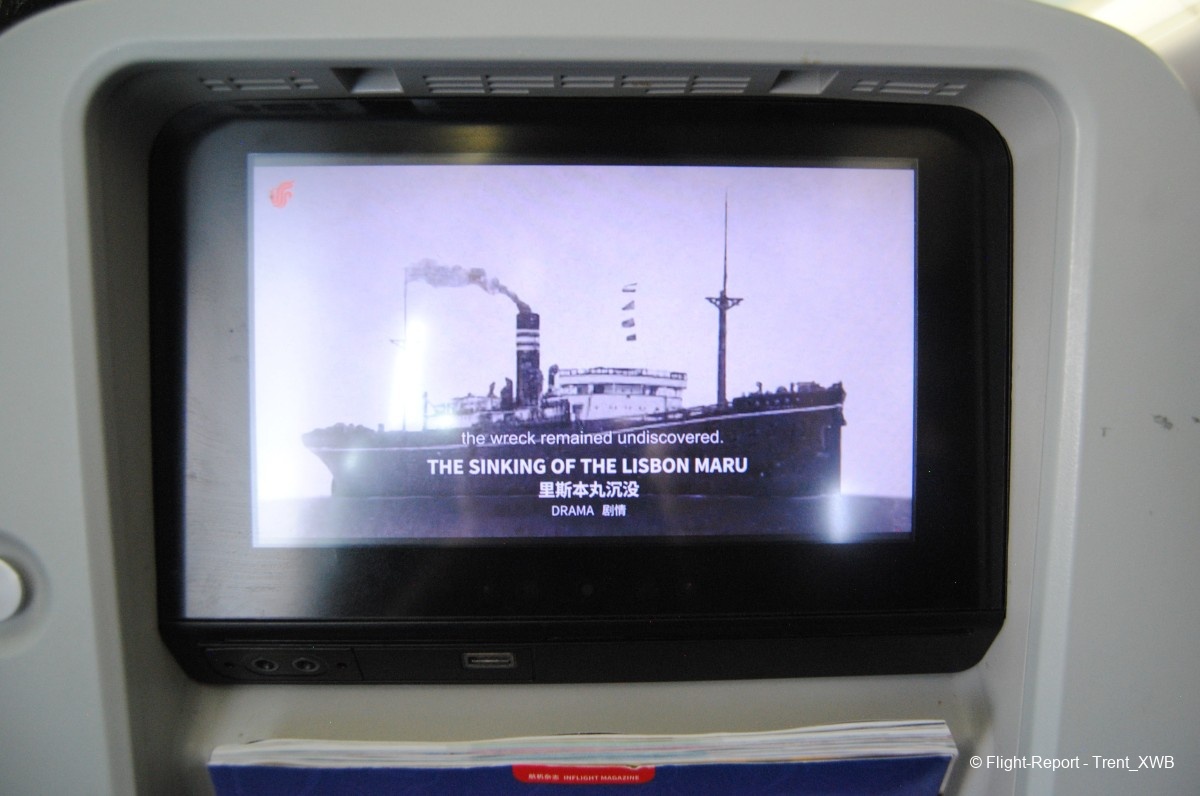
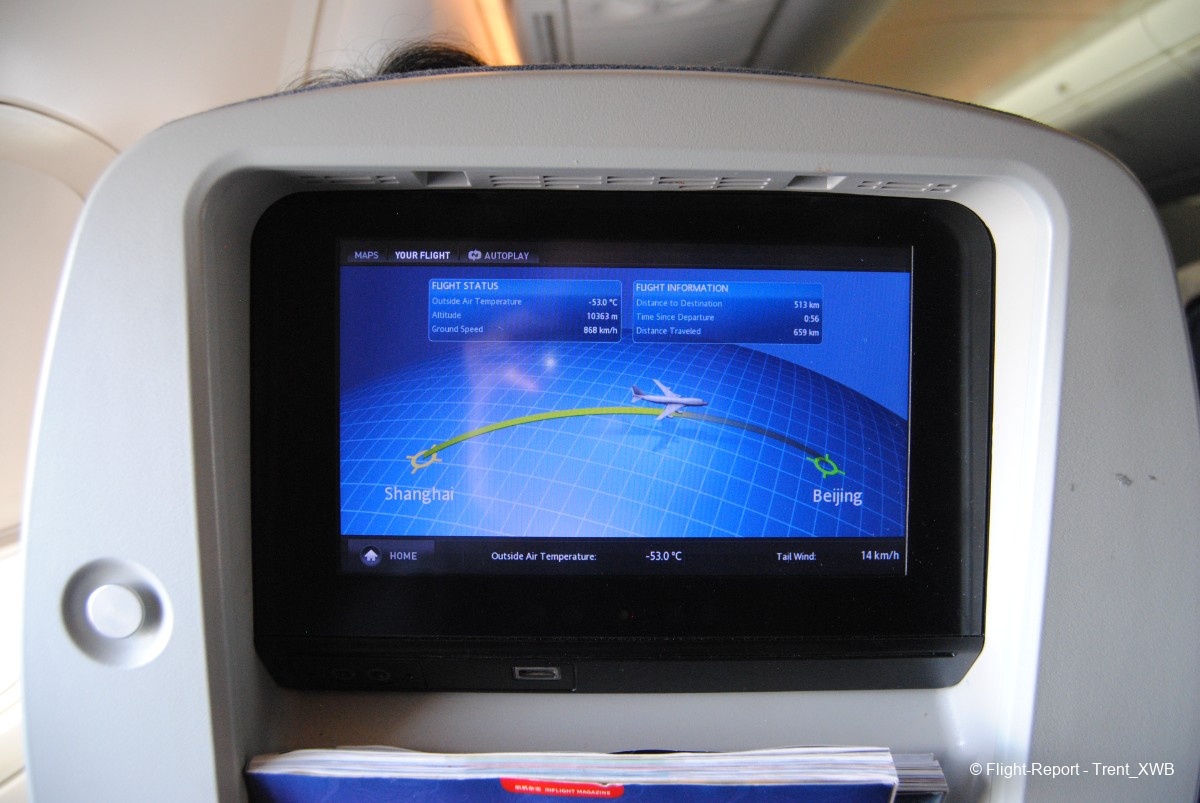
Let's dive a bit into IFE: the flight map, an example of music content, an example of children's content and an example of documentary film - "The sinking of the Lisbon Maru", a tragic story from 1942 about the death of more than 800 British prisoners of war, captured by Japanese forces after fall of Hong Kong in 1941. 384 POWs were rescued, mostly thanks to Chinese fishermen from Zhushan archipelago, where the drama happened.
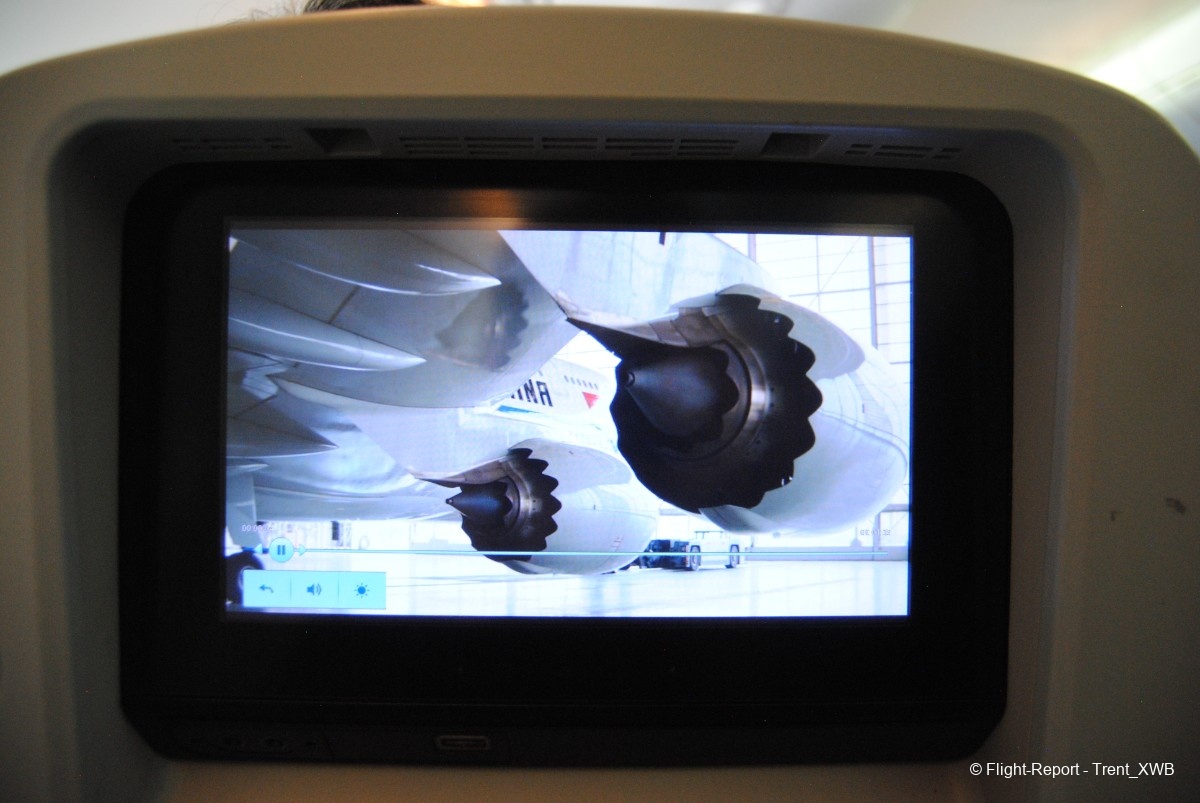
Some screenshots from the video about B748, complementing the screenshot from the same video, presented in the preceding FR.
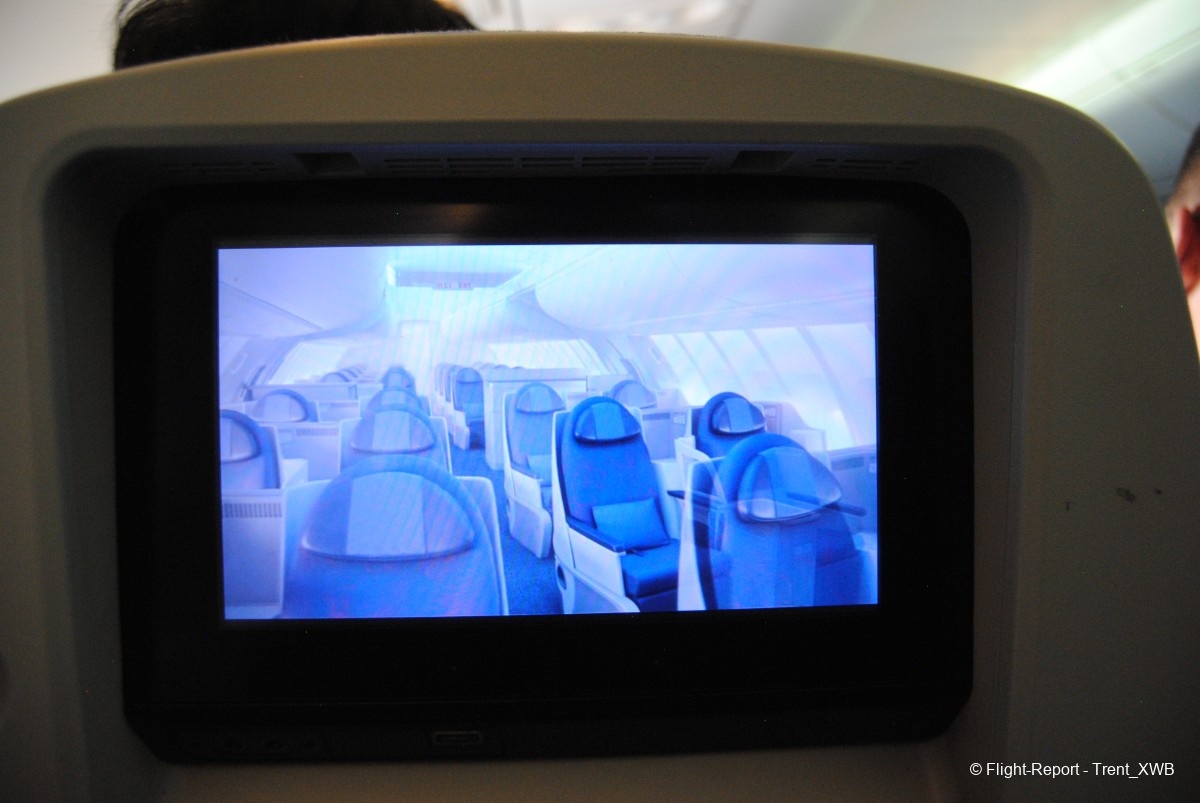
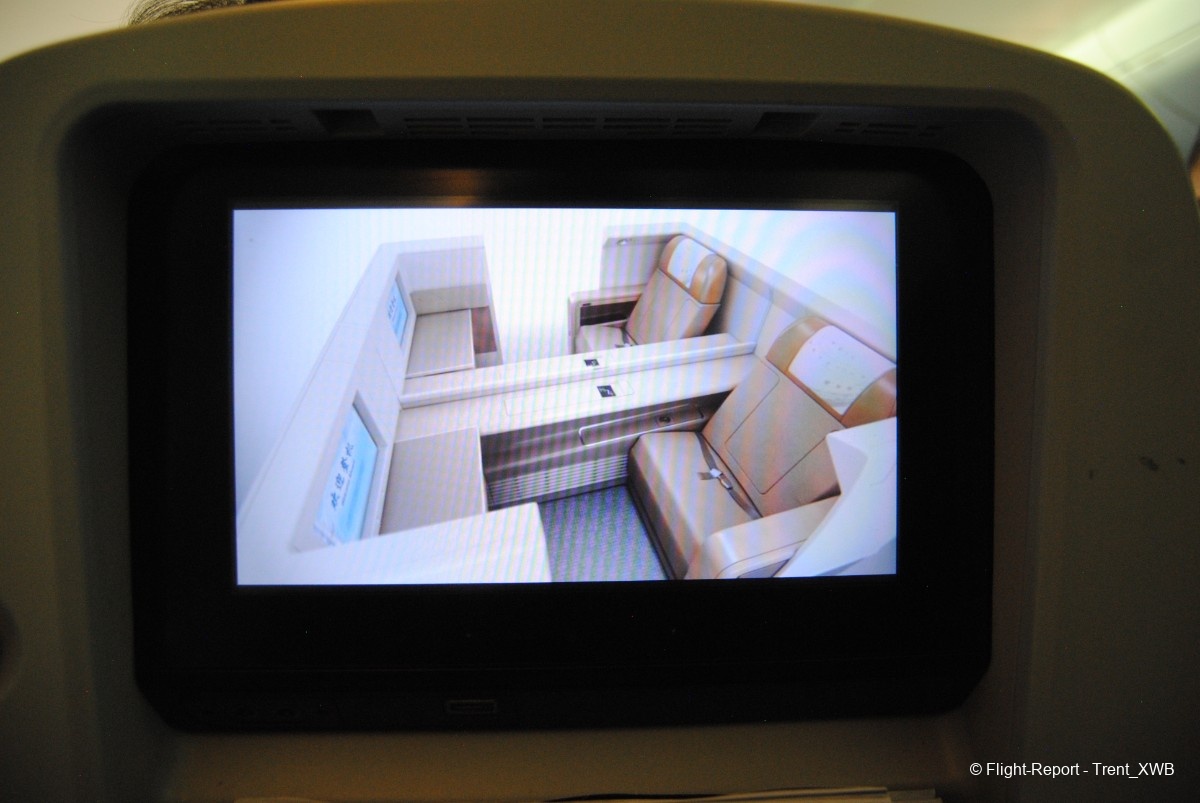
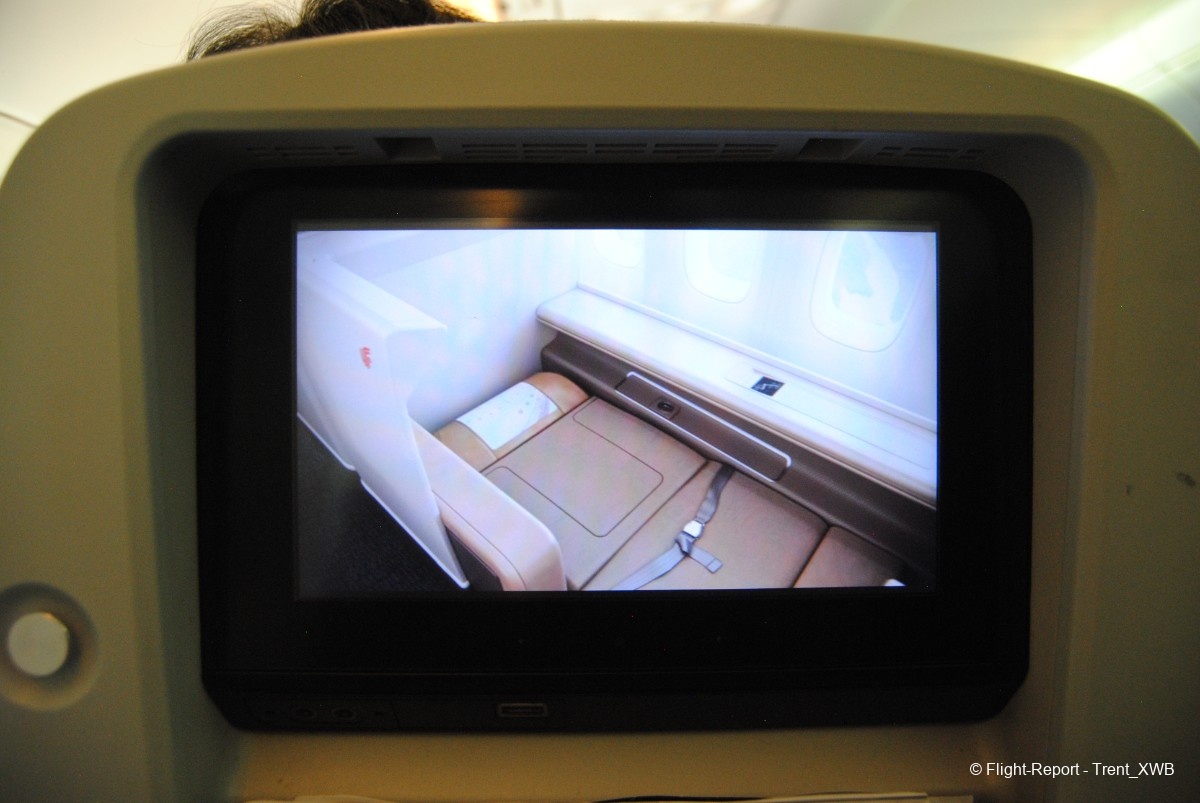
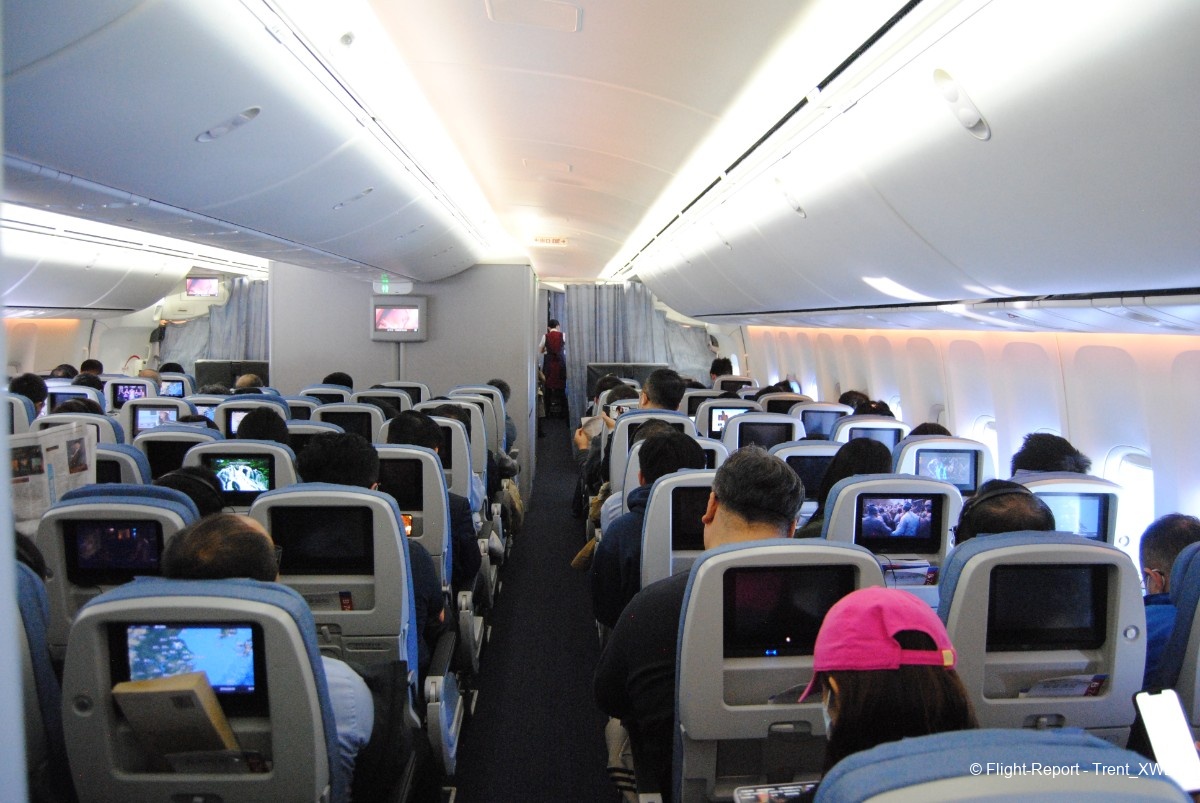
Let's stretch the legs a bit. An inflight view of the large rear economy cabin, which is separated from the smaller front economy cabin by the large galley near 4R/L doors.
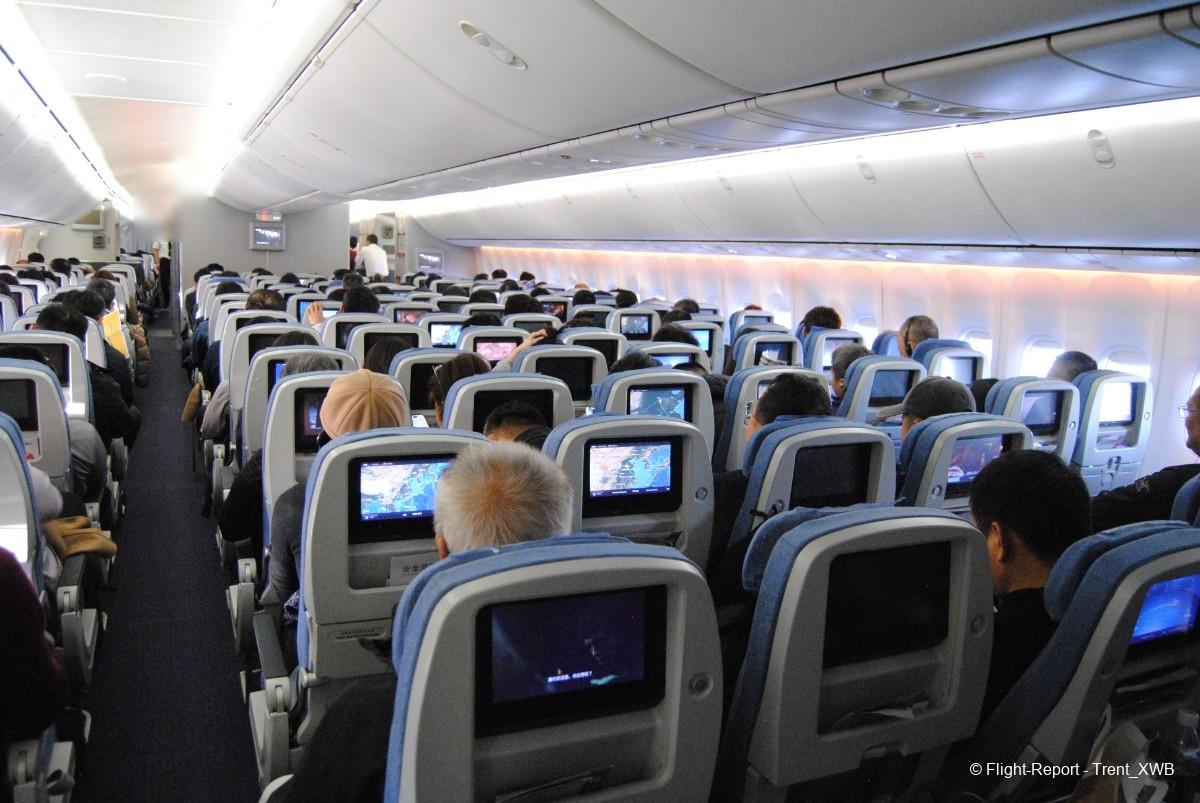
An inflight view of the smaller front economy cabin, which is separated from the "economy plus" cabin by a cluster of 4 lavatories near 3L/R doors.
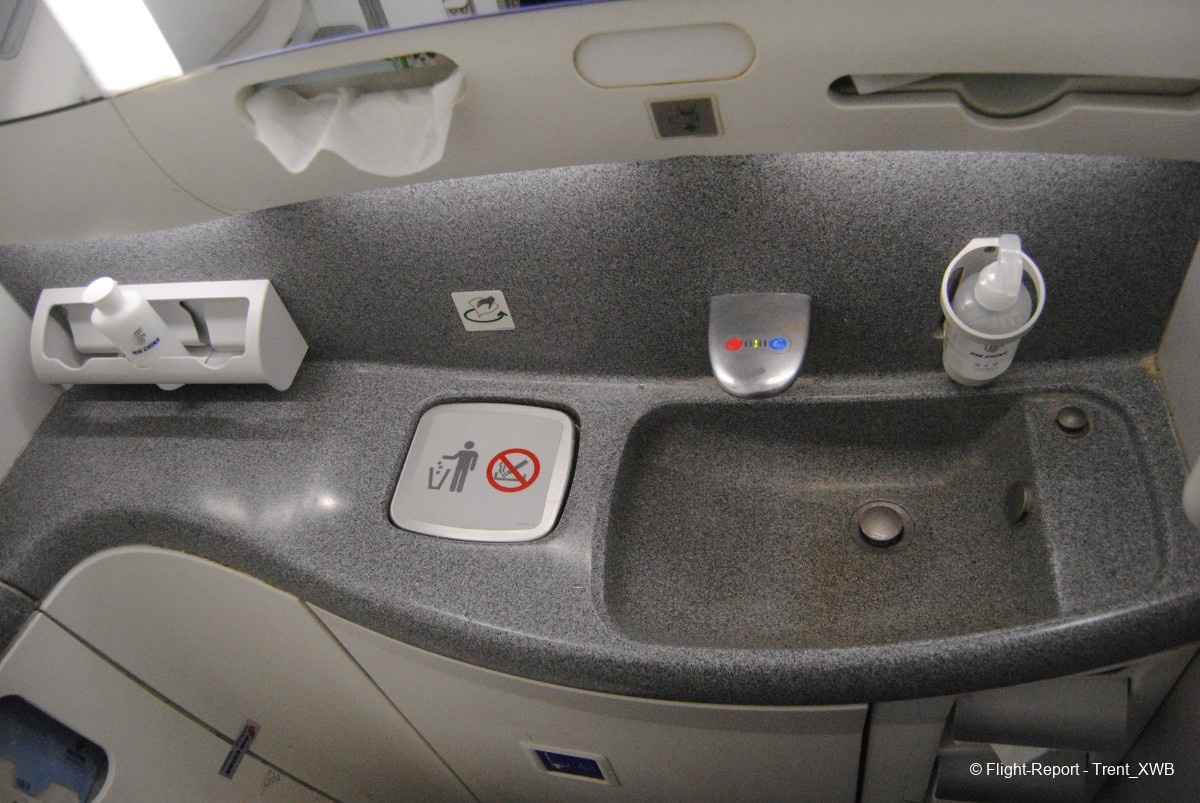
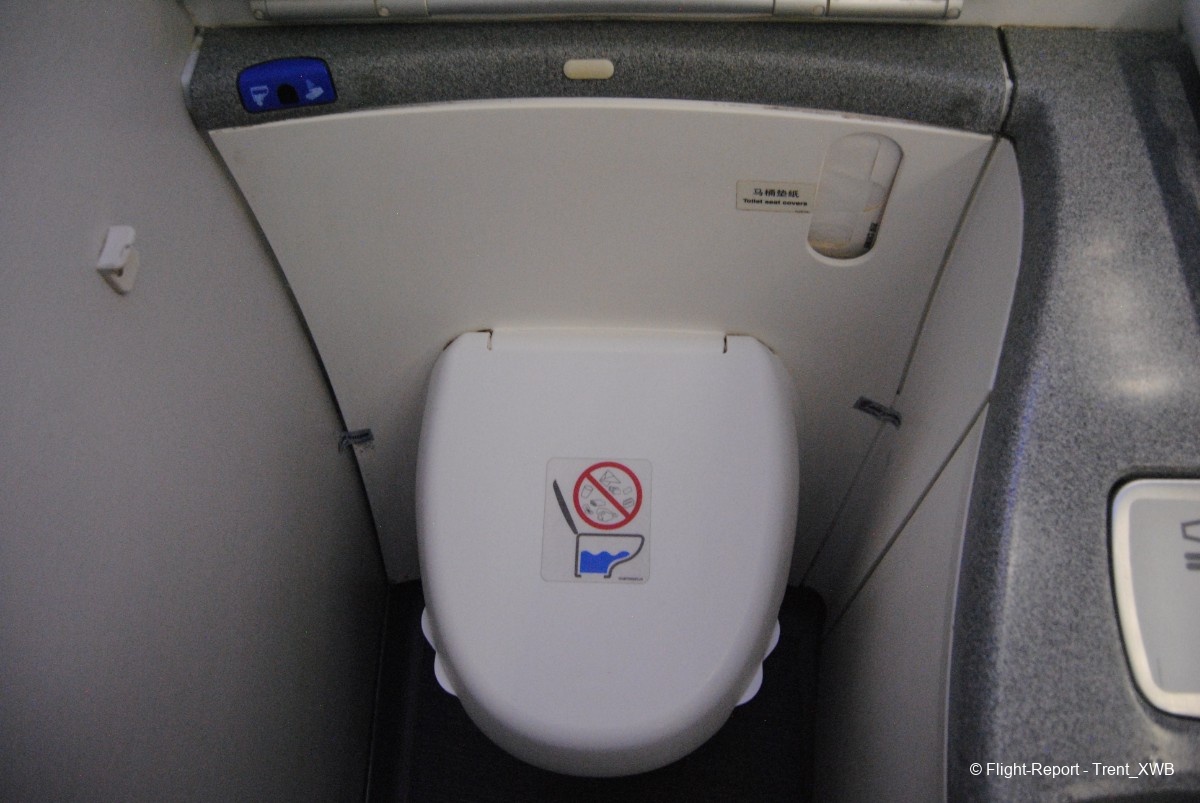
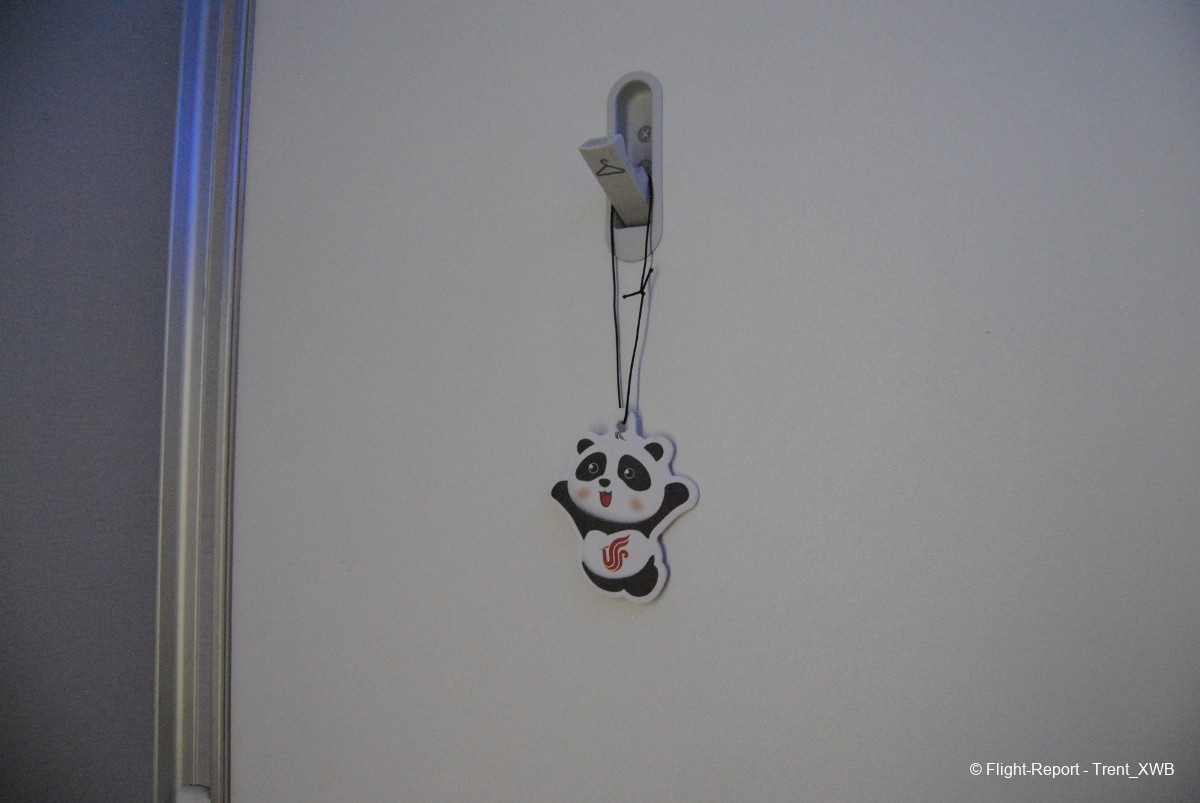
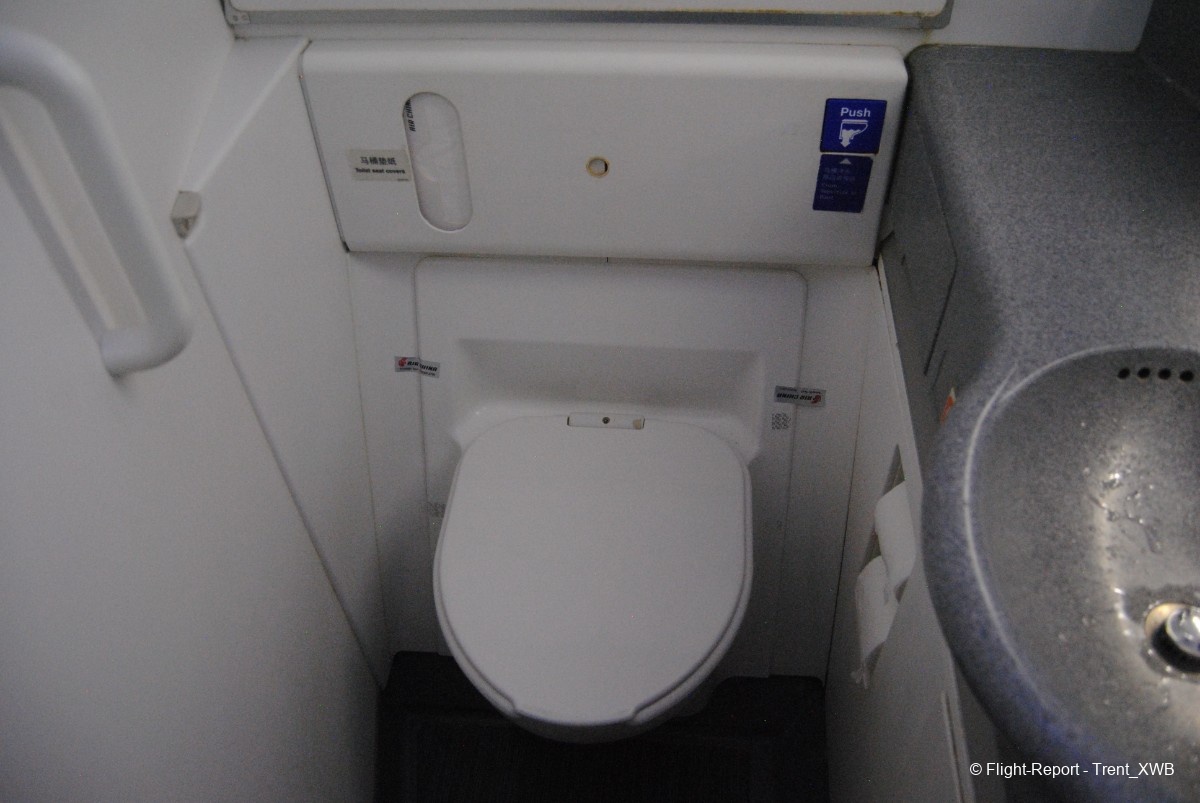
There are 8 lavatories for "economy plus" and economy cabins: 4 787-like ones (smaller with sensor flush) near 3L/R doors and 2 777-like ones (spacious with button flush) plus 2 787-like ones after 5L/R doors in the very rear. The lavatories are clean but showing their age. There're also signature "phoenix panda" air refreshers hanging on the lavs' doors.
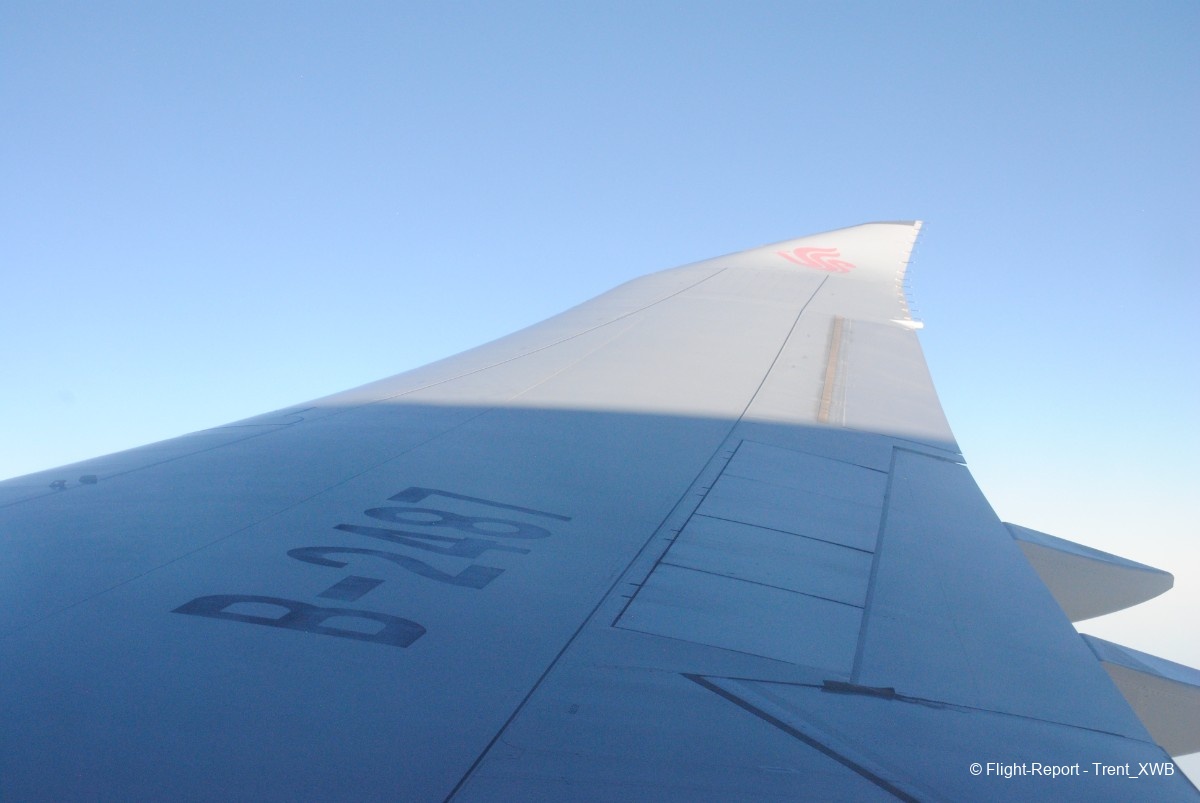
A view of the massive Jumbo's wing from 3R door. Right-side passengers on this flight get even less to see, as the window here is in the deep shadow from the tall fuselage, and the sun doesn't shine through haze at all.
Meanwhile the meal service starts, and it was something very humble (albeit beautifully presented).
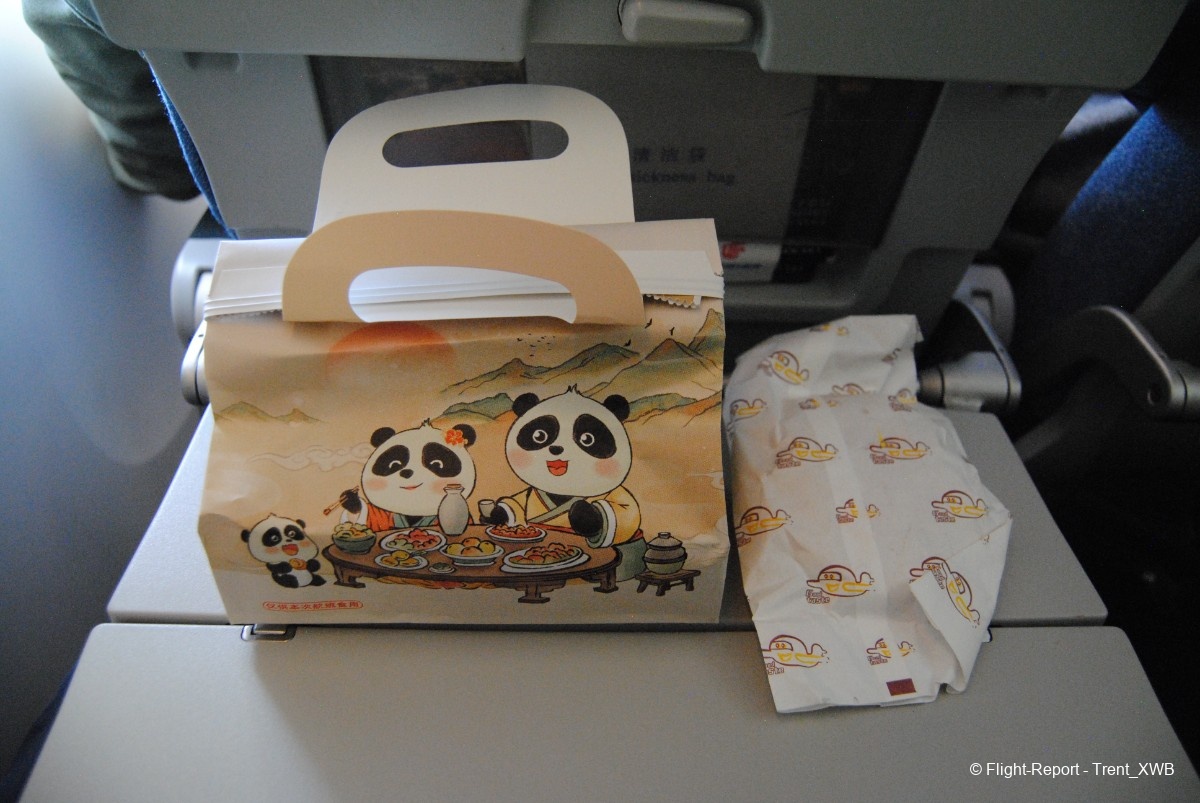
It turned out to be just sandwich plus snack box, containing a small pack of chips and a small amount of apple juice. Taking into account that I had long emptied the bottle with water, I felt very thirsty after the meal, but no additional drink service was provided.
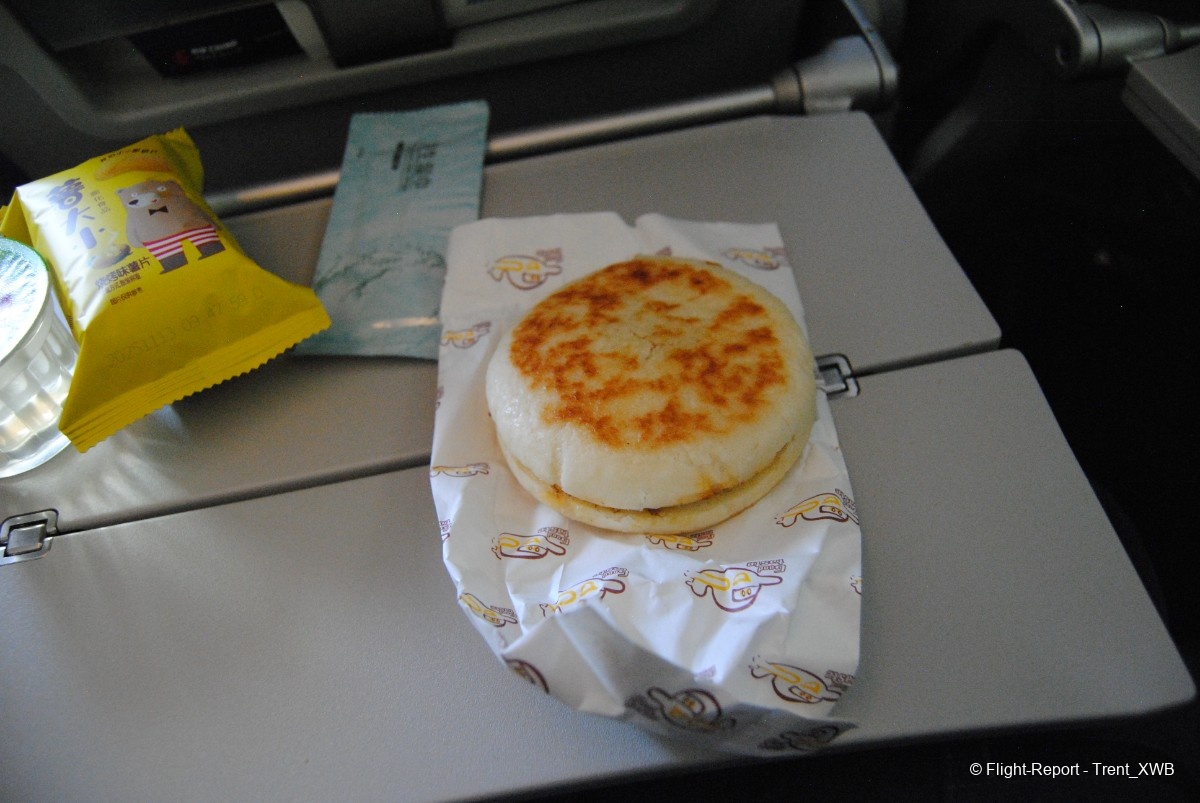
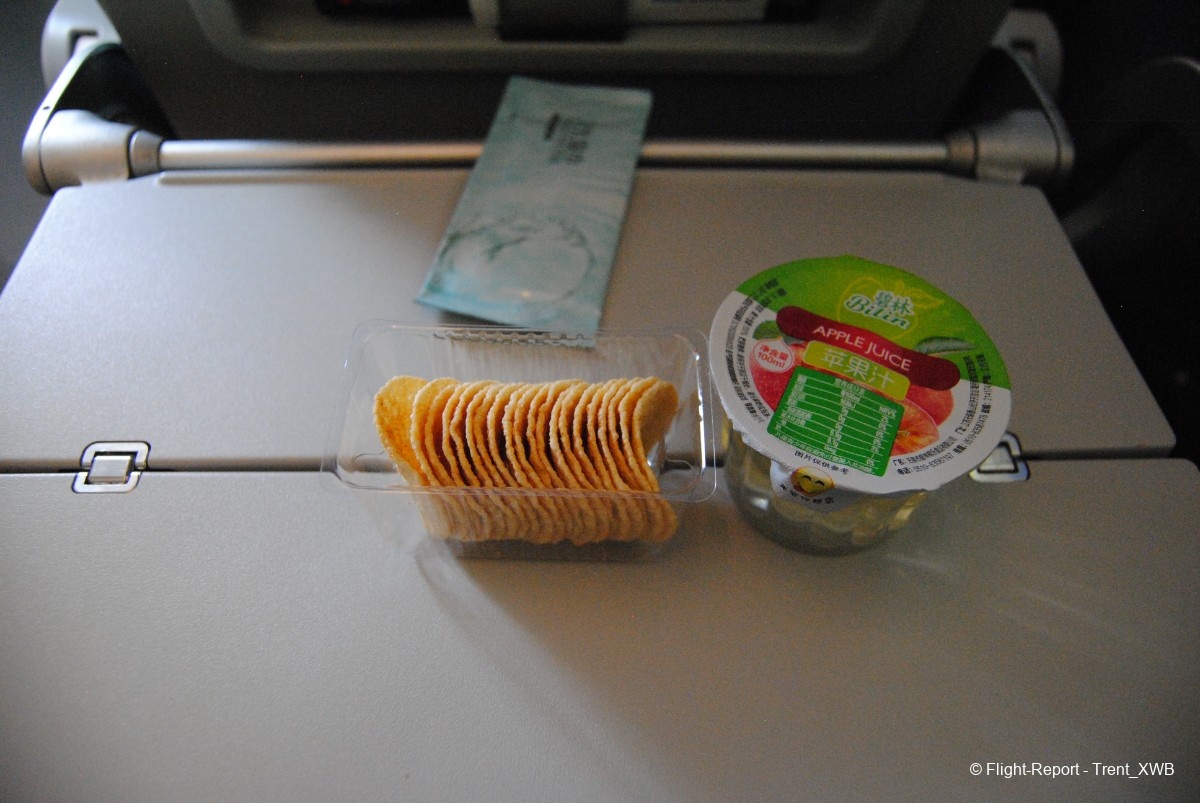
Back then I was unaware about the traditional meal times in China and, comparing these humble (albeit still more than OK for the flight of this length compared to the European standards, where you usually get nothing but water) snacks with the hot meal I got on the preceding CA1557 flight, I felt disappointed and was thinking that CA's meal service on domestic flight is inconsistent. But, let's remind, the reality is that you get a hot meal on domestic flights (with block time more than 1.5 hours) in China only if the cruising phase of flights overlaps with one of 3 traditional daily meal intervals: breakfast (07:00-09:00), lunch (12:00-14:00) and dinner (18:00-20:00). One can easily see that the schedule of CA1558 doesn't overlap at all with any of these intervals. And, for example, the morning CA1501 PEK-SHA flight, reviewed by jaersene, also gets just sandwich and snack box, as its cruise time doesn't overlap with the breakfast time. Well, even first class passengers of domestic CA flights don't get a hot meal if the cruise time doesn't overlap with these intervals, as one can see from the example of late evening CA1510 SHA-PEK flight, reviewed by Sewey135, who got to fly an old venerable B744 (the meal service in F on this flight looks especially disappointing even compared to what economy passengers get on flights like CA1501 and CA1558!). So, now you're aware about the pecularities of the Chinese domestic inflight meal service and hopefully it will help you to choose your flight time properly. But if you're an avgeek, it's the aircraft type, who gets the priority, not the meal!
Meanwhile more than half-distance to PEK is covered and we're cruising at FL340.
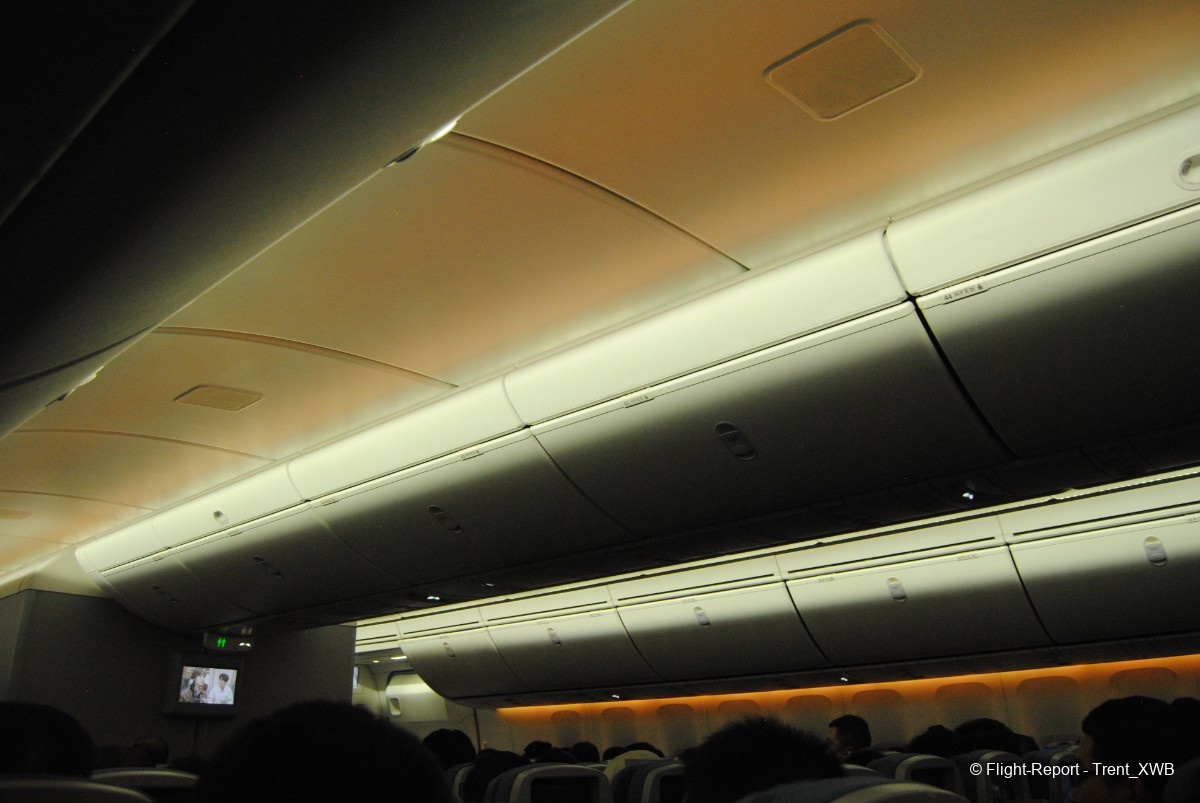
Soon the cabin moodlighting is turned into "sunset" mode…
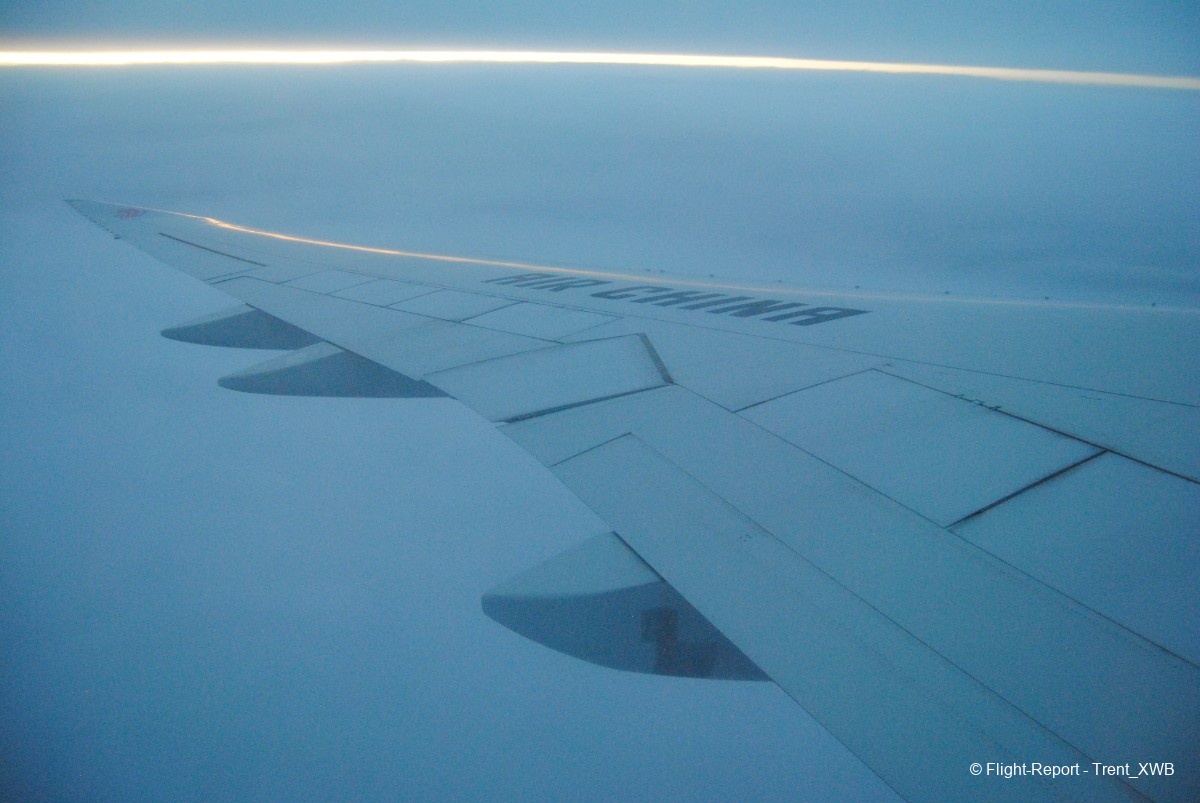
… and we start our slow descent. Having a seat on the left side, I was expecting to see sunset sky and its reflection on the Jumbo's wing, but the reality made some corrections: despite the weather forecast, promising clear skies in Beijing area, the sky was covered by high-level clouds, completely damping the sunset. Just a thin orange strip on the wing's leading edge was all I got.
Flaps out as we're getting closer to PEK.
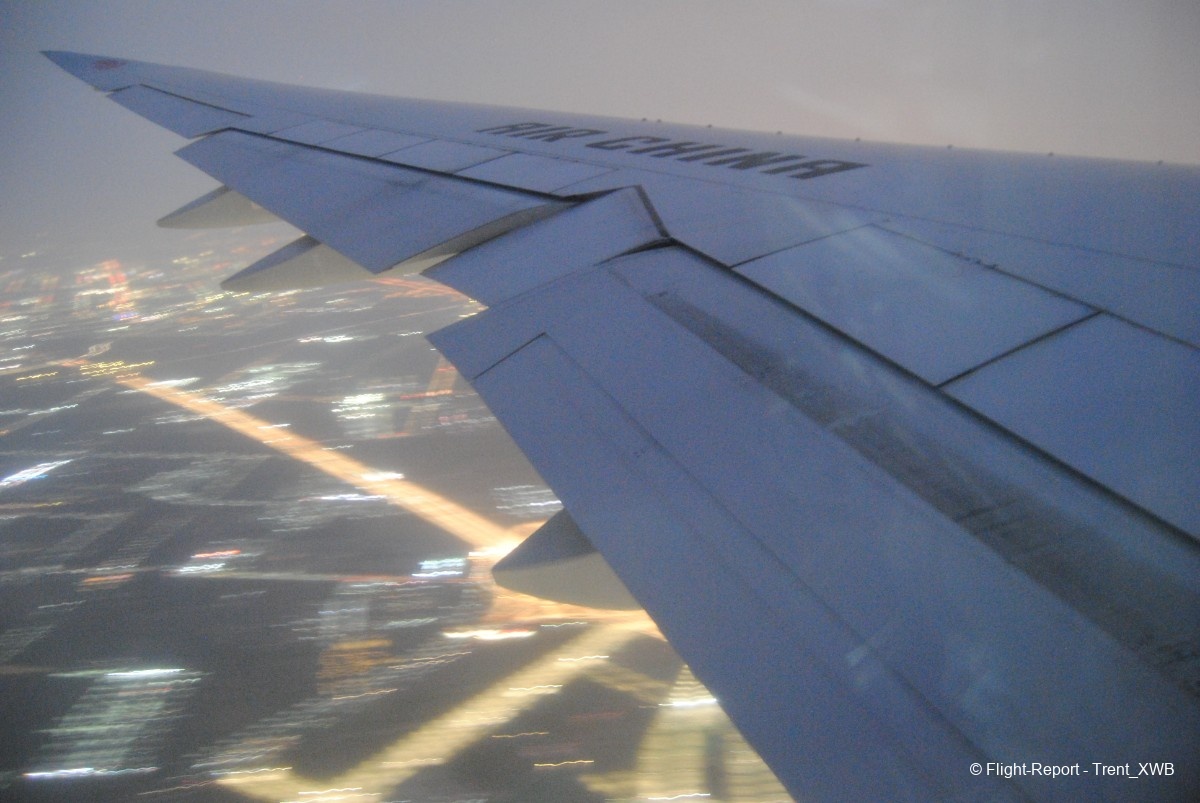
Moments before landing in PEK. Flaps in the landing position makes the B748 wing truly impressive!
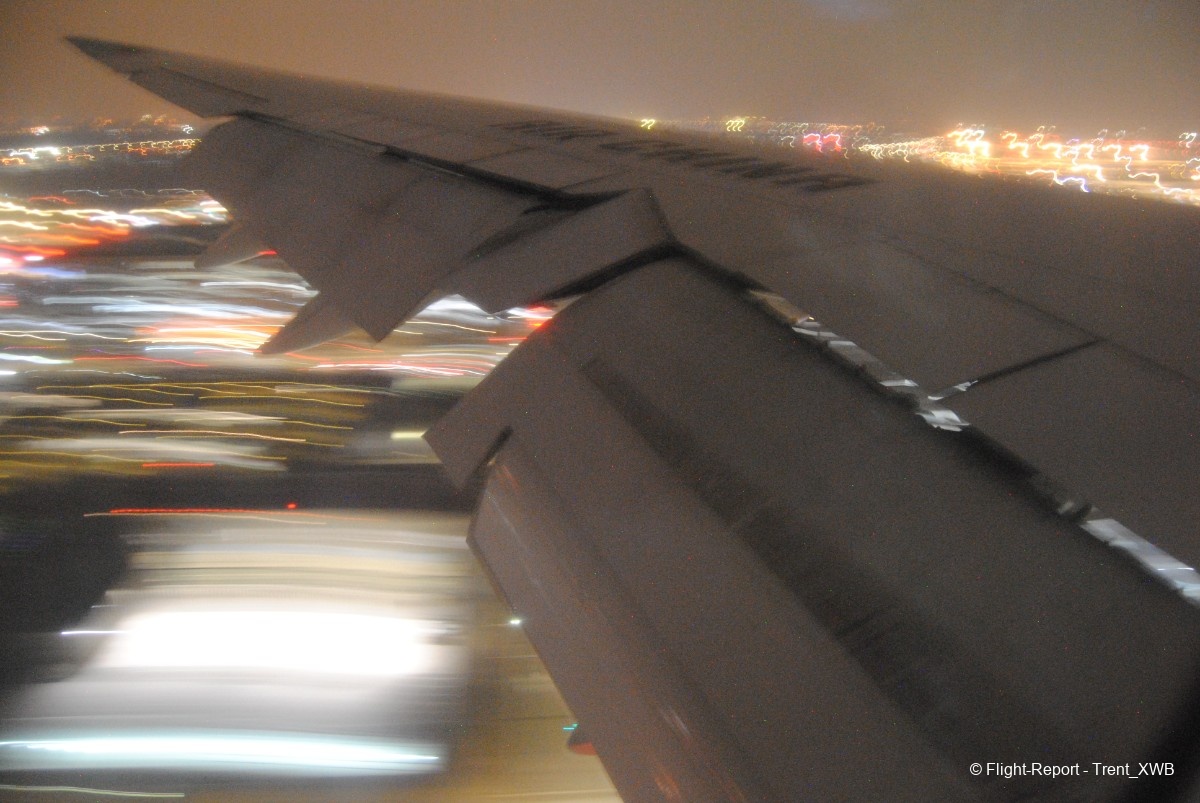
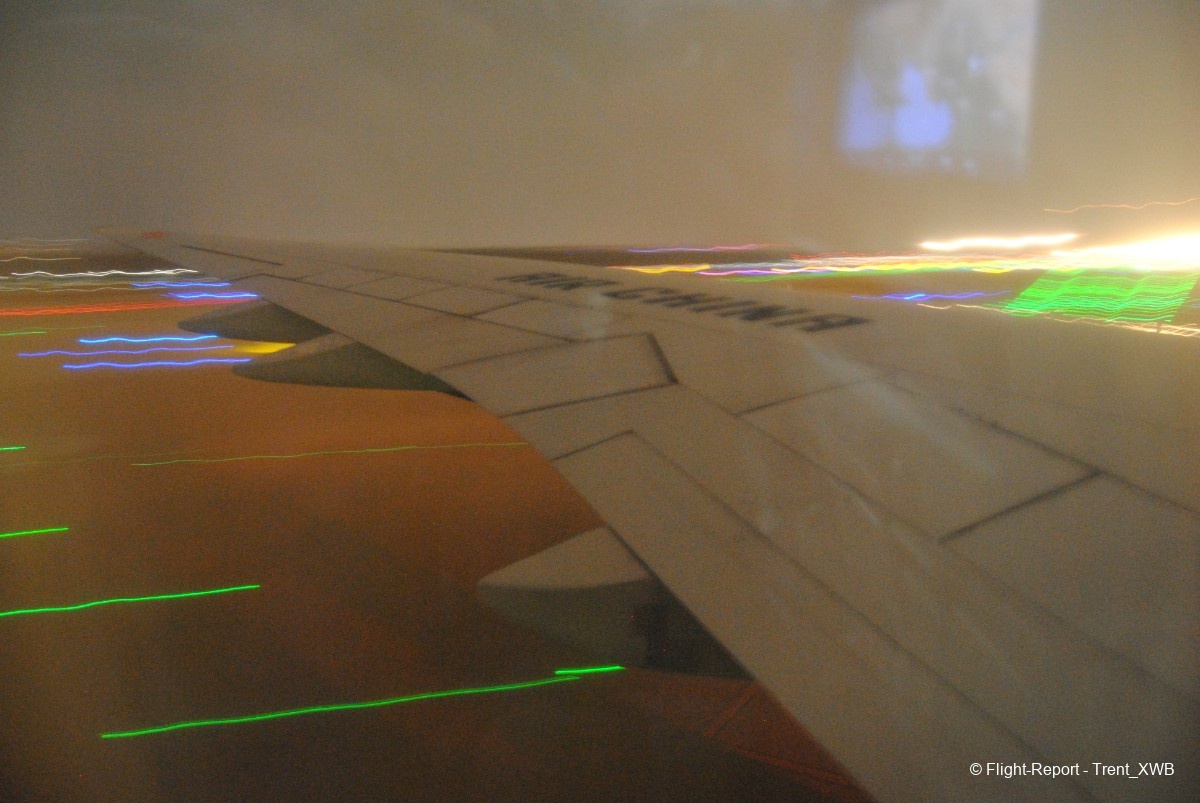
Taxiing to T3 after landing.
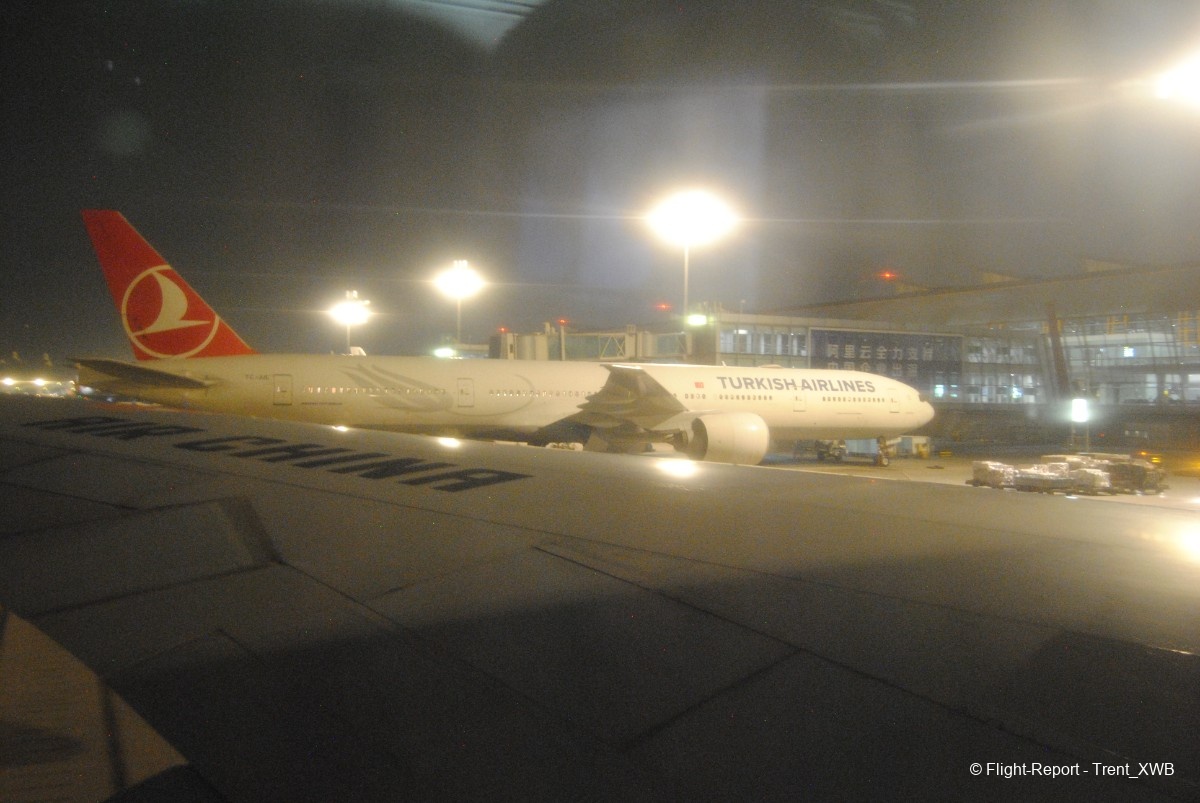
We arrived to the international T3E pier, as our Jumbo was sheduled to JFK this evening (which meant that the passenger should be bussed to T3C) and parked near TK B77W (TC-JJL) - the aircraft I flew back in the end of pandemic 2020 year on IST-CMN. TK's older B77Ws are super comfortable in economy due to very spacious 3-3-3 layout with well-padded Weber 5751 seats. Sadly, TK's newer widebodies - A359s and B789s, which have inferior economy - have pushed B77Ws away from TK's longest routes, thus TK usually sends B77Ws to the flights not exceeding 10+ hours, like PEK.
The Economy Class After The Flight
A couple of views of the front smaller economy cabin, where I sat on this flight, during disembarkment.
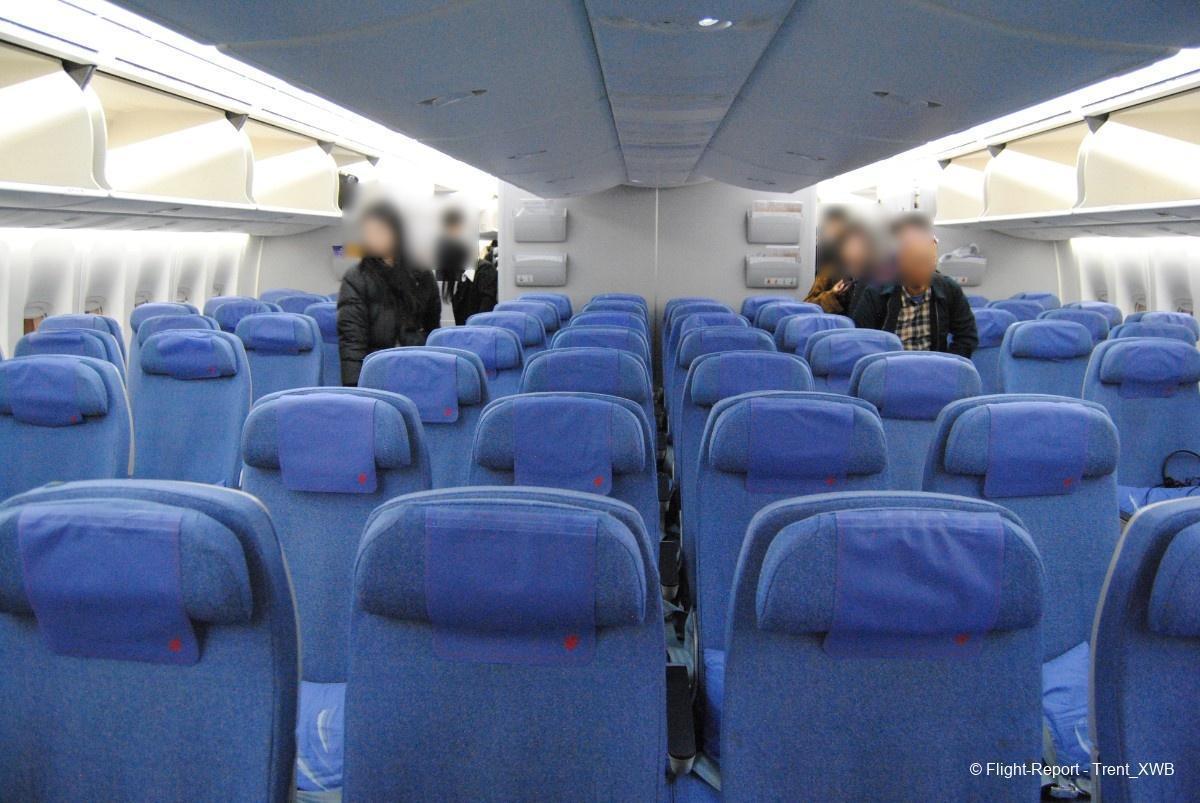
One can notice that seats 39J and 40K/L have some remnants of the original phoenix upholstery.
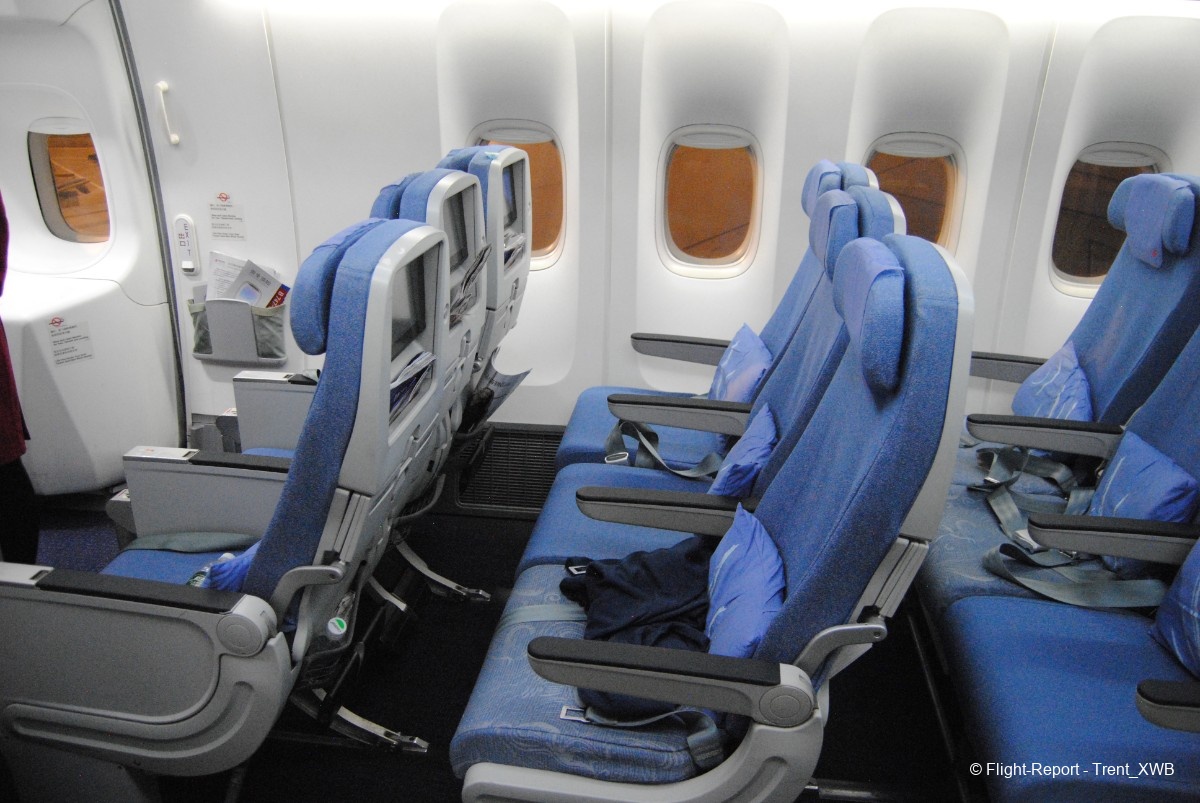
The Economy Plus Cabin After The Flight
A views of the rows 34-36, located in the zone, where 3 windows are missing due to technological reasons. One can notice how well-aligned the seatblocks to the windows (for comparison, the front small economy section in LH B748s, located in the same are, is aligned badly to the windows). One can also see that using the seatback tray table is almost impossible with this generous row pitch, thus justifying the need of use of bulkhead seat blocks with additional tray tables in fixed armrests.
The Upper-Deck Business Class Cabin
Thankfully, the crew (which again were very nice and welcoming) permitted me to visit the upper deck again!
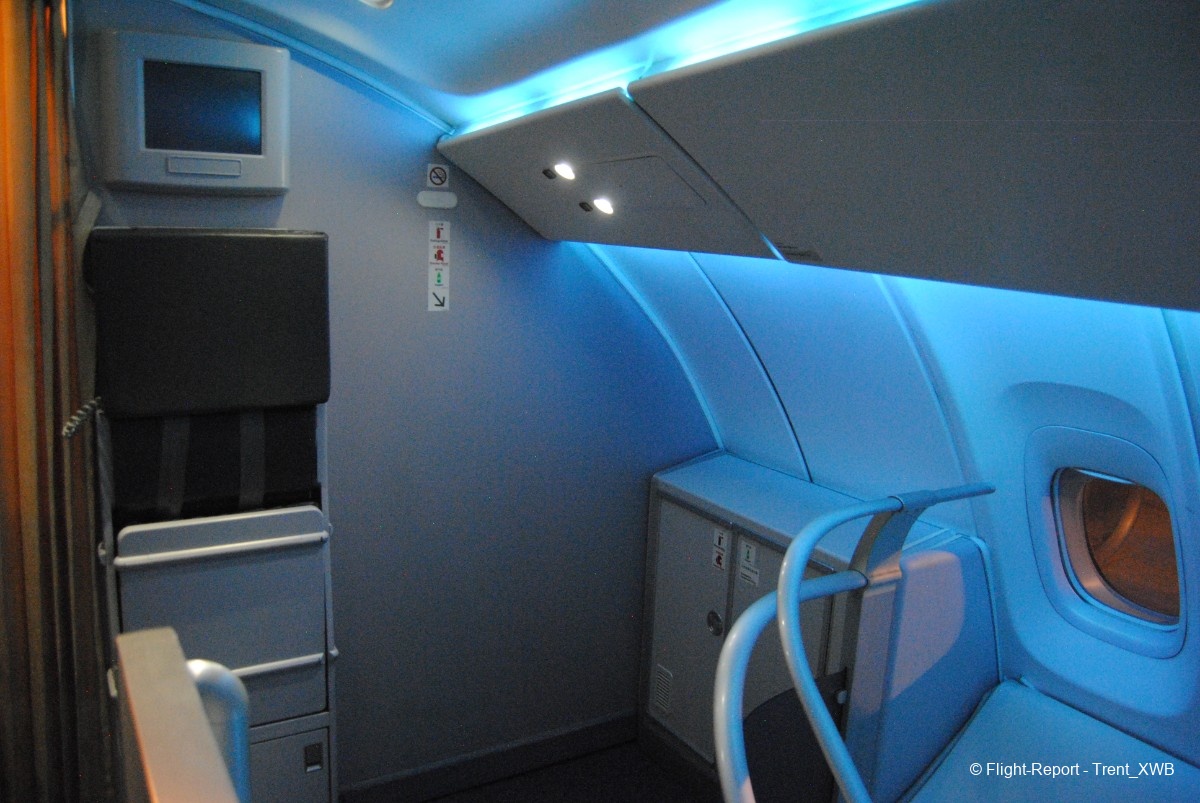
The stair with the night lighting.
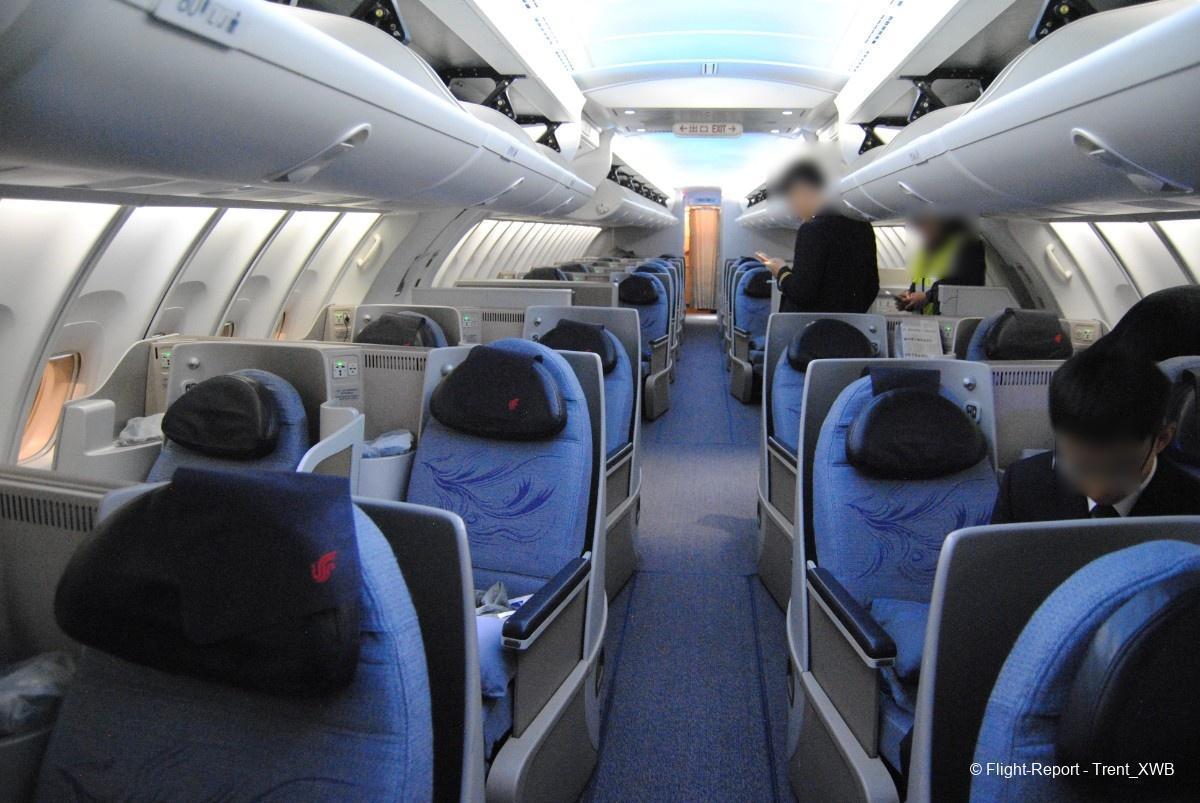
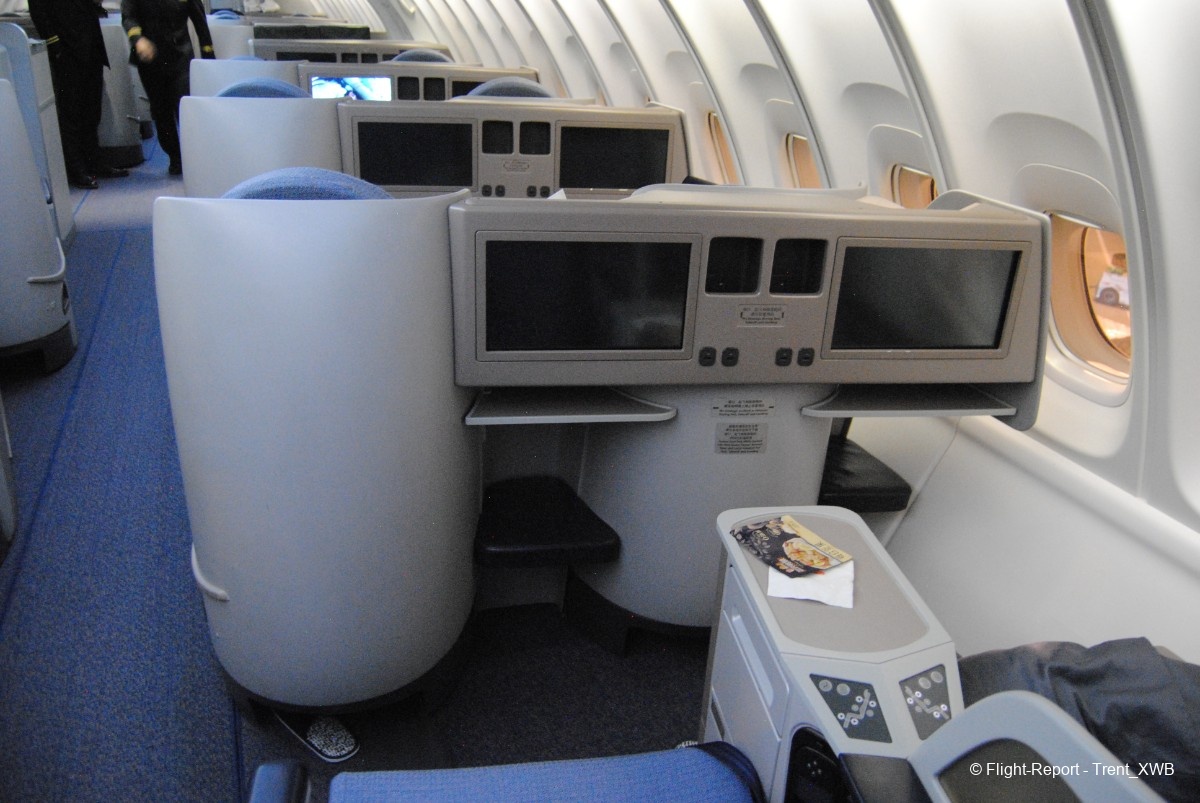
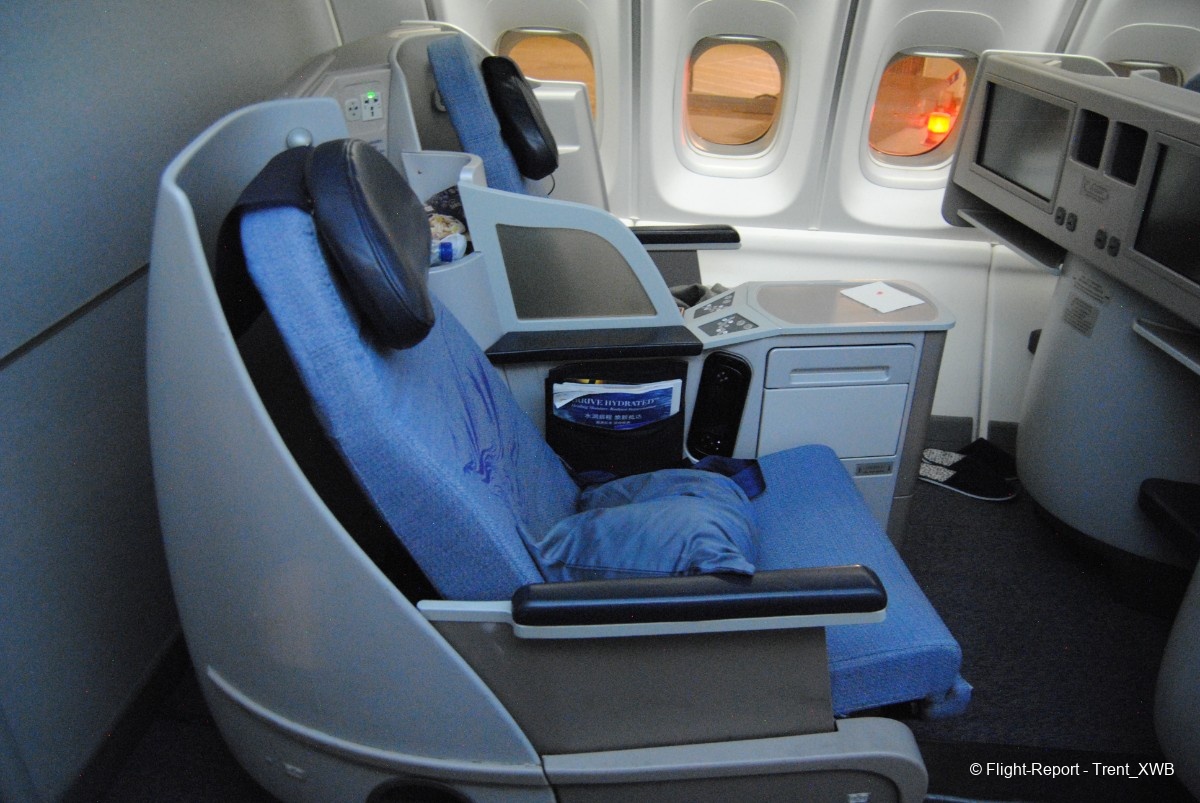
General views of the upper deck business cabin from the front and from the rear. Let's remind that it consists of 30 Collins Parallel Diamond seats (very obsolete by today's standards) in 2-2 layout (rows 80-87), divided into 2 sections (rows 80-82 and rows 83-87) by the upper deck's doors.
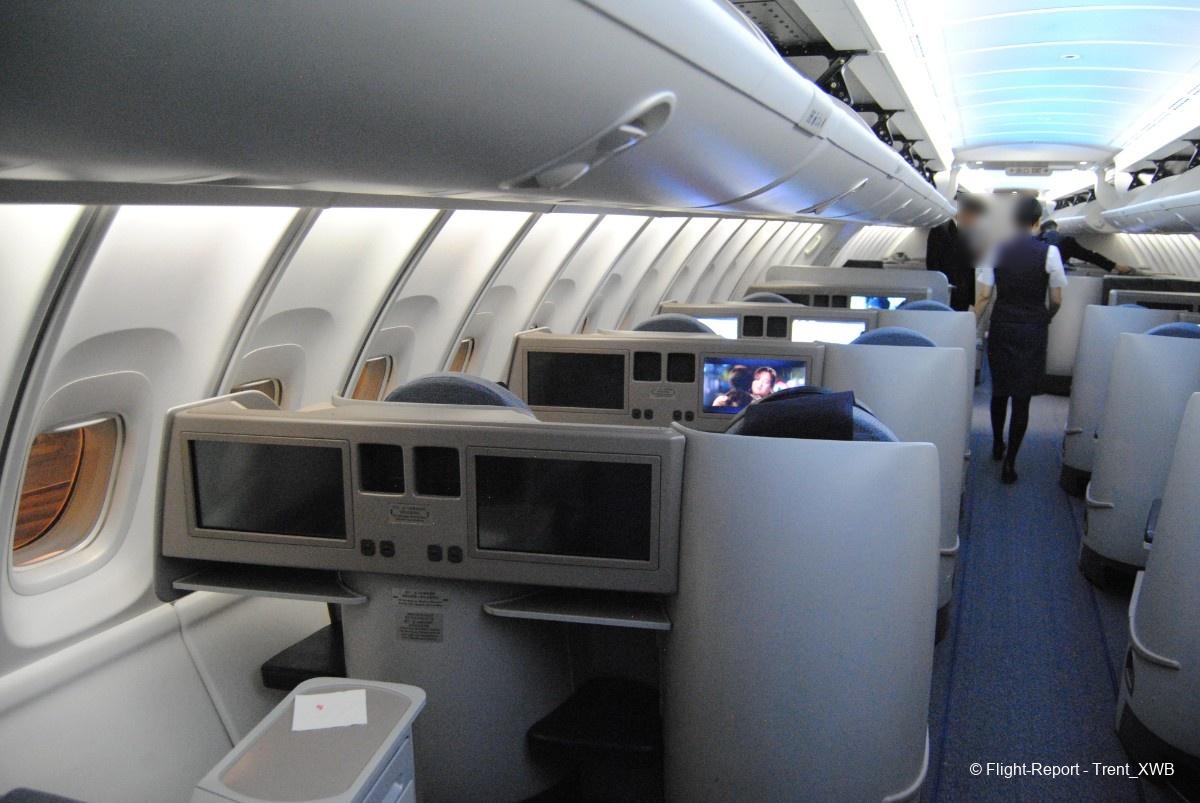
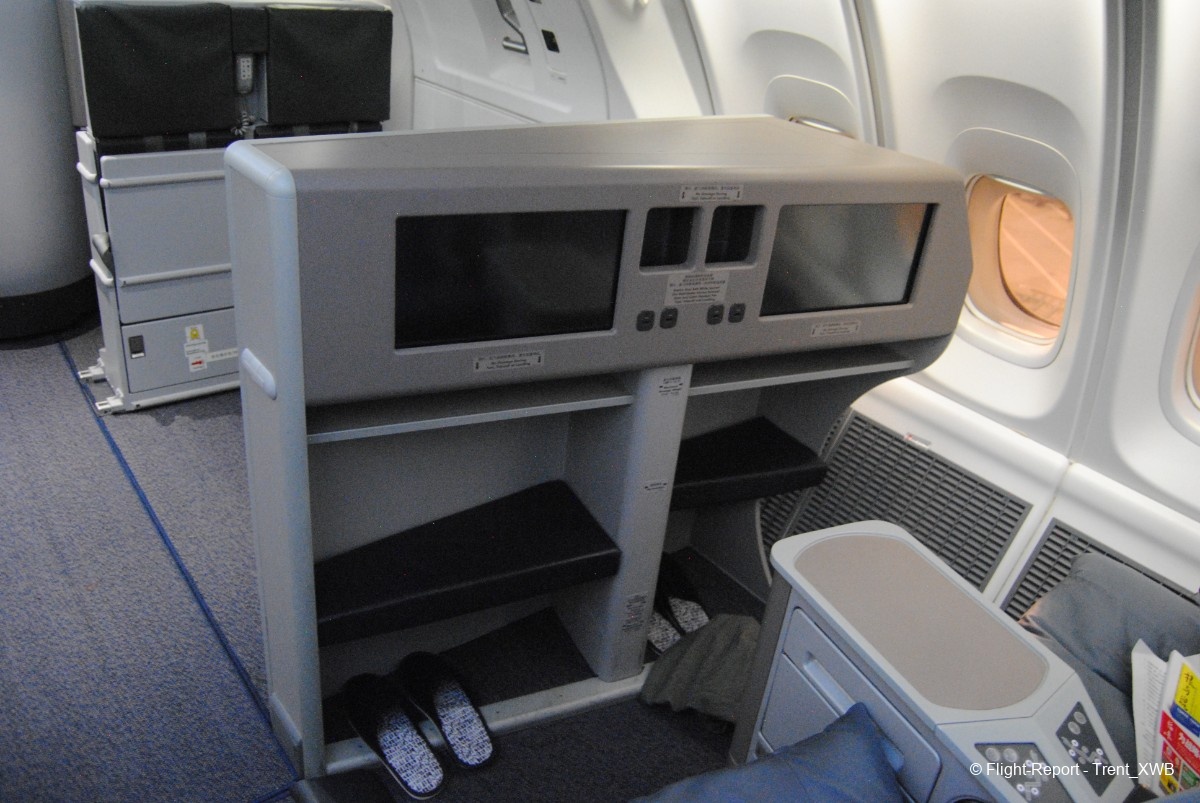
Some detailed views of the second section (rows 83-87). As one can see comparing photos 1 and 3, bulkhead rows (for this cabin rows 80 and 83) have spacious footwells, whereas the regular rows have quite restricted footwells, which is a huge drawback of Parallel Diamond seats. Also these seats are so bulky that their installation on the upper deck requires the removal of Jumbo's signature sidewall storages.
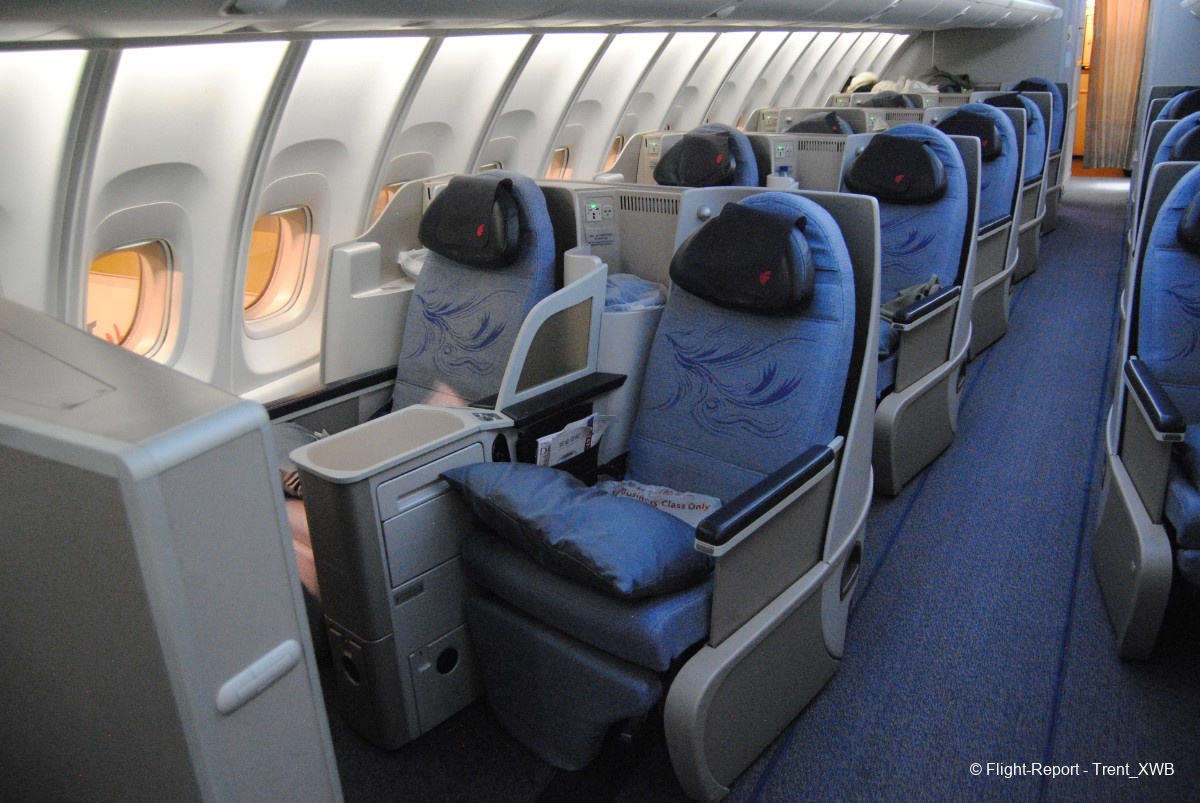
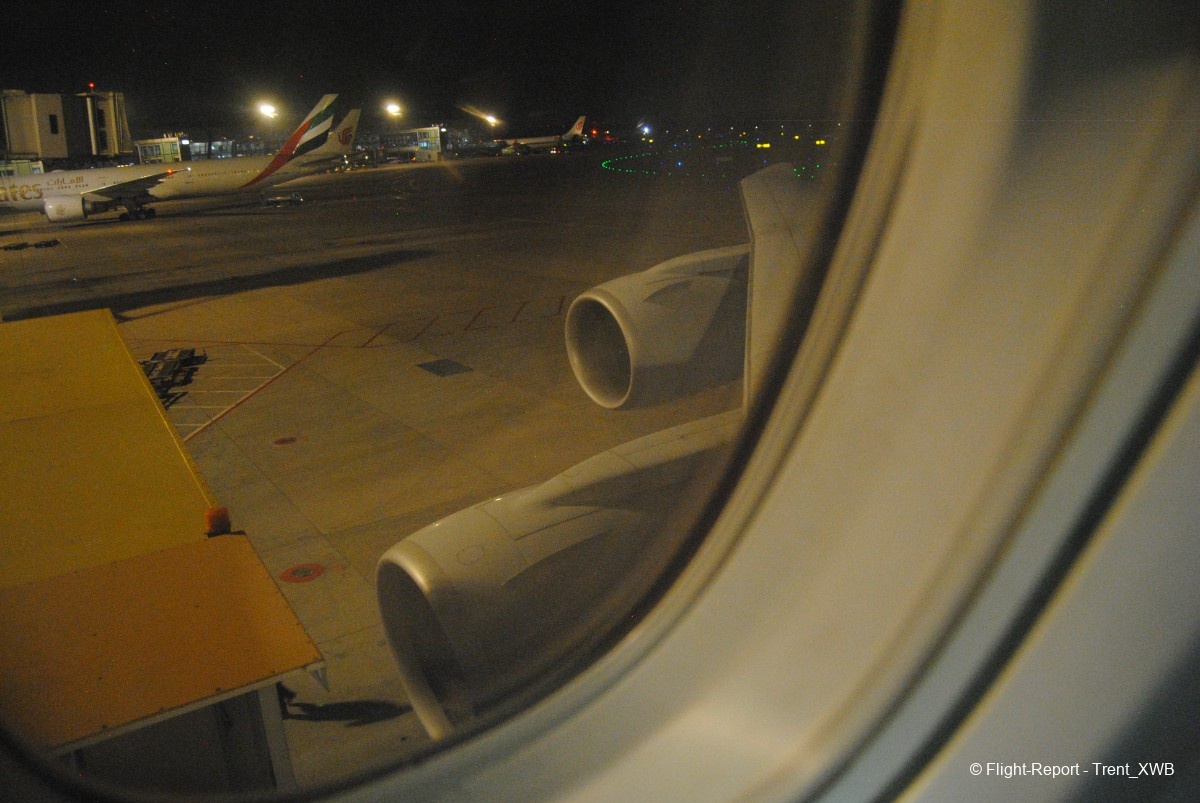
This time I didn't forget to snap a photo of an amazing wing/engine view from 87L seat! One can also see an EK B77W and a couple of CA widebodies near T3E.
One may also notice that the 2 windows over the stair also provide a wing/engine view, but it's tricky to snap a photo from there.
Now, it's time to go downstairs.
The First Class Cabin After The Flight
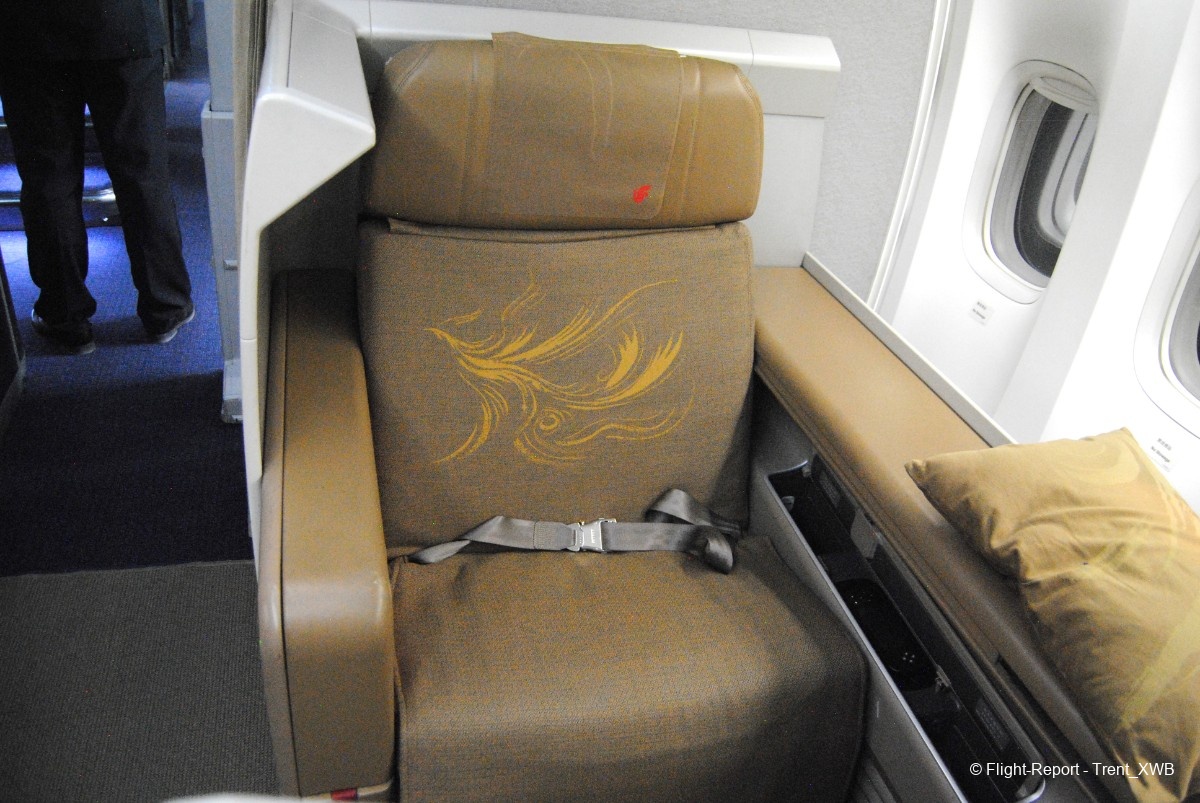
Some detailed views of the first class cabin which, let's remind, consists of 12 Zodiac Aerospace Venus suites, located before 2L/R doors. On the photo 2 one may notice that these suites have kind of wardrobes in their thick outer wall (one may apriori think that these walls contain privacy doors, but no). On the photos 3-4 one can see the beautiful upholstery with the golden phoenix of these seats.
The Second Main Deck Business Cabin After The Flight
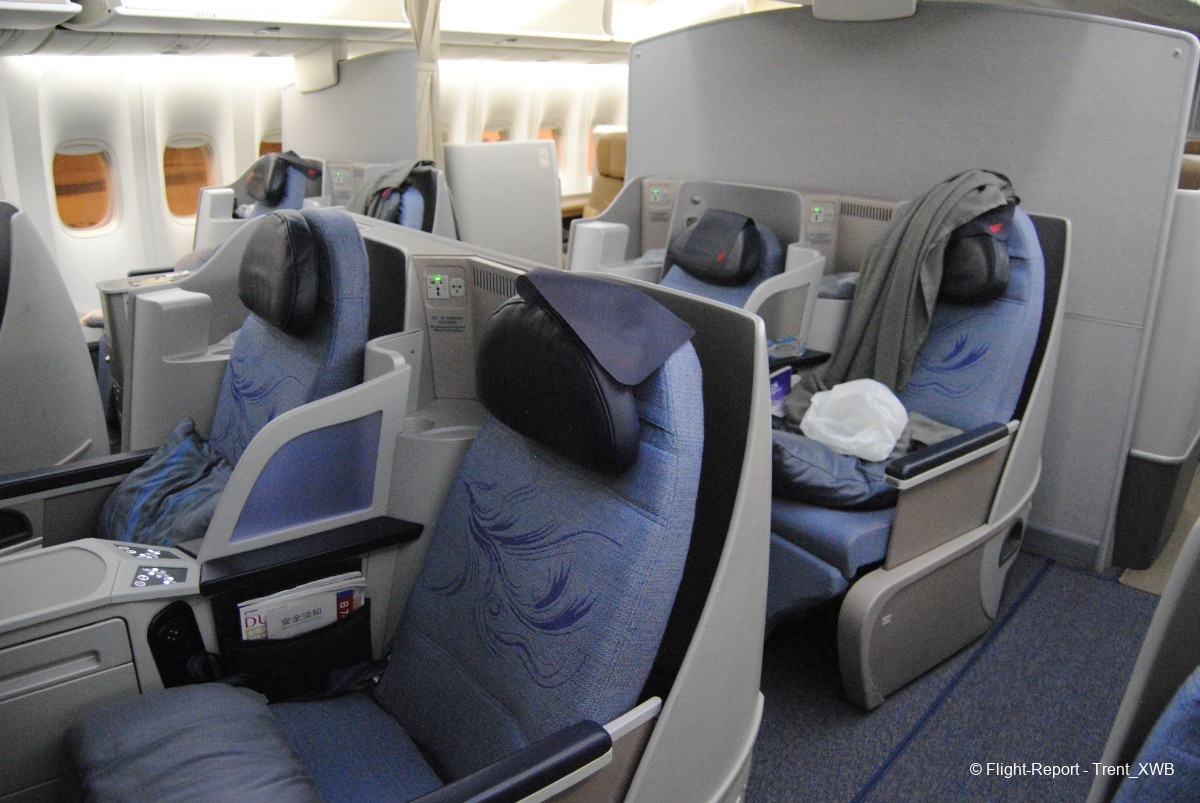
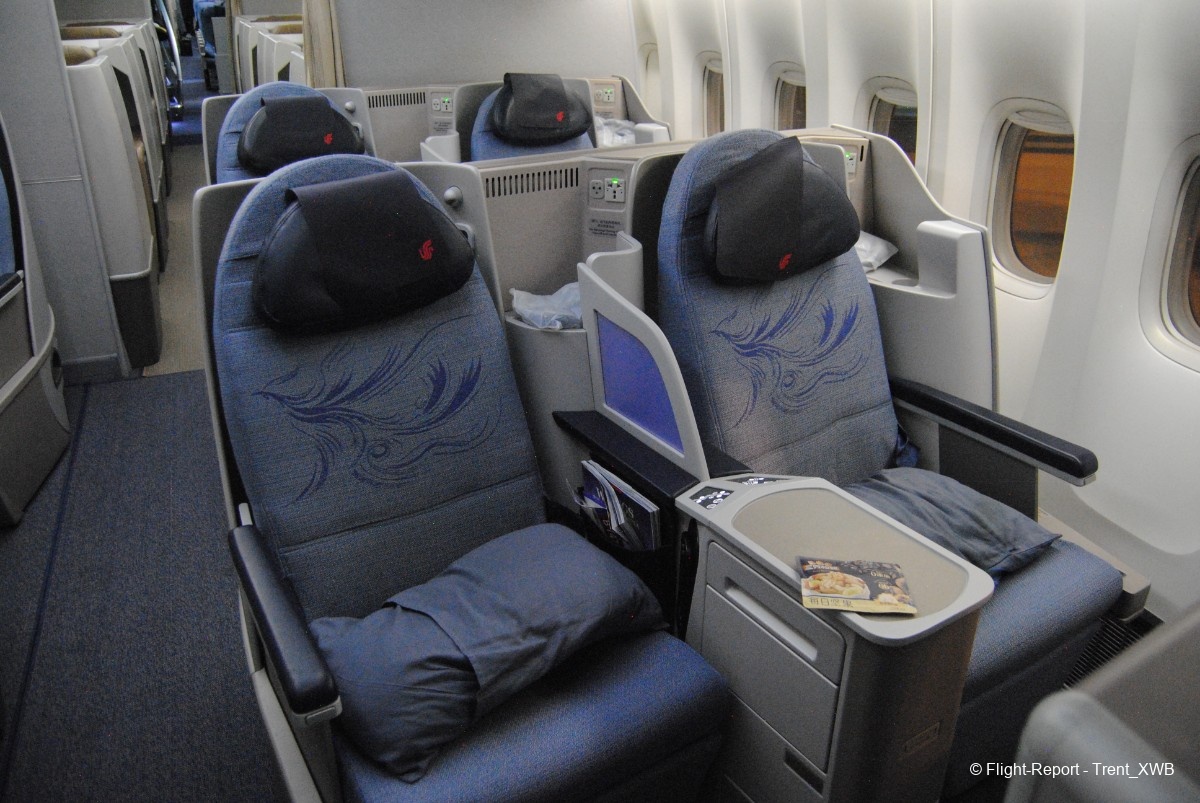
A couple of views of the second business cabin of the main deck, located between 1L/R doors and the first class cabin, and consisting of 12 Collins Parallel Diamond seats in 2-2-2 layout (rows 14-15). This is the only one of three business cabins on these Jumbos, having the central seat blocks (which are identical to the right-side ones, which gives the cabin an odd asymmetry). As we already know, only the bulkhead row (14) provides unrestrictred footwell space here.
I wanted to visit also the nose business cabin, but it was occupied by the cleaning staff and I was told to leave the aircraft via 2L door. Anyway, I visited the Jumbo's nose on the preceding CA1557 flight, so this time I didn't miss something special. I thanked the crew and left the aircraft.
The Aircraft After The Flight
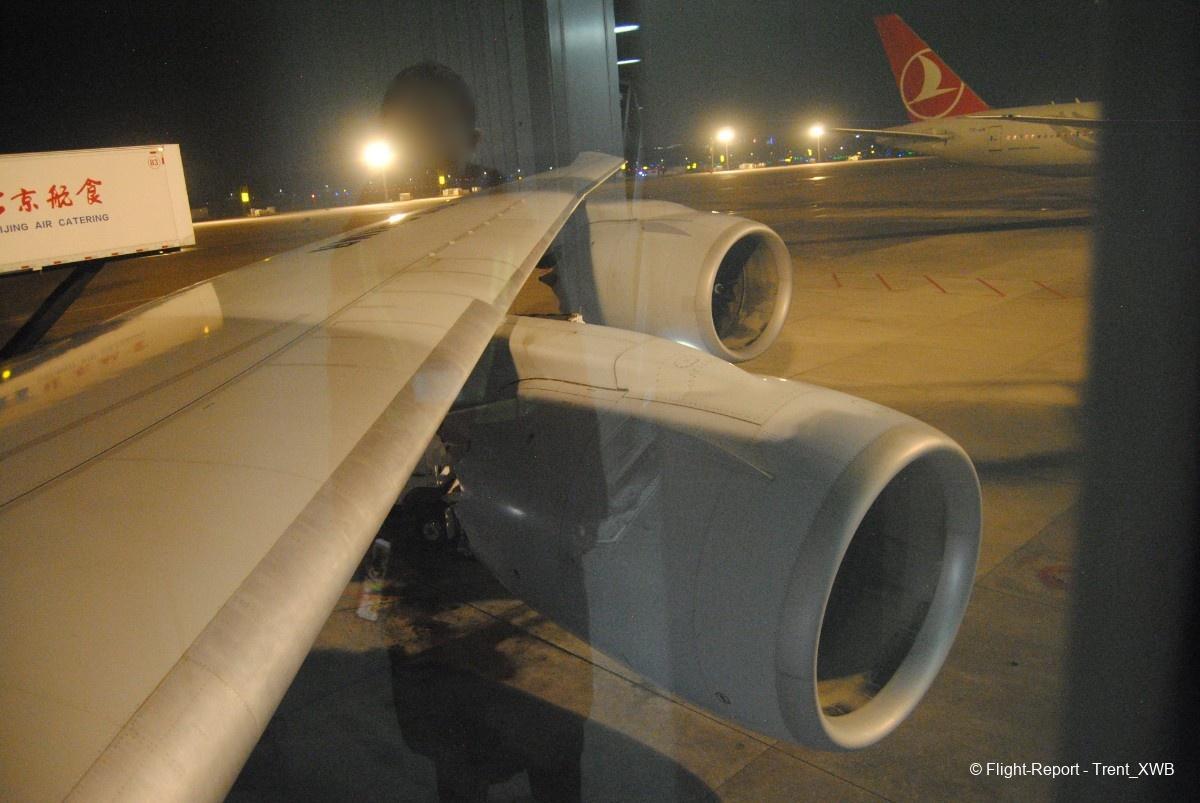
Wing and portside engines view from the jetbridge upon exiting 2L door. One can see a reflection of the ground staff who guided me to the bus as I was the last passenger to leave the aircraft.
A view of the Jumbo's hump from the jetbridge.
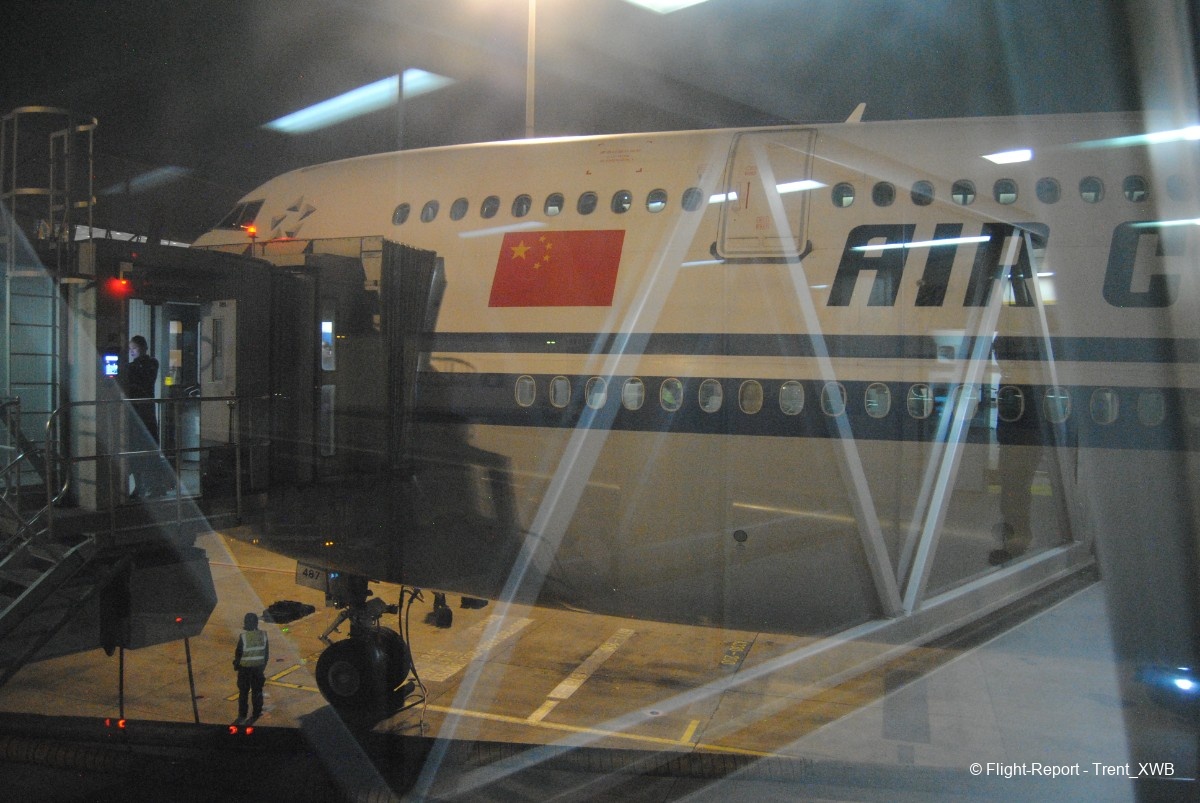
The way from jetbridge to the bus via elevator occasionally gave a possibility to see the Jumbo, being prepared for JFK flight, from above.
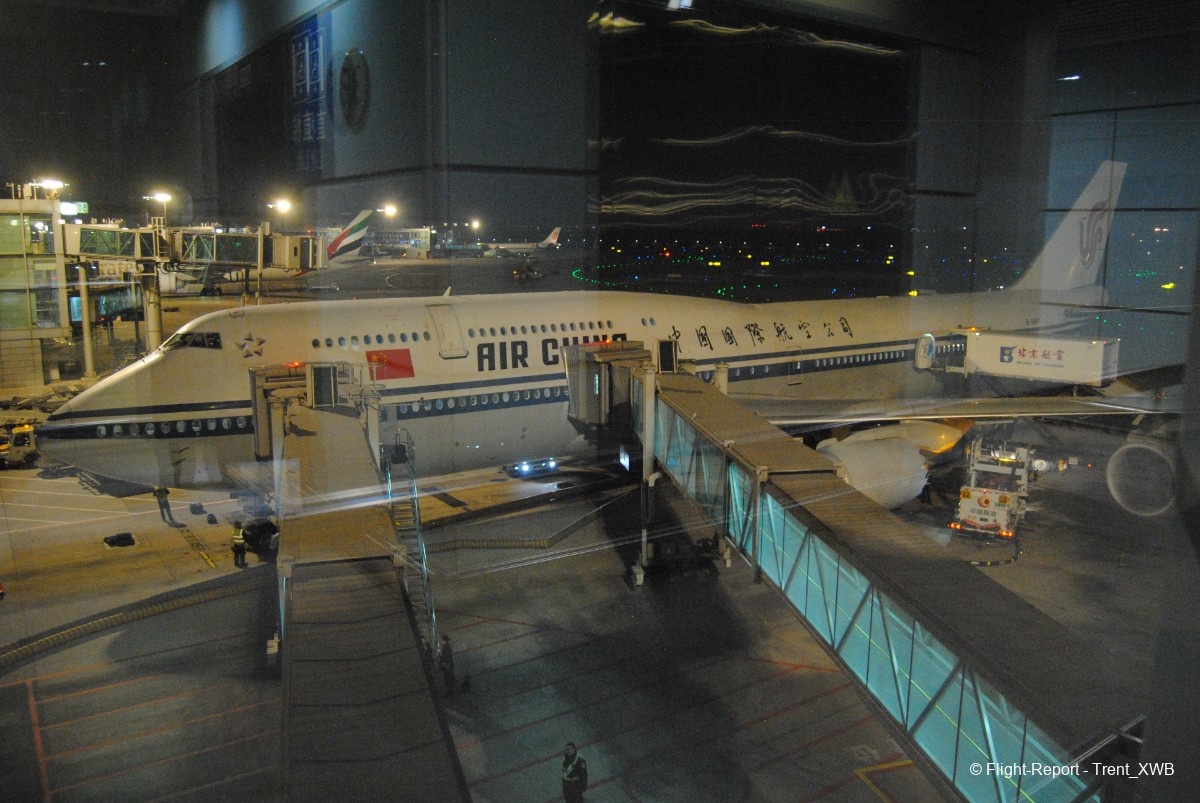
The last glance on the Jumbo from the bus.
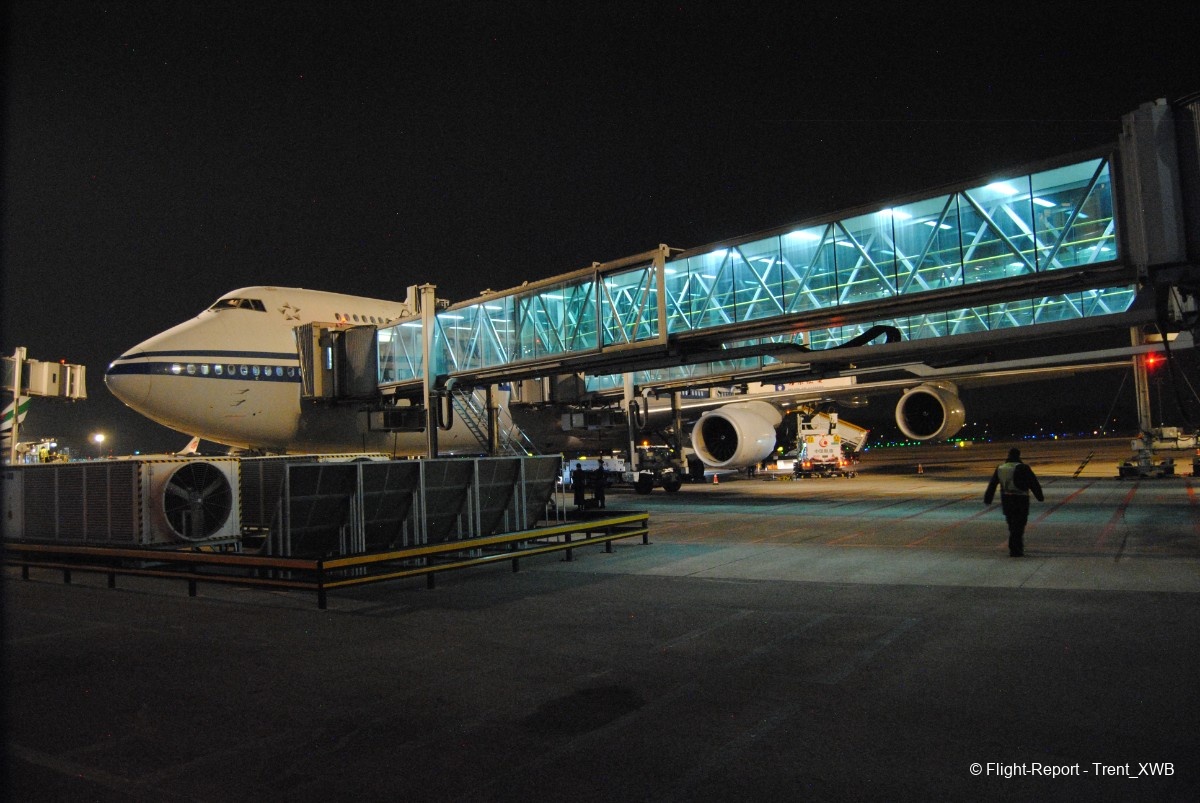
Planespotting From T3C PEK
Upon arrival to T3C I spotted a couple of CA aircrafts near T3C from the transit zone:
An A333…
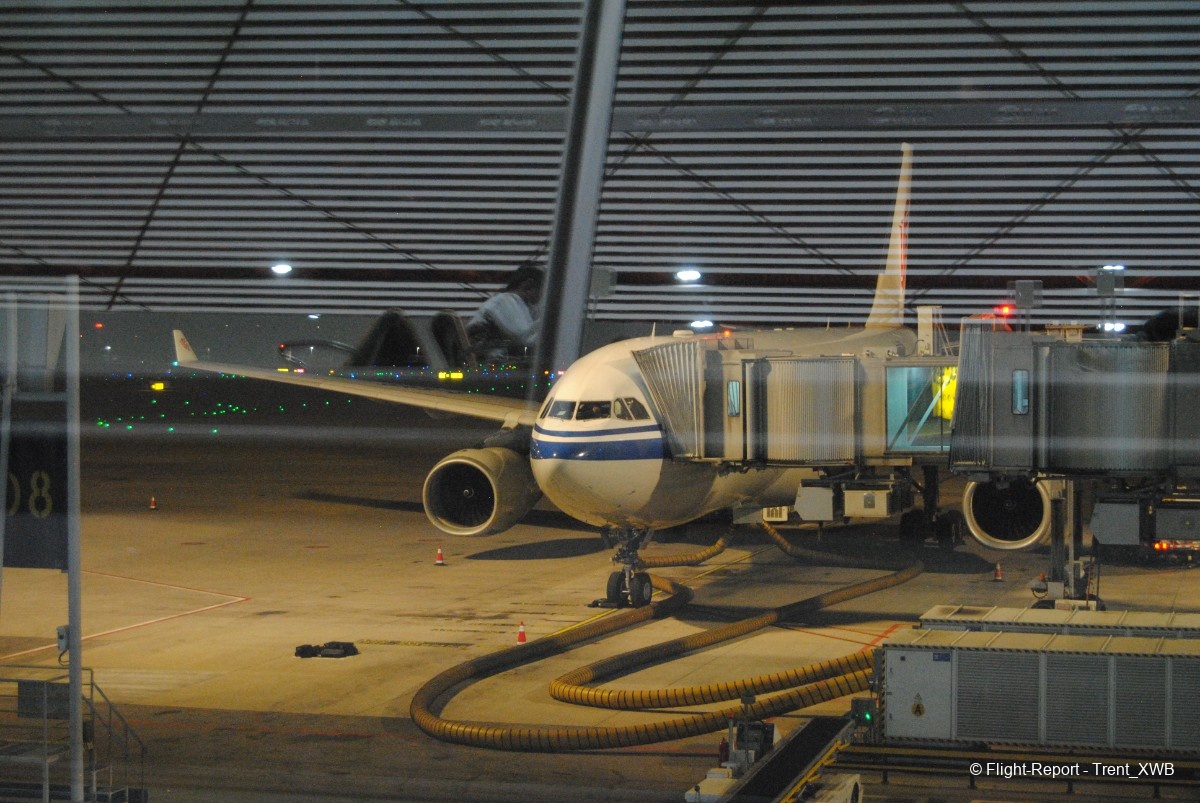
… and B737 (B-5202). CA has 11 older 2004-2006-built B737s (including this one) and 3 newer 2013-built B737s (probably featuring Sky Interior). All the CA B737s have C8_Y120 layout.
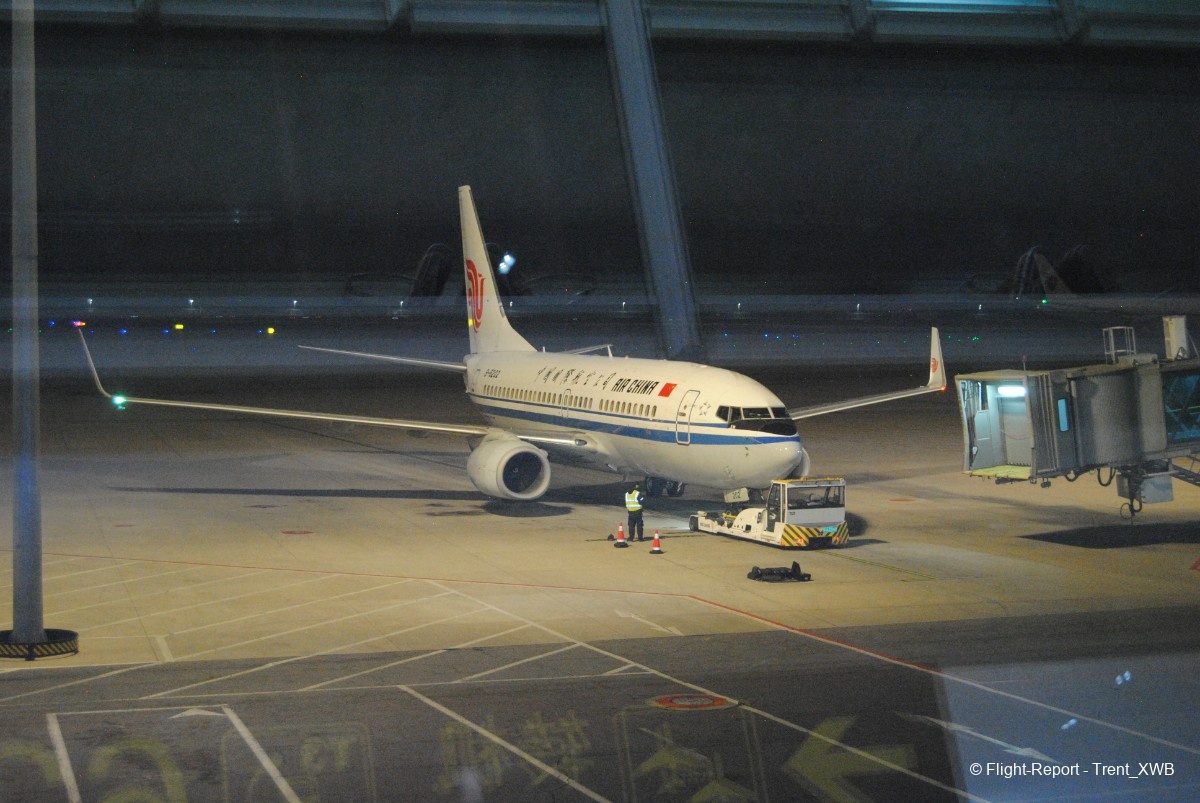
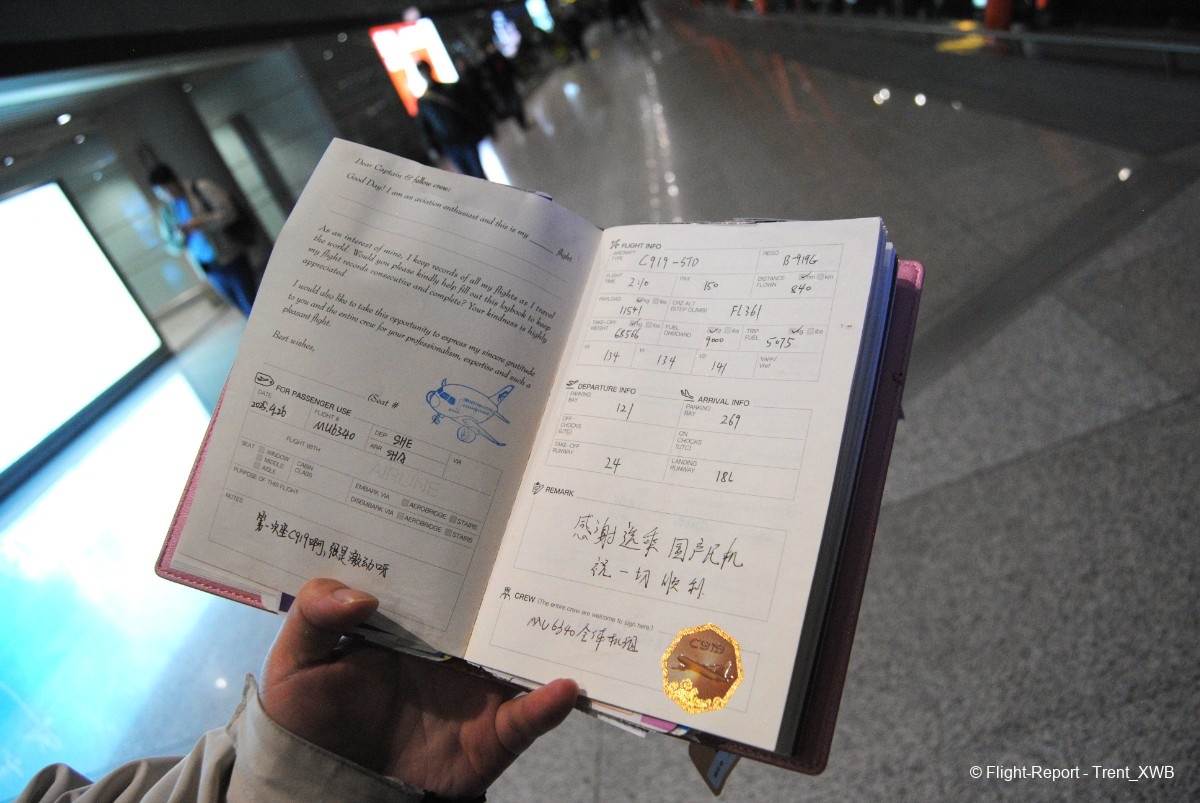
In the transit zone I had a short conversation with another avgeek (a Chinese guy) from my flight, who also visited the upper deck after the flight. He told me about some interesting Chinese aircrafts he'd been on, including C919, and allowed me to take a photo of his beautiful logbook. As he had to catch another domestic flight, we didn't have that much time to talk more about aircrafts.
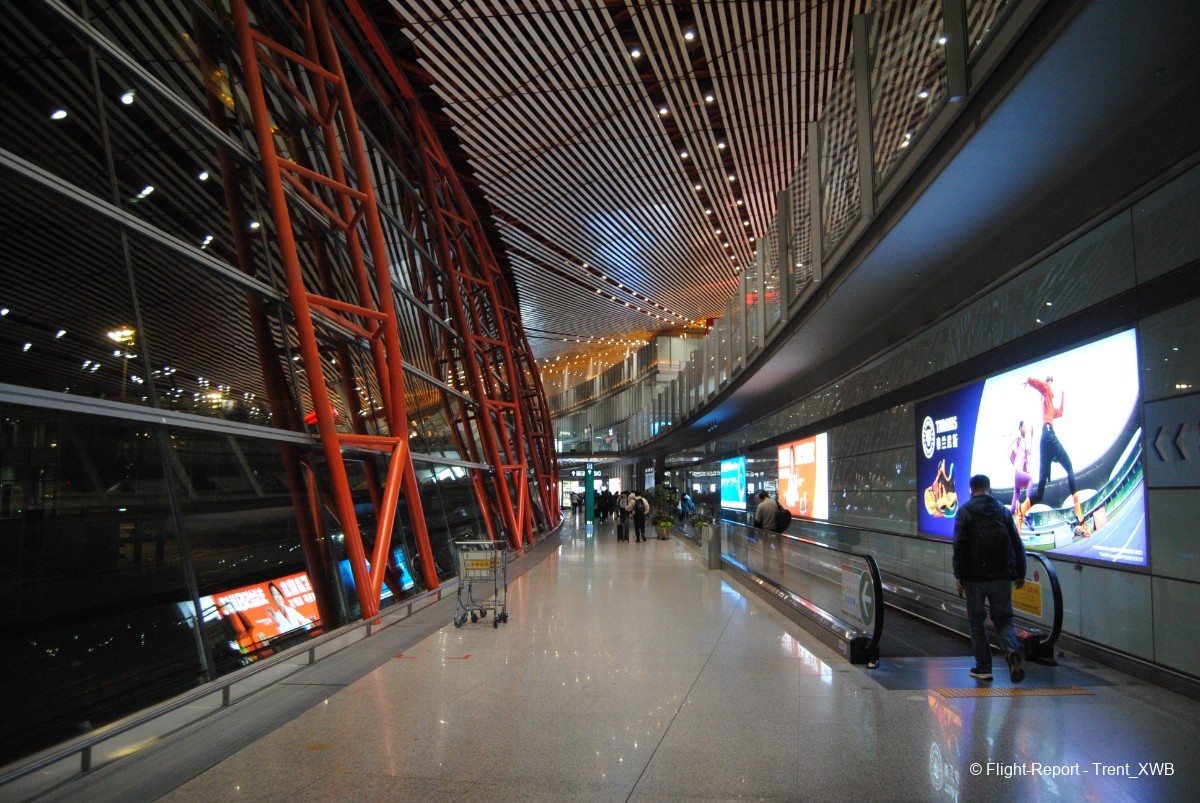
PEK T3C: Arrivals
A view of the transit area of T3C. In contrast to the gates area (located above) it has direct access to the windows.
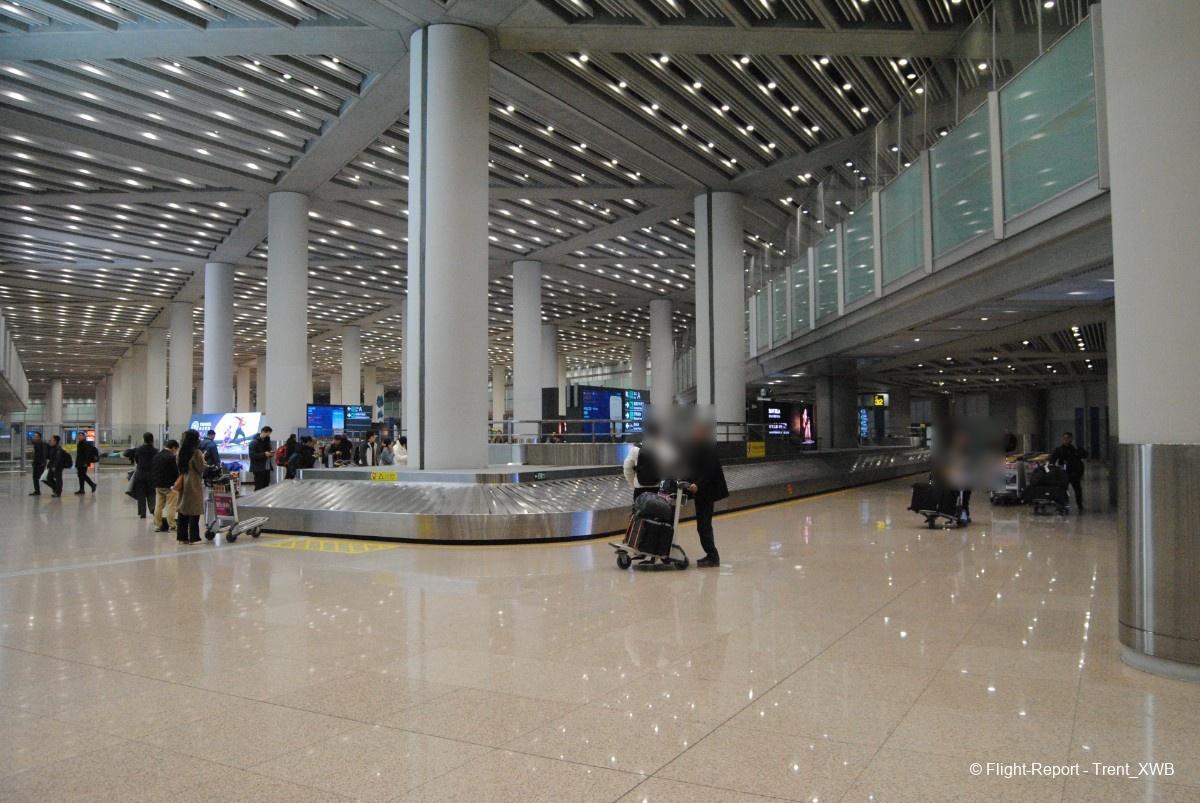
The luggage claim hall.
The arrivals zone in landside area with a kind of Chinese garden with some small architectural forms.
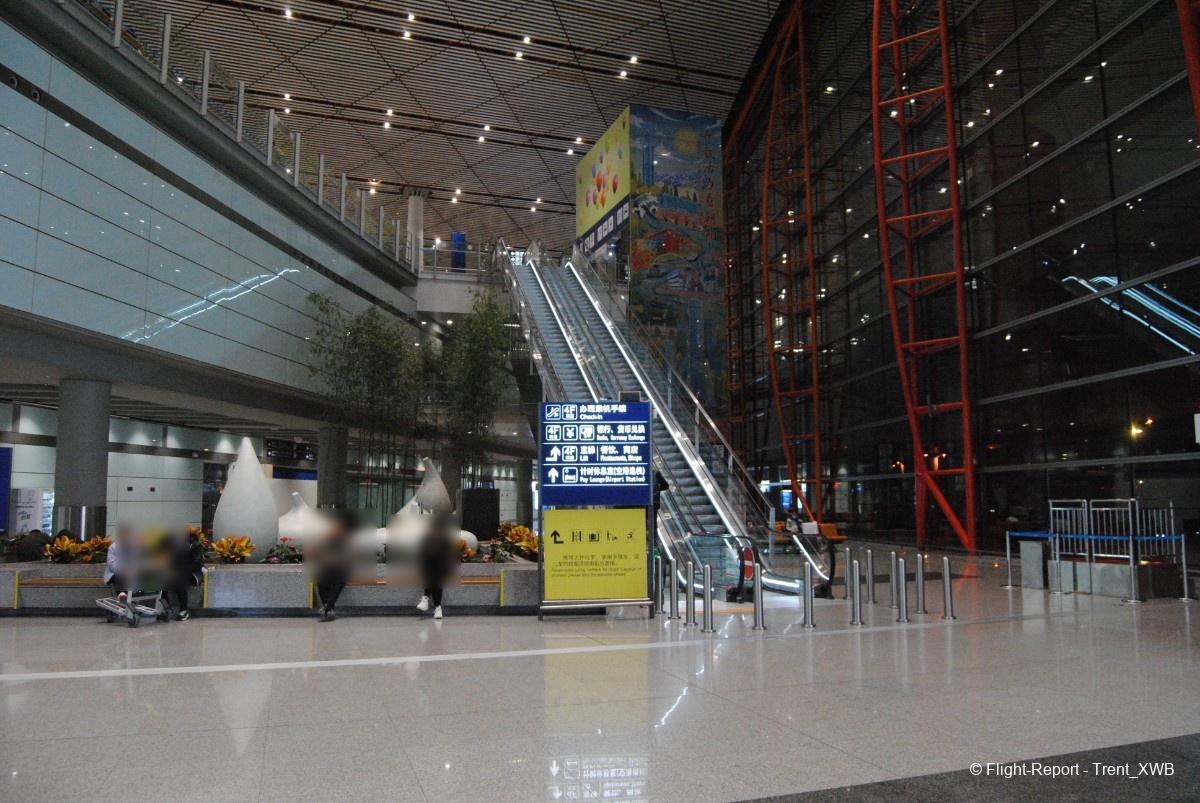
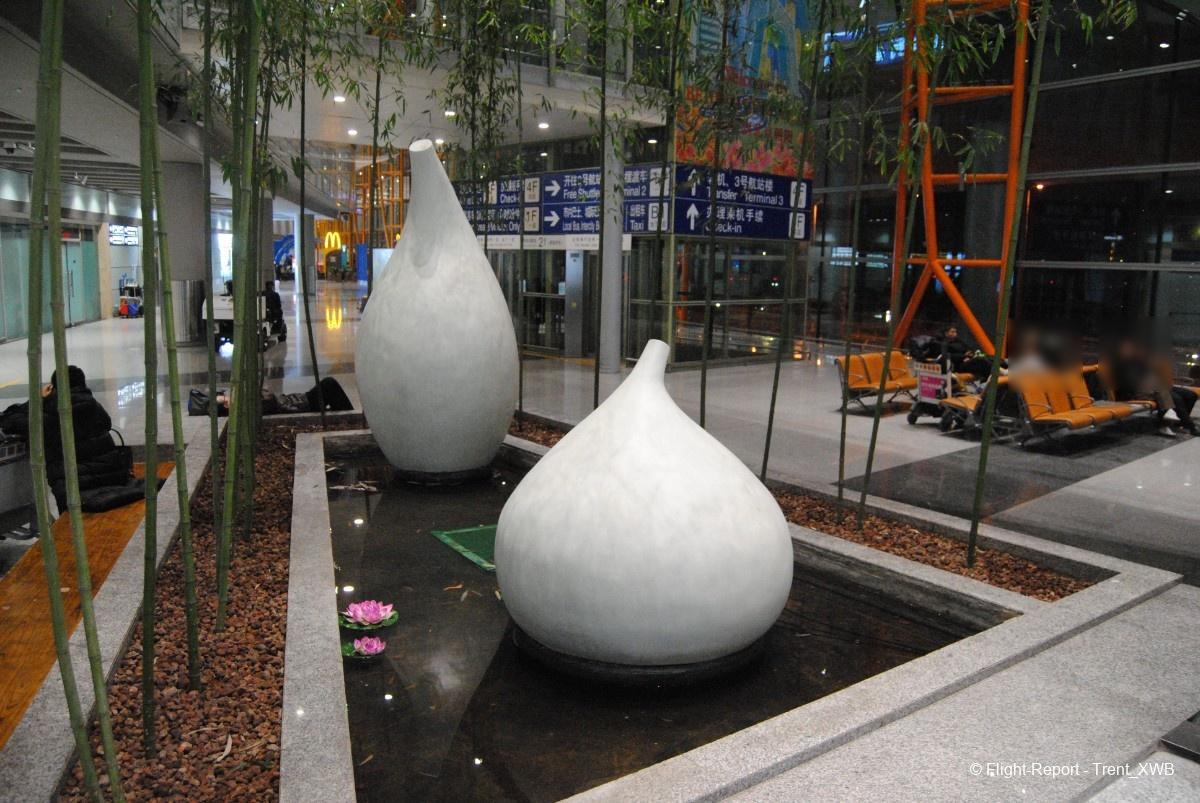
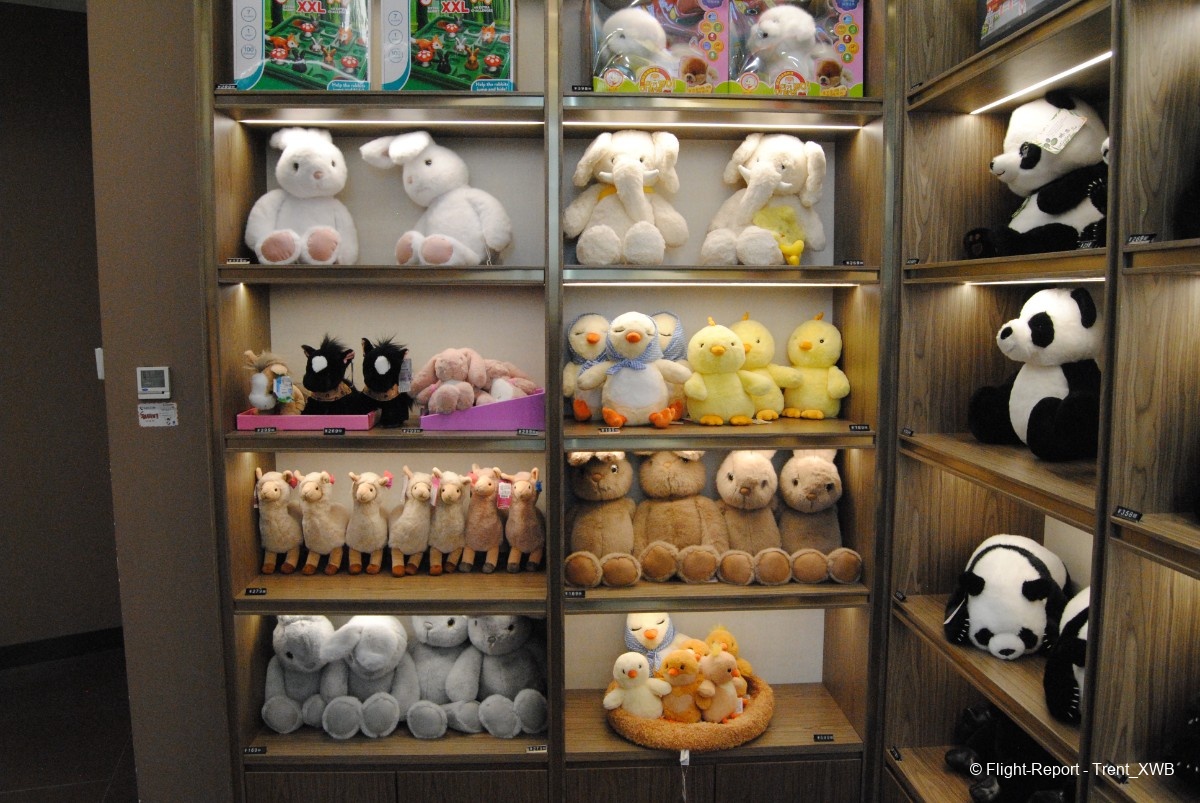
On this level one can find a number of shops, starting from toy shop with pandas and other animals…
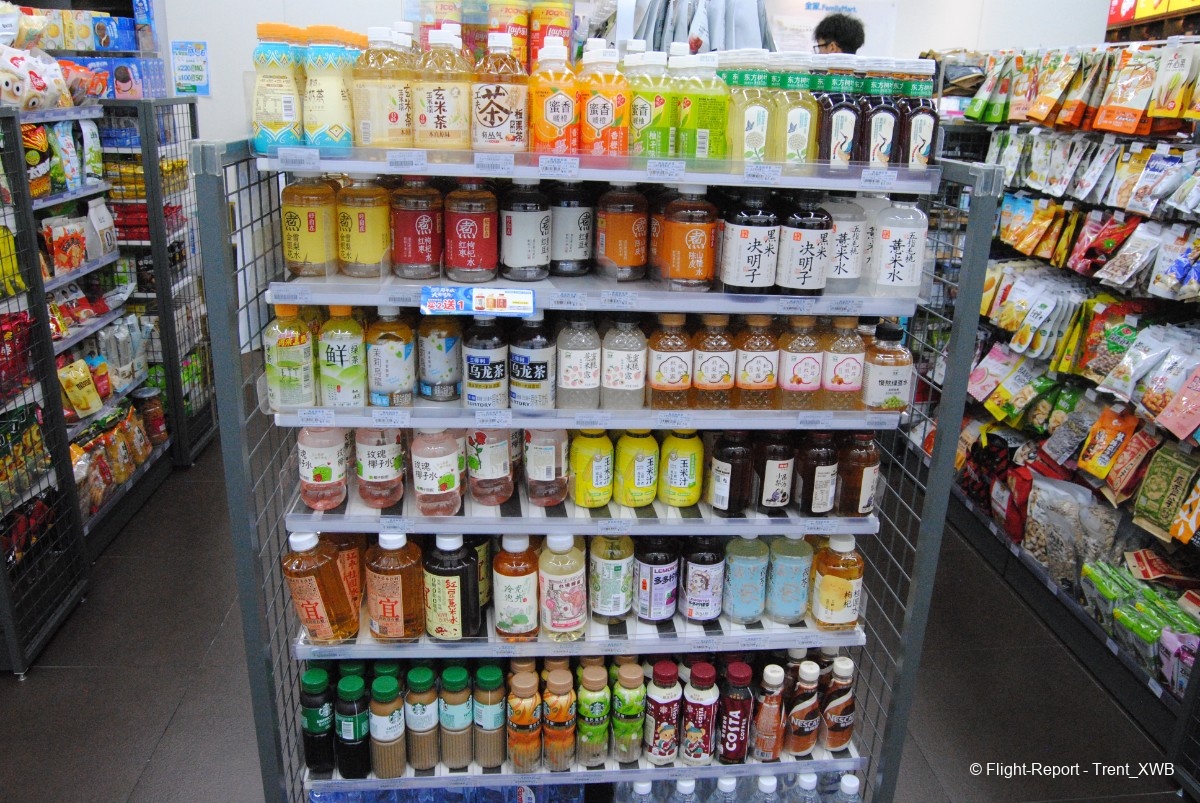
… and continuing with Lawson conbini, which was a saving grace for me, as I was very thirsty after the flight.
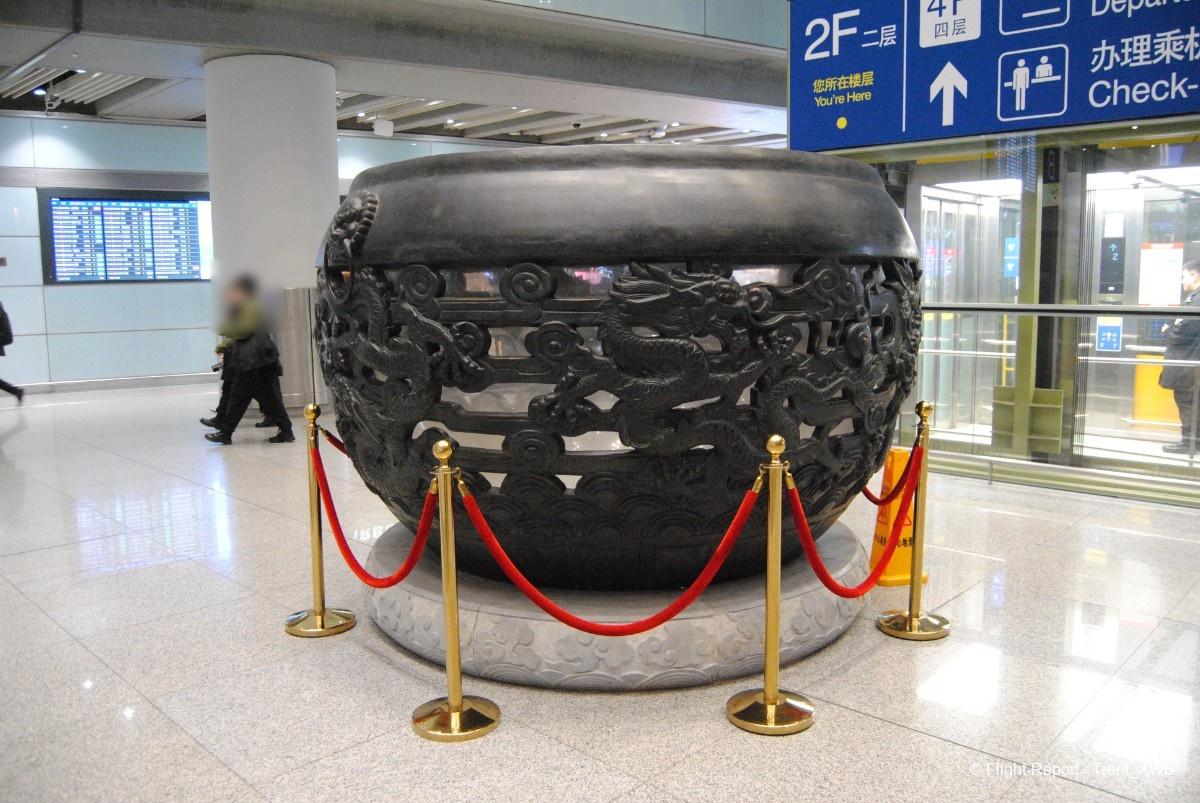
A bowl with dragons - one of the beautiful elements of the terminal on the way out to the train station.